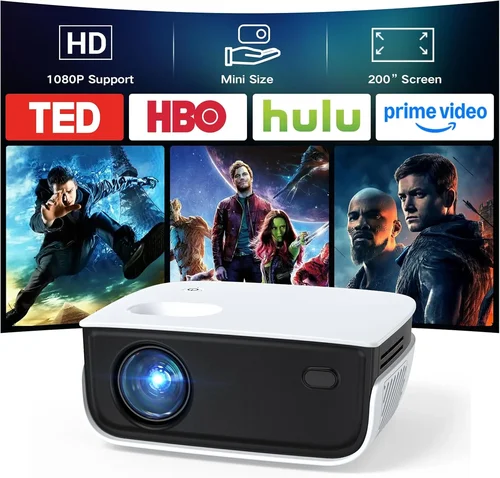
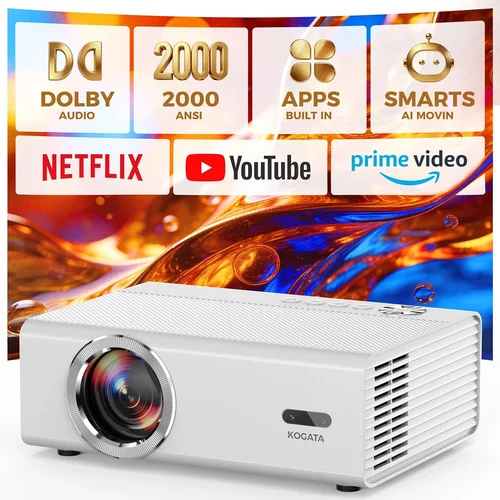
Finding a projector that delivers a decent picture without draining your wallet can feel like searching for a needle in a haystack. The market is flooded with models that promise “cinema‑quality” performance, yet many of them sit well above the $200 mark. That’s why we’ve crafted this guide: to cut through the hype and help you identify the best cheap projector under 200 that actually works for home movies, gaming, and occasional presentations.
In the pages that follow you’ll learn which specifications truly matter at this price point, how different projector types compare, and which common pitfalls to steer clear of. By the end, you’ll be equipped to make a confident purchase that matches your budget, space, and viewing habits.

What to Look for When Buying Buying Guide
1. Budget & Price Range
The first step is setting a realistic budget. “Cheap” can mean anything from $80 to $199, but the sweet spot for a usable experience usually lands between $120 and $180. Below $100, you’ll often sacrifice brightness and native resolution, while models approaching $200 tend to include extra connectivity options and a brighter lamp. Decide how much you’re willing to stretch; a slightly higher spend can dramatically improve image quality and longevity.
2. Performance Specifications
Key specs to watch are:
- Resolution: Most sub‑$200 units offer 720p (1280×720) or native 800×480 (WVGA). For crisp text and sharper movies, aim for a 720p model.
- Brightness (lumens): A minimum of 2,500 ANSI lumens is advisable for rooms with some ambient light. If you plan to use the projector in a dark bedroom, 1,800–2,200 lumens can suffice.
- Contrast Ratio: Higher ratios (e.g., 5,000:1) deliver deeper blacks, essential for movie nights.
- Throw Distance & Zoom: Short‑throw models can project a 100‑inch image from under 3 ft, ideal for small apartments.
3. Build Quality & Durability
Cheap projectors often feel plasticky, but look for models with a sturdy chassis, reinforced lens housing, and a well‑ventilated cooling system. Overheating is a common cause of early failure, so a fan that runs quietly yet effectively is a good sign.
4. Features & Functionality
Even at a low price, many projectors pack useful extras:
- Multiple HDMI ports: Allows dual‑source switching without unplugging cables.
- USB playback: Play videos directly from a flash drive.
- Wireless screen mirroring: Built‑in Wi‑Fi or Bluetooth for casting from phones and tablets.
- Built‑in speakers: While not a substitute for a sound system, a decent 2‑5 W speaker can be handy for casual viewing.
5. Brand Reputation
Established brands such as Epson, BenQ, ViewSonic, and Anker often provide more reliable firmware updates and customer support. Newer entrants can surprise with great value, but research warranty terms and user forums before committing.
6. Warranty & Support
A minimum 1‑year limited warranty is standard. Look for manufacturers that offer easy lamp replacement or a “lamp‑free” LED light source, which typically lasts 20,000–30,000 hours and eliminates the cost of spare bulbs.
7. Size & Portability
If you’ll be moving the projector between rooms or taking it on trips, weight matters. Models under 2 kg with a compact footprint fit easily into a backpack. Integrated handles or a dedicated carry case are bonus features.
8. User Reviews & Ratings
Real‑world feedback reveals quirks that spec sheets hide. Scan reviews for recurring themes such as “overheating after 2 hours” or “excellent color accuracy out of the box.” A product with a 4‑star average across 200+ reviews is generally a safe bet.
Different Types of Buying Guide

Common Buying Mistakes to Avoid
❌ Mistake: Ignoring Ambient Light Conditions
Why it’s bad: A projector rated at 2,000 lumens may look great in a dark room but will appear washed out in a living room with curtains open.
What to do instead: Measure your typical lighting. If you can’t darken the room, aim for at least 2,500–3,000 lumens or choose a model with high contrast and a built‑in ambient light sensor.
❌ Mistake: Overlooking Input Compatibility
Why it’s bad: Buying a projector with only VGA input means you’ll need adapters for modern HDMI sources, adding clutter and potential signal loss.
What to do instead: Prioritize at least one HDMI 1.4 port, plus optional USB‑C or wireless casting if you use smartphones frequently.
❌ Mistake: Focusing Solely on Resolution
Why it’s bad: A 1080p projector that only outputs 1,800 lumens can be useless in a bright room, negating the resolution advantage.
What to do instead: Balance resolution with brightness and contrast; for most budget buyers, 720p + 2,500 lumens is a winning combo.
❌ Mistake: Forgetting Lamp Life & Replacement Costs
Why it’s bad: Traditional UHP lamps often need replacement every 2,000‑3,000 hours, costing $50‑$100 each.
What to do instead: Look for LED or laser light sources that last 20,000+ hours and eliminate recurring lamp expenses.
❌ Mistake: Neglecting Portability Needs
Why it’s bad: A heavy, bulky projector can become a storage nightmare if you move often.
What to do instead: Check weight (under 2 kg is ideal) and consider a model with a built‑in battery for true on‑the‑go use.
❌ Mistake: Assuming All “Budget” Projectors Are the Same
Why it’s bad: The term “budget” covers a wide quality spectrum; some units skimp on color accuracy, others on connectivity.
What to do instead: Read detailed reviews, compare spec sheets, and verify that the unit meets your top three priorities before purchasing.
Budget Guidelines: How Much Should You Spend?
- Entry‑Level ($80‑$120): Expect WVGA resolution, 1,800–2,200 lumens, and basic HDMI connectivity. Suitable for casual phone casting in a dark room.
- Mid‑Range ($121‑$170): 720p resolution, 2,500–3,000 lumens, better contrast, and added features like USB playback and dual HDMI. This tier covers most home‑theater and gaming needs.
- Premium ($171‑$200): LED light source, short‑throw capability, higher contrast (5,000:1+), and robust build quality. Ideal for small apartments where space is limited.
- Luxury ($200+): While beyond the scope of this guide, luxury models often push into 1080p, include lens shift, and provide professional‑grade color accuracy.
Expert Tips for Getting the Best Deal
- Timing: Major discount windows include Black Friday, Cyber Monday, and post‑Christmas clearance. Also watch for “Back‑to‑School” promos in August.
- Retailers: Compare Amazon, Best Buy, Walmart, and direct manufacturer stores. Some brands offer exclusive bundles (e.g., free screen or mounting kit) when bought directly.
- Bundle Savings: Purchasing a projector with a compatible screen, mounting bracket, or HDMI cable from the same seller can shave $20‑$30 off the total.
- Warranty Extensions: If the baseline warranty is only 90 days, consider a modest extension for peace of mind, especially for LED models.
- Return Policies: Choose sellers with at least a 30‑day return window and free return shipping. This lets you test the projector in your own environment.
- Testing Before Buying: If possible, view a demo unit in‑store. Pay attention to color uniformity, fan noise, and keystone correction quality.
- Check Firmware Updates: Some manufacturers release performance‑enhancing patches. A model that receives regular updates will stay relevant longer.
- Consider Refurbished: Certified refurbished units can offer a 20‑30% discount while retaining the full warranty.

Frequently Asked Questions
Q: Can a projector under $200 replace a TV for everyday watching?
A: It can, but only in a controlled lighting environment. For bright rooms, a TV will still outperform a budget projector. However, for movie nights in a dimmed room, a 720p, 2,500‑lumens projector provides a large‑screen experience at a fraction of the cost.
Q: Do I need a separate sound system?
A: Most cheap projectors have built‑in speakers that are adequate for casual viewing. For immersive movies or gaming, pairing the projector with a Bluetooth soundbar or external speakers greatly improves audio quality.
Q: How long does the lamp last?
A: LED light sources common in sub‑$200 models last 20,000–30,000 hours, effectively a lifetime for most users. Traditional UHP lamps, if present, may need replacement every 2,000–3,000 hours.
Q: Is keystone correction important?
A: Yes, especially if you can’t place the projector perfectly perpendicular to the screen. Look for models offering at least ±30° vertical keystone and, if possible, horizontal correction.
Q: What’s the difference between HDMI 1.4 and 2.0?
A: HDMI 1.4 supports 1080p at 30 Hz and 4K at 24 Hz, which is sufficient for most budget projectors. HDMI 2.0 adds 4K at 60 Hz and higher bandwidth, but few sub‑$200 units utilize it.
Q: Can I use a projector outdoors?
A: Yes, provided you have a dark environment and a stable, flat surface. Outdoor use may require a weather‑proof screen and protection from dust.
Q: Does short‑throw mean lower image quality?
A: Not necessarily. Short‑throw refers to the distance‑to‑screen ratio. Quality depends on the light engine and optics, which can be comparable to standard‑throw models in the same price range.
Q: Are there any health concerns with using projectors?
A: Modern projectors emit low levels of blue light compared to smartphones. However, prolonged viewing in a dark room can cause eye strain; take regular breaks and consider a screen with a matte finish.
Our Final Recommendations
- Best for Budget‑Conscious Buyers: Anker Nebula Capsule II – Portable, 720p, 2,400 lumens, built‑in Android TV, and a rechargeable battery. Ideal for renters who need flexibility.
- Best Overall Value: ViewSonic M1 Mini Plus – LED light source, 1080p support via scaling, 2,500 lumens, dual HDMI, and a built‑in JBL speaker. Offers the most balanced package for home cinema.
- Best Premium Option (under $200): Epson EF‑100 – Laser light source, 720p, 3,300 lumens, short‑throw, and excellent color accuracy. Slightly above $200 during sales, but often discounted into the budget range.
- Best for Beginners: Vankyo Leisure 3 – Very easy setup, 800×480 native, 2,400 lumens, and a sturdy tripod. Perfect for first‑time users.
- Best for Advanced Users: BenQ TH585 – Although it hovers just above $200, its 1080p, 3,500 lumens, low input lag, and sport mode make it a future‑proof choice for gamers willing to stretch a little.
Conclusion: Making the Right Choice
Choosing the best cheap projector under 200 boils down to matching your primary use case with the right blend of brightness, resolution, and features. Remember to assess your room’s lighting, prioritize ports you actually need, and factor in lamp life or LED longevity. By avoiding common mistakes—like ignoring ambient light or overlooking warranty—you’ll secure a device that delivers enjoyable viewing without breaking the bank.
Take the recommendations above as a starting point, run a quick price check, and enjoy the freedom of a big‑screen experience wherever you are. Happy projecting!