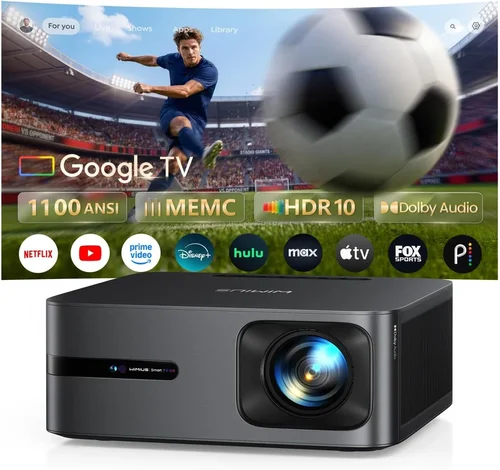
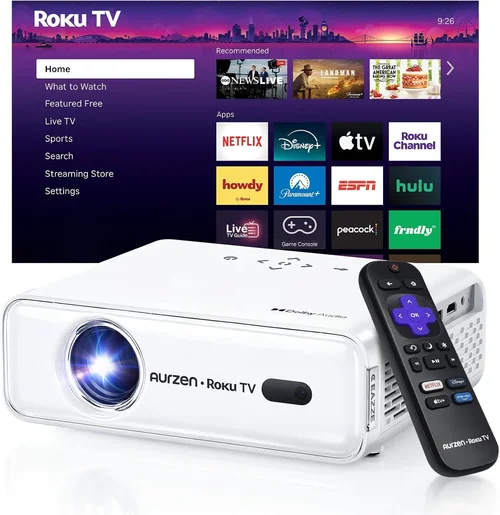
Choosing a home projector can feel like stepping into a maze of specifications, brand names, and price tags. With so many options under $1,000, it’s easy to wonder which model will truly deliver a cinematic experience without breaking the bank. That’s why we’ve put together this expert buying guide – to cut through the noise, clarify the most important features, and help you make a confident decision that matches your viewing habits, room setup, and budget.
In the pages that follow, you’ll learn how to evaluate brightness, resolution, contrast, and connectivity, as well as why factors like lamp life, throw distance, and built‑in audio matter more than you might think. We’ll also compare the main projector categories, highlight common pitfalls, and provide a clear price‑tier roadmap so you can see exactly what you’ll get for every dollar spent. By the end, you’ll be equipped to pick the best home projector under $1,000 for movie nights, gaming sessions, or even work presentations.
The home projector market in 2026 is more competitive than ever. Advances in LED and laser light sources, the rise of 4K‑enhanced DLP chips, and smarter built‑in operating systems have pushed performance higher while keeping prices in check. Yet, the “sweet spot” of sub‑$1,000 still favors a mix of traditional lamp‑based models and newer LED options. Understanding where each technology shines will ensure you get the most value from your purchase.

What to Look for When Buying Buying Guide
1. Budget & Price Range
Even within the sub‑$1,000 segment, prices can vary dramatically based on lamp type, resolution, and added features. Setting a clear budget helps you narrow down choices quickly. Remember that the sticker price often excludes essential accessories such as a high‑quality projection screen, mounting hardware, or an HDMI‑ARC audio receiver. Allocate an extra 10‑15% of your budget for these items to avoid unpleasant surprises.
2. Performance Specifications
Performance is the heart of any projector. Key specs to examine include:
- Brightness (lumens): For dim rooms, 1,500–2,000 ANSI lumens is sufficient. Bright living rooms or rooms with ambient light may need 2,500+ lumens.
- Resolution: 1080p (Full HD) remains the baseline for crisp images. Some models offer 4K‑enhanced or native 4K, but they often require more light to look their best.
- Contrast Ratio: Higher contrast delivers deeper blacks and richer colors. Look for a ratio of at least 10,000:1 for a satisfying movie experience.
- Throw Ratio: Determines how far the projector must be from the screen to achieve a specific image size. Short‑throw models (0.5–1.0) are ideal for small rooms.
3. Build Quality & Durability
Projectors are mechanical devices with moving parts (like lamp housings) that can wear over time. A sturdy chassis, reinforced lens housing, and a reliable cooling system are signs of durability. Aluminum bodies and well‑designed fan ducts reduce vibration and extend the lifespan of both the projector and its light source.
4. Features & Functionality
Modern projectors pack a lot of tech beyond just projecting an image. Consider the following:
- Built‑in Speakers: Useful for casual viewing, but rarely replace a dedicated sound system.
- Smart OS: Android TV, Roku, or proprietary platforms let you stream directly without an external box.
- Wireless Connectivity: Wi‑Fi, Bluetooth, and screen‑mirroring (Miracast, AirPlay) add convenience.
- Multiple HDMI Ports: At least two HDMI inputs are ideal for gaming consoles, streaming sticks, and Blu‑ray players.
- Keystone Correction & Lens Shift: These features make it easier to achieve a perfectly rectangular image without physically moving the projector.
5. Brand Reputation
Established brands such as Epson, BenQ, ViewSonic, and Optoma have proven track records for reliability and support. Newer entrants may offer cutting‑edge technology at a lower price, but research warranty terms and after‑sales service before committing.
6. Warranty & Support
A solid warranty protects you against early failures. Look for at least a 2‑year coverage on the projector and a minimum of 1 year on the lamp (if applicable). Some manufacturers also provide extended service plans or on‑site repairs, which can be a lifesaver if the unit fails during a crucial movie night.
7. Size & Portability
If you plan to move the projector between rooms, a compact, lightweight design is essential. Portable models often sacrifice brightness and lens options, so weigh the convenience against performance needs.
8. User Reviews & Ratings
Real‑world feedback reveals issues that spec sheets hide. Look for consistent praise (or complaints) about image uniformity, fan noise, and long‑term reliability. Sites like Amazon, B&H, and dedicated AV forums provide a wealth of user experiences.
Different Types of Buying Guide
Common Buying Mistakes to Avoid
❌ Mistake: Ignoring Ambient Light
Why it’s bad: Selecting a projector with insufficient lumens for your room’s light level results in washed‑out images.
What to do instead: Measure the typical lighting conditions and aim for at least 2,500 lumens if you cannot fully darken the room.
❌ Mistake: Overlooking Throw Ratio
Why it’s bad: A standard‑throw projector may need to sit several meters away, making it impossible in small apartments.
What to do instead: Choose a short‑throw or ultra‑short‑throw model when space is limited.
❌ Mistake: Buying the Cheapest Lamp
Why it’s bad: Low‑cost lamps often have shorter lifespans and uneven brightness, leading to higher long‑term costs.
What to do instead: Invest in a reputable OEM lamp or consider LED/laser models with virtually endless life.
❌ Mistake: Forgetting Audio Needs
Why it’s bad: Relying on built‑in speakers can lead to a subpar sound experience, especially for movies.
What to do instead: Pair the projector with a soundbar or external speakers; ensure the projector has audio out options.
❌ Mistake: Not Checking Compatibility with Content Sources
Why it’s bad: Some projectors lack HDMI 2.1, limiting 4K/120Hz gaming or HDR performance.
What to do instead: Verify the HDMI version and HDR support matches your primary devices.
❌ Mistake: Skipping Firmware Updates
Why it’s bad: Out‑of‑date firmware can cause stability issues, missing features, or security vulnerabilities.
What to do instead: Choose a brand with a straightforward update process and regularly check for new releases.
Budget Guidelines: How Much Should You Spend?
Understanding what each price tier delivers helps you avoid overpaying or under‑delivering on expectations.
- Entry‑Level ($400‑$600): Expect 1080p resolution, 1,500–2,000 lumens, and basic lamp‑based light sources. Ideal for dedicated home theaters that can be fully darkened.
- Mid‑Range ($601‑$850): You’ll find 1080p or 4K‑enhanced DLP chips, 2,200–2,800 lumens, and often LED or laser light sources with longer life. Some models include smart OS integrations.
- Premium ($851‑$1,000): Native 4K (or excellent 4K‑enhancement), 3,000+ lumens, high contrast ratios, and advanced features like lens shift, extensive keystone correction, and low‑latency gaming modes.
- Luxury ($1,000+): Beyond the scope of this guide, but typically includes true 4K laser projectors, premium optics, and professional‑grade HDR.
Expert Tips for Getting the Best Deal
- Timing: Late summer (July–August) is when manufacturers release new models; older inventory is discounted.
- Retailers: Compare prices across Amazon, B&H Photo, Best Buy, and direct brand sites. Some sites offer price‑match guarantees.
- Coupon Stacking: Use manufacturer coupons, credit‑card cash‑back offers, and retailer promo codes together for maximum savings.
- Extended Warranty: If you plan heavy use, consider purchasing an extended lamp warranty; many third‑party providers offer cheaper rates.
- Return Policies: Choose sellers with at least a 30‑day return window and free return shipping—essential for testing image quality in your own space.
- Testing: Bring a phone or laptop to the store to project a test image; check for uniformity, color accuracy, and fan noise.
- Bundling: Some retailers bundle a 100‑inch screen with the projector for a discount—evaluate if the screen’s material suits your needs.

Frequently Asked Questions
Q: Do I need a special screen for a projector under $1,000?
A: While you can project onto a white wall, a dedicated screen improves contrast and color accuracy. Look for a 120‑gain or 1.1‑gain screen for bright rooms, and a matte white screen for darker environments.
Q: How long does a lamp typically last?
A: Traditional UHP lamps last 2,000–4,000 hours, while LED and laser light sources can exceed 30,000 hours, effectively lasting the lifetime of the projector.
Q: Can I use a projector for gaming?
A: Yes, but prioritize low input lag (under 30ms) and a high refresh rate (60‑120Hz). Some mid‑range models now include “Game Mode” that reduces processing delay.
Q: Is 4K really necessary for a home cinema?
A: 4K offers finer detail, especially on larger screens (100″+). However, a good 1080p projector with high contrast can still deliver an immersive experience for most viewers.
Q: What’s the difference between HDR10 and Dolby Vision?
A: HDR10 is an open standard widely supported; Dolby Vision offers dynamic metadata for scene‑by‑scene optimization but requires compatible content and hardware. Most sub‑$1,000 projectors support HDR10 only.
Q: Should I care about the projector’s weight?
A: If you plan to mount the projector on the ceiling or move it frequently, a lighter unit (under 5 kg) simplifies installation and reduces mounting hardware costs.
Q: How do I calculate the optimal throw distance?
A: Use the formula: Throw Distance = Throw Ratio × Desired Screen Width. Manufacturers provide a throw‑ratio chart; plug in your screen width to find the ideal placement.
Q: Are built‑in smart platforms worth it?
A: Built‑in Android TV or Roku can eliminate the need for an external streaming box, but they may receive slower updates. If you already own a streaming device, you can skip this feature to save money.
Q: Can I connect multiple devices simultaneously?
A: Look for at least two HDMI ports and a USB or Bluetooth option. Some projectors also include a VGA port for legacy laptops.
Q: What maintenance does a projector need?
A: Regularly clean the air filter (every 2‑3 months), keep vents dust‑free, and replace the lamp according to the manufacturer’s schedule. LED and laser models require far less upkeep.
Our Final Recommendations
- Best for Budget‑Conscious Buyers: Epson Home Cinema 1060 – 3,200 lumens, 1080p, reliable lamp life, and a price around $550.
- Best Overall Value: BenQ HT3550 – 4K‑enhanced DLP, 2,000 lumens, HDR‑10, and excellent color accuracy for $899.
- Best Premium Option: Optoma UHD50X – True 4K, 3,400 lumens, 240Hz gaming mode, and low input lag, priced at $999.
- Best for Beginners: ViewSonic M2 – LED light source, 1,200 lumens, portable, built‑in Harman Kardon speakers, and intuitive UI for $799.
- Best for Advanced Users: LG CineBeam HU85LA – Ultra‑short‑throw laser, 2,700 lumens, 4K, AI‑enhanced picture, and smart TV platform for $999.
Conclusion: Making the Right Choice
Choosing the best home projector under $1,000 boils down to matching your viewing environment, usage patterns, and budget. Prioritize brightness and contrast for bright rooms, resolution and HDR for larger screens, and low input lag for gaming. Remember that a good screen, proper placement, and occasional maintenance are just as important as the projector itself.
Take the time to compare specifications, read user reviews, and, if possible, test the projector in your own space. With the right information, you’ll enjoy cinema‑quality visuals without overspending. Ready to start your search? Grab a notebook, check the recommended models, and happy viewing!