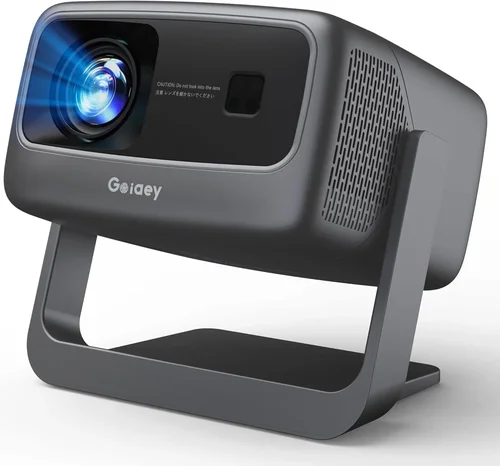
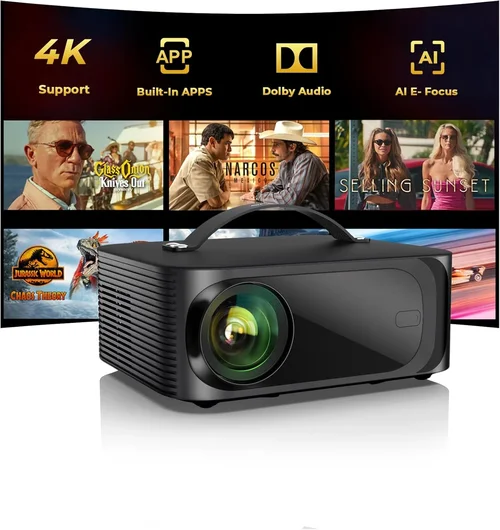
Finding the perfect outdoor projector under $500 can feel like hunting for a needle in a haystack. The market is flooded with options that promise big‑screen magic, yet many fall short when it comes to brightness, durability, or ease of use. This guide cuts through the noise, giving you a clear roadmap so you can enjoy movie nights, sports events, and gaming sessions under the stars without breaking the bank.
In the next few pages you’ll learn which specifications truly matter for outdoor use, how to match a projector to your specific setup, and which models consistently deliver the best performance for the price. By the end, you’ll be equipped to pick a projector that fits your budget, space, and lifestyle—so you can start streaming your favorite content on a wall‑sized canvas as soon as the sun sets.
The outdoor projector market has evolved dramatically over the past five years. Advances in LED and laser light sources, improved throw ratios, and smarter built‑in speakers mean that even entry‑level units can rival older premium models. However, the $500 ceiling still imposes limits, especially around lumen output and native resolution. Understanding where compromises are acceptable—and where they’re not—will help you avoid costly regrets.

What to Look for When Buying Buying Guide
1. Brightness (Lumens)
Brightness is the single most critical factor for outdoor viewing. Unlike a dark home theater, an outdoor setting usually has some ambient light—from street lamps, moonlight, or a nearby fire pit. Measured in ANSI lumens, a projector needs at least 2,500‑3,000 lumens to produce a clear image in semi‑dark conditions. If you plan to watch after twilight but before full darkness, aim for the higher end of that range. Remember that LED and laser projectors often list “equivalent lumens,” which can be misleading; always check the ANSI rating.
2. Resolution
Resolution determines how sharp your image will appear, especially on larger screens. For a budget projector, 1080p (Full HD) is the sweet spot—offering crisp detail without demanding premium hardware. Some models only provide 720p, which can look pixelated when the image is expanded beyond 100 inches. If you intend to stream 4K content, a 1080p projector will still downscale the video, but you’ll still benefit from a cleaner picture than a native 720p device.
3. Contrast Ratio
The contrast ratio measures the difference between the darkest blacks and the brightest whites. A higher ratio (e.g., 10,000:1) means deeper blacks and more vibrant colors—essential for outdoor movies where ambient light can wash out the image. While manufacturers often inflate these numbers, a contrast ratio above 5,000:1 usually indicates decent performance for a sub‑$500 unit.
4. Throw Distance & Zoom
Throw distance tells you how far the projector must sit from the screen to achieve a certain image size. A short‑throw projector can create a 100‑inch image from just a few feet away, which is handy for small patios or balconies. Look for a flexible zoom range (e.g., 1.2‑2.0x) so you can adjust the image size without moving the unit.
5. Build Quality & Weather Resistance
Outdoor environments expose gear to dust, humidity, and temperature fluctuations. While most budget projectors aren’t fully waterproof, a sturdy aluminum chassis, sealed ports, and a fan‑controlled cooling system are good signs. Consider buying a protective cover or a portable enclosure if you’ll leave the projector outdoors for extended periods.
6. Connectivity Options
Versatile inputs make it easier to stream from multiple sources. Look for HDMI (preferably 2.0), USB‑C, and wireless options like Wi‑Fi or Bluetooth. Some models also support screen mirroring via Apple AirPlay or Google Cast, which can be a game‑changer for spontaneous movie nights.
7. Built‑in Audio
While you can always pair an external speaker, a decent built‑in speaker (at least 5 W) saves you from hauling additional gear. For casual viewing, a clear, moderately loud speaker is sufficient; for larger gatherings, plan on a Bluetooth or aux‑compatible sound system.
8. Brand Reputation & Support
Established brands often provide better firmware updates, more reliable customer service, and longer warranty periods. Even within the $500 bracket, companies like Epson, BenQ, ViewSonic, and Anker have proven track records. Check community forums and review sites to gauge post‑purchase support.
Different Types of Buying Guide

Common Buying Mistakes to Avoid
❌ Mistake: Ignoring Ambient Light Conditions
Why it’s bad: Choosing a projector with low lumens will result in a washed‑out picture when there’s any stray light.
What to do instead: Measure the typical lighting of your viewing area and aim for at least 2,500 ANSI lumens for dusk‑time use, or 3,500+ if you’ll be under street lamps.
❌ Mistake: Over‑focusing on Native Resolution Alone
Why it’s bad: A high‑resolution projector with insufficient brightness will still look dull.
What to do instead: Balance resolution with lumens and contrast. For most outdoor scenarios, 1080p + 2,500 lumens is the optimal combo.
❌ Mistake: Forgetting Throw Distance
Why it’s bad: A long‑throw projector may need to be placed too far away, limiting placement options.
What to do instead: Check the throw ratio and calculate the required distance for your desired screen size before purchasing.
❌ Mistake: Skipping Weather Protection
Why it’s bad: Exposure to moisture can damage internal components, void warranties, and shorten lifespan.
What to do instead: Invest in a waterproof cover or choose a model with an IP rating suitable for occasional outdoor use.
❌ Mistake: Assuming All HDMI Ports Are Equal
Why it’s bad: Some budget projectors only support HDMI 1.4, limiting 4K or high‑frame‑rate content.
What to do instead: Verify the HDMI version; HDMI 2.0 or higher is preferred for future‑proofing.
Budget Guidelines: How Much Should You Spend?
While the focus of this guide is sub‑$500 units, it helps to understand what each price tier typically offers.
- Entry‑Level ($300‑$350): Expect 2,000‑2,500 lumens, 720p resolution, basic speakers, and limited connectivity. Ideal for occasional use on a small screen.
- Mid‑Range ($350‑$450): Usually 2,500‑3,200 lumens, full 1080p, better contrast, and added features like Bluetooth or built‑in Wi‑Fi.
- Premium ($450‑$500): Pushes 3,200‑3,800 lumens, higher contrast ratios, short‑throw options, and hybrid LED‑laser light sources for longer life.
- Luxury ($500+): Exceeds 4,000 lumens, 4K UHD, advanced color processing, and often includes a warranty extension.
Expert Tips for Getting the Best Deal
- Timing: Late summer sales often feature outdoor gear discounts as retailers make room for fall inventory.
- Where to Buy: Compare prices on Amazon, Best Buy, and the manufacturer’s website. Some brands offer exclusive bundles (e.g., screen + projector) that save $50‑$100.
- Spotting Deals: Look for “refurbished” or “open‑box” units with full warranties; they’re often indistinguishable from new.
- Warranty Considerations: A minimum 2‑year warranty is advisable. Extended plans are worth it only if you plan heavy outdoor use.
- Return Policies: Ensure a 30‑day return window so you can test the projector in your actual environment.
- Testing Before Buying: If possible, view a demo in a dimly lit outdoor area. Pay attention to color accuracy and hotspot uniformity.
- Accessories: A good portable screen (120‑150 inches) and a weather‑proof cover can dramatically improve the experience.

Frequently Asked Questions
Q: Can I use a projector designed for indoor use outdoors?
A: Yes, but you must control ambient light and protect the unit from moisture. An indoor projector with at least 2,500 lumens can work for early‑evening screenings.
Q: Do I need a separate screen?
A: While a plain white wall works, a dedicated projector screen (gain 1.0‑1.2) improves brightness and contrast, especially on uneven surfaces.
Q: How far should the projector be from the screen?
A: It depends on the throw ratio. For a 2.0 throw ratio, a 100‑inch image requires roughly 8‑9 feet of distance. Short‑throw models can achieve the same size from 4‑5 feet.
Q: Will a wireless connection cause lag?
A: Modern Wi‑Fi or Bluetooth streaming introduces minimal latency (<30 ms), which is fine for movies but may affect fast‑paced gaming.
Q: Are LED projectors truly longer lasting?
A: Yes. LED light sources typically last 20,000‑30,000 hours, far surpassing traditional lamps, making them ideal for frequent outdoor use.
Q: Is it safe to leave the projector running overnight?
A: Only if the unit is rated for continuous operation and kept in a ventilated, weather‑protected enclosure. Otherwise, shut it down after each session.
Q: How loud are the fans on budget projectors?
A: Most sub‑$500 models have fan noise between 30‑35 dB in normal mode, which is audible but not distracting in an outdoor setting.
Our Final Recommendations
- Best for Budget‑Conscious Buyers: Anker Nebula Capsule II – 720p, 2,200 lumens, compact, built‑in Android TV. Ideal for small patios and camping.
- Best Overall Value: ViewSonic M2 – 1080p, 1,200 lumens (laser‑LED), 10,000:1 contrast, Bluetooth audio, and a sleek design. Great balance of brightness and portability.
- Best Premium Option: Epson Home Cinema 1060 – 3,200 lumens, 1080p, 15,000:1 contrast, interchangeable lenses. Slightly above $500 on sale, but offers top‑tier image quality.
- Best for Beginners: BenQ TH585 – 3,500 lumens, 1080p, low input lag, and easy setup wizard. Perfect for first‑time outdoor cinema fans.
- Best for Advanced Users: Optoma UHD38 – 4,000 lumens, 4K UHD, HDR10, and 8 ms game mode. Slightly stretches the budget but delivers pro‑level performance.
Conclusion: Making the Right Choice
Choosing the best outdoor projector under $500 boils down to three core priorities: sufficient brightness, reliable resolution, and ruggedness suitable for the elements. By weighing these factors against your specific viewing environment—whether it’s a backyard garden, a rooftop terrace, or a campsite—you can pinpoint the model that delivers cinema‑quality entertainment without overspending.
Remember to factor in accessories like a proper screen and protective cover, and keep an eye on seasonal sales for the deepest discounts. With the knowledge from this guide, you’re now ready to make an informed purchase that will turn any night into a memorable screen‑sharing experience.