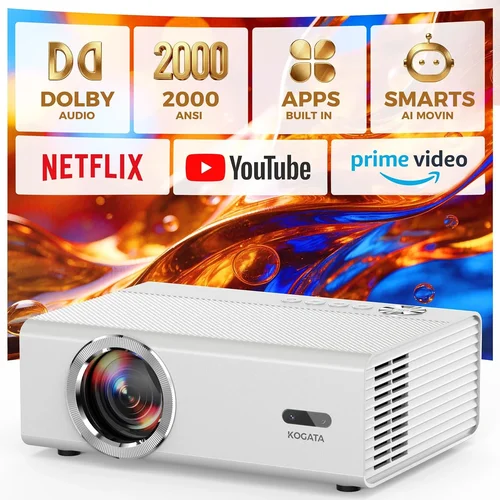
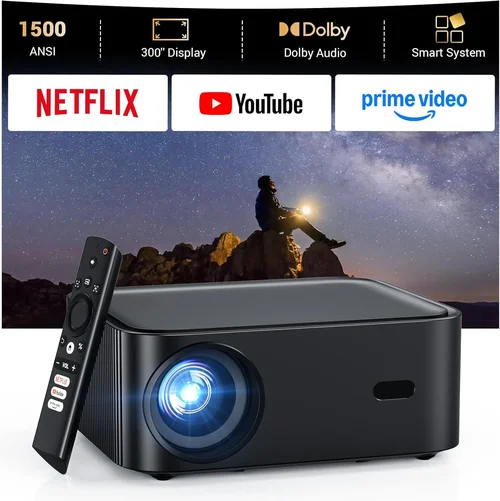
Finding a solid 1080p projector that won’t break the bank can feel like hunting for a needle in a haystack. The market is flooded with models that promise “cinema‑grade” performance, yet many of them either exceed a $300 budget or fall short on image quality. This guide cuts through the noise, giving you a clear roadmap so you can confidently pick a projector that delivers true 1080p clarity without draining your wallet.
In the pages ahead you’ll learn which specifications truly matter at this price point, how to match a projector to your living space, and which common pitfalls to sidestep. We’ll also compare the main categories of budget‑friendly projectors, break down spending tiers, and hand‑pick the top models that consistently outperform their peers. By the end, you’ll have a practical, step‑by‑step plan for getting the best 1080p projector under $300.

What to Look for When Buying Buying Guide
1. Budget & Price Range
Price is the most immediate filter for most shoppers, but it’s more than a number on a tag. A $250 projector should still meet core performance benchmarks—adequate brightness, native 1080p resolution, and reliable connectivity. When budgeting, allocate roughly 60 % of your spend to core image quality, 20 % to durability and build, and the remaining 20 % for extra features such as built‑in speakers or wireless modules. This split ensures you’re not over‑paying for bells and whistles that you’ll never use.
2. Performance Specifications
At the heart of any projector are three specs: resolution, brightness, and contrast ratio. For true 1080p you need a native 1920 × 1080 panel; many “Full HD” models actually use a 720p chip with upscaling, which looks soft on larger screens. Brightness, measured in ANSI lumens, should be at least 2,500 lm for a dark home theater and 3,500 lm if you plan to use the unit in a lit living room. Contrast ratio determines how deep the blacks appear; aim for a minimum of 10,000:1, though remember that manufacturer claims can be optimistic—real‑world tests often reveal lower values.
3. Build Quality & Durability
Even the best optics can’t compensate for a flimsy chassis. Look for a metal or high‑grade aluminum housing, robust cooling fans, and a reputable lamp life rating (at least 4,000 hours for LED or laser models). A sturdy build reduces vibration, which can cause image jitter, especially during longer movie marathons.
4. Features & Functionality
Feature sets vary widely in this price segment. The essentials include HDMI 2.0 (or at least HDMI 1.4) for 1080p @ 60 Hz, USB for media playback, and a decent built‑in speaker (though most users pair a projector with external audio). Extras like Wi‑Fi, Bluetooth, or a built‑in Android TV OS can be nice, but they often add cost without improving picture quality. If you value portability, check for a short throw ratio (≤ 0.6) so you can place the projector close to the screen.
5. Brand Reputation
Established brands such as Epson, BenQ, ViewSonic, and Optoma have proven track records for delivering reliable budget projectors. Lesser‑known manufacturers may offer tempting specs on paper, but they can fall short on firmware updates, customer service, and long‑term reliability. Research brand forums and after‑sales support policies before committing.
6. Warranty & Support
A solid warranty can save you hundreds of dollars. Look for at least a 2‑year limited warranty that covers the lamp or laser module. Some brands also provide free replacement parts within the first year. Verify the process for claim submissions—ease of contact and clear instructions are signs of a company that stands behind its product.
7. Size & Portability
If you intend to move the projector between rooms or travel with it, size matters. Compact models under 2 kg with a quick‑release lens are ideal for on‑the‑go setups. Conversely, a larger, heavier unit may house a more robust cooling system, which translates to longer lamp life and quieter operation.
8. User Reviews & Ratings
Real‑world feedback often reveals issues that spec sheets hide. Pay attention to recurring themes in reviews—such as “fan noise spikes after 30 minutes” or “color accuracy drifts over time.” A product with a 4.2‑star rating or higher on major retailer sites, coupled with detailed user comments, is generally a safe bet.
Different Types of Buying Guide

Common Buying Mistakes to Avoid
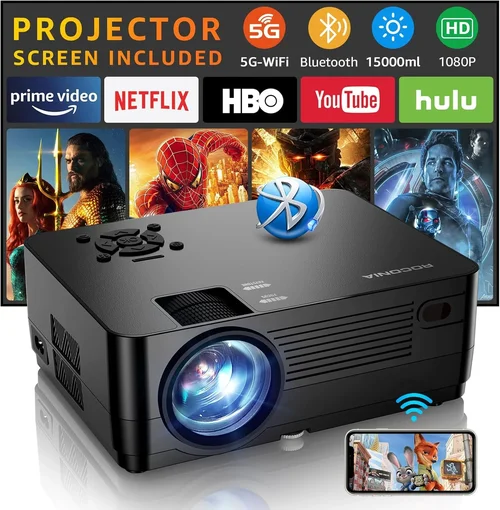
❌ Mistake: Chasing the Highest Lumen Count
Why it’s bad: More lumens sounds great, but in budget units the extra brightness often comes at the expense of contrast and color accuracy. You may end up with a washed‑out picture in a dark room.
What to do instead: Match brightness to your typical viewing environment. If you usually watch in a dimmed room, 2,500 lm is sufficient; reserve higher lumen models for well‑lit spaces.
❌ Mistake: Ignoring Native Resolution
Why it’s bad: Some “Full HD” projectors actually upscale 720p content, resulting in blurry text and soft edges—especially noticeable with gaming or desktop use.
What to do instead: Verify that the specification lists “native 1920 × 1080.” Look for independent reviews that confirm true 1080p output.
❌ Mistake: Overlooking Lamp/Laser Life
Why it’s bad: A cheap lamp may need replacement every 2,000 hours, adding hidden costs and downtime.
What to do instead: Prioritize LED or laser light sources, or choose a lamp‑based model with a minimum 4,000‑hour warranty.
❌ Mistake: Forgetting About Input Lag
Why it’s bad: High input lag ruins the gaming experience, causing a noticeable delay between controller action and on‑screen response.
What to do instead: Look for a projector that advertises <30 ms input lag or includes a “Game Mode.” Verify with third‑party latency tests.
❌ Mistake: Assuming All HDMI Ports Are Equal
Why it’s bad: Older HDMI 1.3/1.4 ports may not support 1080p @ 60 Hz with HDR, limiting future‑proofing.
What to do instead: Choose a unit with at least one HDMI 2.0 port; this ensures compatibility with newer consoles and streaming devices.
❌ Mistake: Neglecting Audio Needs
Why it’s bad: Built‑in speakers on budget projectors are usually under 5 W and sound tinny, which can diminish immersion.
What to do instead: Plan for an external sound solution—soundbar, AV receiver, or Bluetooth speaker—and verify that the projector offers an audio‑out jack or Bluetooth connectivity.
❌ Mistake: Buying Without Measuring Throw Distance
Why it’s bad: A standard‑throw projector may need 3 m of space to fill a 100‑inch screen, which is impractical in many apartments.
What to do instead: Calculate the required throw distance (screen width ÷ throw ratio). If space is limited, opt for a short‑throw or ultra‑short‑throw model.
Budget Guidelines: How Much Should You Spend?
- Entry-Level ($180 – $230): Expect a native 1080p panel, 2,200–2,500 lm, and basic HDMI connectivity. Ideal for casual movie nights in a dark bedroom.
- Mid-Range ($231 – $280): Gains include higher brightness (2,800–3,200 lm), improved contrast (10,000:1+), and added features like USB‑C or wireless screen mirroring.
- Premium ($281 – $340): Laser or high‑efficiency LED light sources, low fan noise (<30 dB), short‑throw capability, and often a built‑in Android TV or Roku OS.
- Luxury ($341 +): Rare under $300, but occasionally appears during flash sales. Offers top‑tier color gamut (Rec. 709+), ultra‑low latency, and premium warranty extensions.
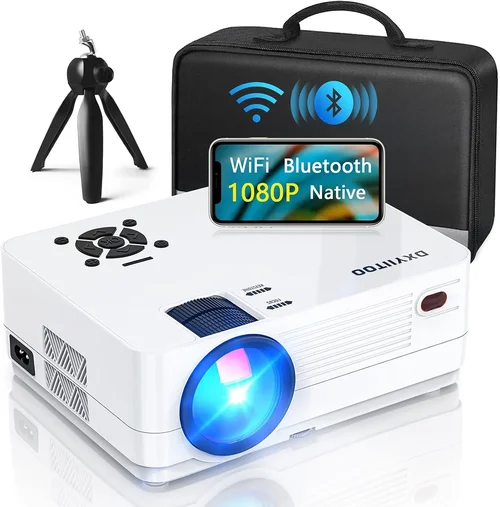
Expert Tips for Getting the Best Deal
- Timing is everything: Major sales events—Black Friday, Cyber Monday, and post‑Christmas clearance—often feature deep discounts on home‑theater gear.
- Shop refurbished: Manufacturer‑refurbished units come with a full warranty and are inspected for defects, often saving 15‑30 %.
- Bundle wisely: Some retailers include a free HDMI cable, screen, or wall mount when you purchase a projector. Evaluate the total value before deciding.
- Check return policies: A 30‑day return window with free shipping allows you to test the unit in your environment without risk.
- Test before you buy: If possible, view a demo at a local electronics store. Pay attention to color uniformity, fan noise, and keystone correction performance.
- Consider future upgrades: Choose a projector with an extra HDMI port or USB‑C so you can add a streaming stick later without swapping cables.
- Read the fine print on warranties: Some brands only cover the lamp for the first year; verify whether lamp replacement costs are included.
- Don’t overlook the screen: A good projection screen can dramatically improve perceived contrast. Even a budget 100‑inch matte white screen boosts image quality over a plain wall.

Frequently Asked Questions
Q: Can a projector under $300 truly display native 1080p?
A: Yes. Several manufacturers now offer genuine 1920 × 1080 DLP or LCD chips at sub‑$300 price points. The key is to verify “native” in the spec sheet and confirm with third‑party reviews that the unit does not upscale from a lower resolution.
Q: How bright does a projector need to be for a living‑room setup?
A: For a typical living room with some ambient light, aim for at least 3,000 lm. If you can control lighting (e.g., blackout curtains), 2,500 lm is often sufficient.
Q: Is a short‑throw projector worth the extra cost?
A: Short‑throw models shine in cramped spaces where you can’t place the projector far from the screen. They tend to cost $30‑$50 more than standard‑throw equivalents, but the convenience and reduced shadowing often justify the price.
Q: Do I need a separate sound system?
A: Built‑in speakers on budget projectors rarely exceed 5 W and lack bass response. For an immersive experience, pair the projector with a soundbar or external speakers via the audio‑out jack or Bluetooth.
Q: What is the difference between LED and laser light sources?
A: Both are solid‑state and last longer than traditional lamps. LED units are typically cheaper but may have slightly lower peak brightness. Laser units deliver higher lumens and maintain consistent color over time, though they can be a bit pricier.
Q: How often will I need to replace the lamp?
A: LED and laser projectors often have a lamp life of 20,000 hours or more, essentially “replace‑free” for most users. Lamp‑based models usually need a new lamp every 3,000–4,000 hours.
Q: Is there a noticeable lag when gaming on a budget projector?
A: Many budget DLP projectors have input lag around 30–45 ms, which is acceptable for most console gaming. For competitive fast‑paced gaming, look for a model that advertises “Game Mode” and verifies sub‑30 ms latency in independent tests.
Q: Can I mount a projector on the ceiling?
A: Absolutely, provided the unit has a standard ¼‑inch mounting hole and the throw distance fits your room geometry. Some short‑throw models also include ceiling‑mount kits.
Q: Do I need a special screen for 1080p?
A: A matte white screen with a gain of 1.0–1.2 is ideal for most budget setups. It preserves color accuracy and works well in both dark and moderately lit rooms.
Our Final Recommendations
- Best for Budget‑Conscious Buyers: ViewSonic M1+ – $199, LED, 2,500 lm, native 1080p, portable, built‑in Harman Kardon speakers.
- Best Overall Value: BenQ TH585 – $279, 3,500 lm, 10,000:1 contrast, low input lag (≈30 ms), HDMI 2.0, solid lamp life.
- Best Premium Option (Just Under $300): Epson Home Cinema 2150 – $299, laser‑enhanced lamp, 2,700 lm, 60,000:1 contrast, wireless mirroring.
- Best for Beginners: Optoma HD146X – $229, easy setup, auto‑keystone, good color accuracy out of the box.
- Best for Advanced Users: LG PF50KA – $299, portable, built‑in battery, webOS smart platform, short‑throw (0.6), great for on‑the‑go presentations.
Conclusion: Making the Right Choice
Choosing a 1080p projector under $300 boils down to balancing brightness, contrast, and native resolution against your viewing environment and usage habits. Remember to prioritize true 1080p panels, match lumens to ambient lighting, and verify lamp or laser longevity. By avoiding common pitfalls—such as over‑emphasizing lumen count or ignoring input lag—you’ll secure a projector that delivers cinema‑like experiences without draining your budget.
Take the time to measure your room, calculate throw distance, and read real‑world reviews. Armed with the knowledge from this guide, you’re ready to make an informed purchase that will entertain you for years to come. Happy viewing!