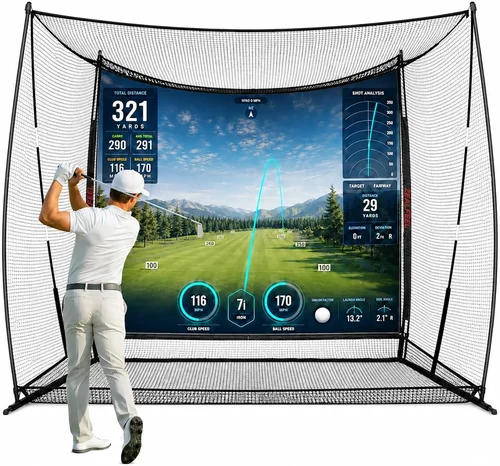
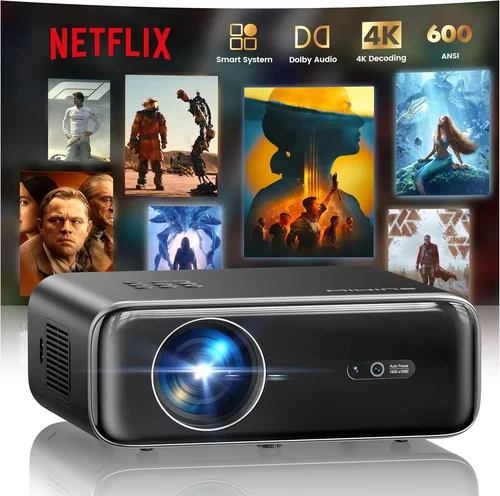
When you step onto the fairway of a home golf simulator, the projector is the star that turns a plain wall into a lush, rolling green. Yet many golfers assume that a high‑end, cinema‑grade projector is required to get a realistic experience. In reality, you can build a solid simulator for under $500 without sacrificing image clarity, brightness, or durability. This guide walks you through everything you need to know to pick the best golf simulator projector under $500, so you can swing confidently knowing your investment will deliver consistent performance.
We’ll cover the most important specs, compare the different projector families, highlight common pitfalls, and give you a step‑by‑step budgeting plan. By the end, you’ll know exactly which models give the best value, how to match a projector to your space, and what tricks seasoned sim‑players use to stretch every dollar.

What to Look for When Buying Buying Guide
1. Brightness (Lumens)
Brightness is measured in ANSI lumens. For a golf simulator you’re typically projecting onto a screen or a matte white wall in a dimly lit room. A projector that delivers 2,500‑3,000 lumens will produce a crisp, vivid image even when there’s some ambient light. Anything below 2,000 lumens can look washed out, especially on larger screens, which makes it harder to track ball flight accurately.
2. Resolution
Resolution determines how sharp the virtual course looks. Full HD (1920 × 1080) is the sweet spot for sub‑$500 units. It offers enough pixel density for detailed fairways and greens while keeping the price manageable. Some newer budget models bump up to 4K UHD, but they often sacrifice brightness or require a higher‑end lamp, pushing the cost past $500.
3. Throw Ratio
The throw ratio tells you how far the projector must be from the screen for a given image width. A short‑throw projector (0.5‑0.9:1) can sit just a foot or two away from the wall, which is ideal for tight basements or garages. Long‑throw models need more distance, which may force you to rearrange your room or invest in a ceiling mount.
4. Lamp Life & Maintenance
Projector lamps degrade over time, measured in hours. Look for a lamp life of at least 6,000‑8,000 hours for LED or laser light sources; these last years longer and stay brighter. Traditional UHP lamps can be cheaper upfront but often need replacement after 2,000‑3,000 hours, adding hidden costs.
5. Connectivity Options
Most golf simulation software runs on a PC or Mac, so HDMI is a must. Some models also include USB‑C, VGA, or wireless casting. If you plan to stream lessons or use a tablet as a controller, having multiple inputs can keep your setup tidy.
6. Build Quality & Portability
Even if you’re setting up a permanent home gym, a sturdy chassis protects the optics from dust and accidental bumps. Look for metal housings, sealed vents, and a stable mounting bracket. Portability matters if you intend to move the simulator between rooms or take it to a friend’s house for a practice session.
7. Brand Reputation & Support
Established brands like BenQ, Epson, Optoma, and ViewSonic have extensive warranty networks and firmware updates. A reliable after‑sales support team can save you hours of troubleshooting when you encounter issues like color drift or fan noise.
8. Price vs. Feature Balance
Under $500, you’ll inevitably make trade‑offs. The key is to prioritize what matters most for your style of play. If you focus on swing analysis, image sharpness and low latency are crucial. If you love playing virtual rounds, brightness and screen size take precedence.
Different Types of Buying Guide

Common Buying Mistakes to Avoid
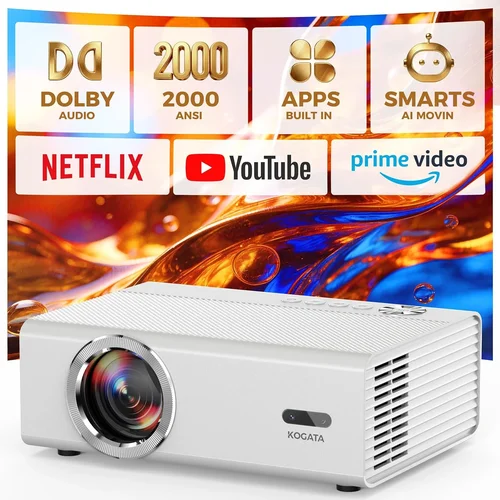
❌ Mistake: Ignoring Ambient Light
Why it’s bad: A projector that looks great in a dark theater can become dull in a garage with a single overhead bulb.
What to do instead: Measure the room’s light level and aim for at least 2,500 lumens. Use blackout curtains or a dedicated screen with high gain to improve contrast.
❌ Mistake: Choosing the Cheapest Resolution
Why it’s bad: Low‑resolution projectors (720p) stretch pixels across the screen, making the virtual course look blocky and impairing swing‑analysis software that relies on precise visual cues.
What to do instead: Stick to Full HD (1080p) as a baseline. If you find a 720p unit well below $200, consider allocating extra budget to a better lens or higher brightness instead.
❌ Mistake: Overlooking Throw Ratio
Why it’s bad: Buying a long‑throw projector for a cramped basement forces you to mount it on the ceiling far away, which can cause keystone distortion and a larger footprint.
What to do instead: Measure the distance from the projector location to the screen. Select a throw ratio that fits within that space, or opt for a short‑throw model.
❌ Mistake: Forgetting Lamp Replacement Costs
Why it’s bad: Some budget projectors use cheap lamps that need replacement after 2,000 hours, adding $80‑$120 to your total cost.
What to do instead: Prioritize LED or laser light sources, which have 20,000‑30,000 hour lifespans and lower long‑term expense.
❌ Mistake: Not Checking Compatibility With Simulation Software
Why it’s bad: A projector may have the right specs but lack the necessary HDMI 2.0 bandwidth for high‑frame‑rate swing‑analysis apps.
What to do instead: Verify the projector supports at least 60 Hz refresh at 1080p and has low input lag (under 30 ms).
❌ Mistake: Skipping Warranty Review
Why it’s bad: Budget units sometimes come with a 90‑day limited warranty, leaving you exposed if a fan fails after a month of heavy use.
What to do instead: Choose a model with at least a 1‑year warranty and consider purchasing an extended service plan if available.
Budget Guidelines: How Much Should You Spend?
- Entry‑Level ($300‑$350): Expect 2,000‑2,500 lumens, 1080p, and a standard throw ratio. Ideal for hobbyists with a dedicated dark room.
- Mid‑Range ($351‑$430): You’ll find short‑throw optics, 2,800‑3,200 lumens, and LED light sources. This tier balances brightness and lamp life, making it the most popular choice for serious simulators.
- Premium ($431‑$500): Laser or high‑performance DLP units with up to 3,500 lumens, enhanced color accuracy, and built‑in keystone correction. Perfect for players who also use the projector for movies or presentations.
- Luxury ($500+): While beyond the scope of this guide, luxury models deliver 4K resolution, HDR, and ultra‑short‑throw lenses, often exceeding $800.
Expert Tips for Getting the Best Deal
- Timing is everything: Black Friday, Cyber Monday, and the post‑Christmas window historically bring the deepest discounts on projectors.
- Buy refurbished: Certified refurbished units from the manufacturer often come with a full warranty and are up to 30% cheaper.
- Check bundle offers: Some retailers bundle a short‑throw lens or a 100‑inch screen with the projector, saving you the cost of separate accessories.
- Compare total cost of ownership: Factor in lamp replacement, mounting hardware, and screen material when evaluating price.
- Test before you commit: If possible, visit a local electronics store and project a high‑contrast image onto a white wall to gauge brightness and color fidelity.
- Read the fine print on warranty: Verify if the warranty covers the lamp, fan, and optical engine, and whether shipping for repairs is included.
- Leverage price‑match policies: Major online retailers often match a lower price found elsewhere, even after purchase.

Frequently Asked Questions
Q: Can I use a regular home theater projector for golf simulation?
A: Yes, but you must meet brightness (≥2,500 lumens) and throw‑ratio requirements. Home theater models often need a dark room, which many basements lack, so a short‑throw projector is usually a better fit.
Q: Do I need a special screen?
A: A matte white screen with a gain of 1.0‑1.2 works well. Some users opt for a high‑gain (1.5) screen to boost brightness, but it can cause hotspotting if the projector isn’t perfectly centered.
Q: How far should the projector be from the screen?
A: It depends on the throw ratio. For a 0.8:1 short‑throw projector, a 100‑inch diagonal screen requires roughly 6‑8 feet of distance. Always use the manufacturer’s calculator.
Q: Will a projector affect the accuracy of swing‑analysis software?
A: Only if the projector introduces lag or distortion. Choose a model with low input lag (<30 ms) and enable keystone correction via the projector’s menu rather than the software.
Q: Is HDMI 2.0 necessary?
A: HDMI 2.0 ensures 1080p at 60 Hz with full color depth. For most simulators, HDMI 1.4 works, but HDMI 2.0 provides future‑proofing for higher frame rates.
Q: Can I mount the projector on the ceiling?
A: Absolutely. Ceiling mounts are common for long‑throw setups. For short‑throw models, a tabletop or wall‑mount near the screen is usually more practical.
Q: How often should I replace the lamp?
A: LED and laser sources typically last the life of the projector (20,000‑30,000 hours). Traditional lamps should be replaced after 2,000‑3,000 hours, or when brightness drops by 20%.
Our Final Recommendations
- Best for Budget‑Conscious Buyers: Optoma GT1080e – 3,200 lumens, 0.5:1 short‑throw, 1080p, under $350. Offers excellent brightness in tight spaces and a solid warranty.
- Best Overall Value: BenQ TH671ST – 3,000 lumens, 0.69:1 throw, low input lag, and a durable metal chassis. Priced around $420, it balances performance and longevity.
- Best Premium Option (under $500): Epson Home Cinema 2150 – 2,500 lumens, 1080p, laser light source, and built‑in wireless. Slightly higher price (~$490) but offers a lamp‑free experience.
- Best for Beginners: ViewSonic PA503W – 3,600 lumens, 720p (upscales to 1080p), simple setup, and a very forgiving warranty. Ideal for first‑time users learning the ropes.
- Best for Advanced Users: LG PF50KA – Portable laser projector, 2,600 lumens, 1080p, built‑in battery, and smart TV features. Perfect for players who want to move the simulator between locations.
Conclusion: Making the Right Choice
Choosing a golf simulator projector under $500 is less about finding the cheapest unit and more about matching the projector’s strengths to your space, budget, and playing style. Remember to prioritize brightness, resolution, and throw ratio, while also accounting for lamp life and warranty coverage. By avoiding common mistakes and leveraging seasonal deals, you can assemble a high‑quality simulation setup that feels like a professional practice range without breaking the bank.
Now that you’re armed with the knowledge, take measurements of your room, list your must‑have features, and compare the models highlighted above. Your perfect swing awaits—project it onto a screen that’s as serious about golf as you are.