If you’ve ever dreamed of turning your living room into a mini‑cinema without splurging on a massive TV, a home‑theatre projector under $500 is the sweet spot. The market in 2026 is flooded with options that promise cinema‑grade brightness, vivid colors, and flexible installation, yet many shoppers feel overwhelmed by the technical jargon and endless model lists. This guide cuts through the noise, giving you a clear roadmap to choose a projector that fits your budget, space, and viewing habits.
By the end of this article you will understand the most important specifications, know which projector type aligns with your setup, avoid common buying pitfalls, and walk away with a shortlist of top‑rated models for every budget tier. Whether you’re a binge‑watching couch‑potato or a serious home‑theatre enthusiast, the information here will empower you to make a confident purchase.

What to Look for When Buying Buying Guide
1. Budget & Price Range
Sticking to a $500 ceiling forces you to prioritize features that matter most. In this segment you’ll typically find projectors ranging from $250 to $499. The lower end often sacrifices brightness or lens quality, while the higher end offers better contrast ratios and smarter connectivity. Decide early how much you’re willing to stretch; a modest increase to $550 can sometimes unlock a model with a significantly higher lumen rating.
2. Performance Specifications
Key specs include:
- Brightness (lumens): For a dimly lit living room, 2,500–3,000 ANSI lumens is ideal. Below 2,000 lumens may look washed out in ambient light.
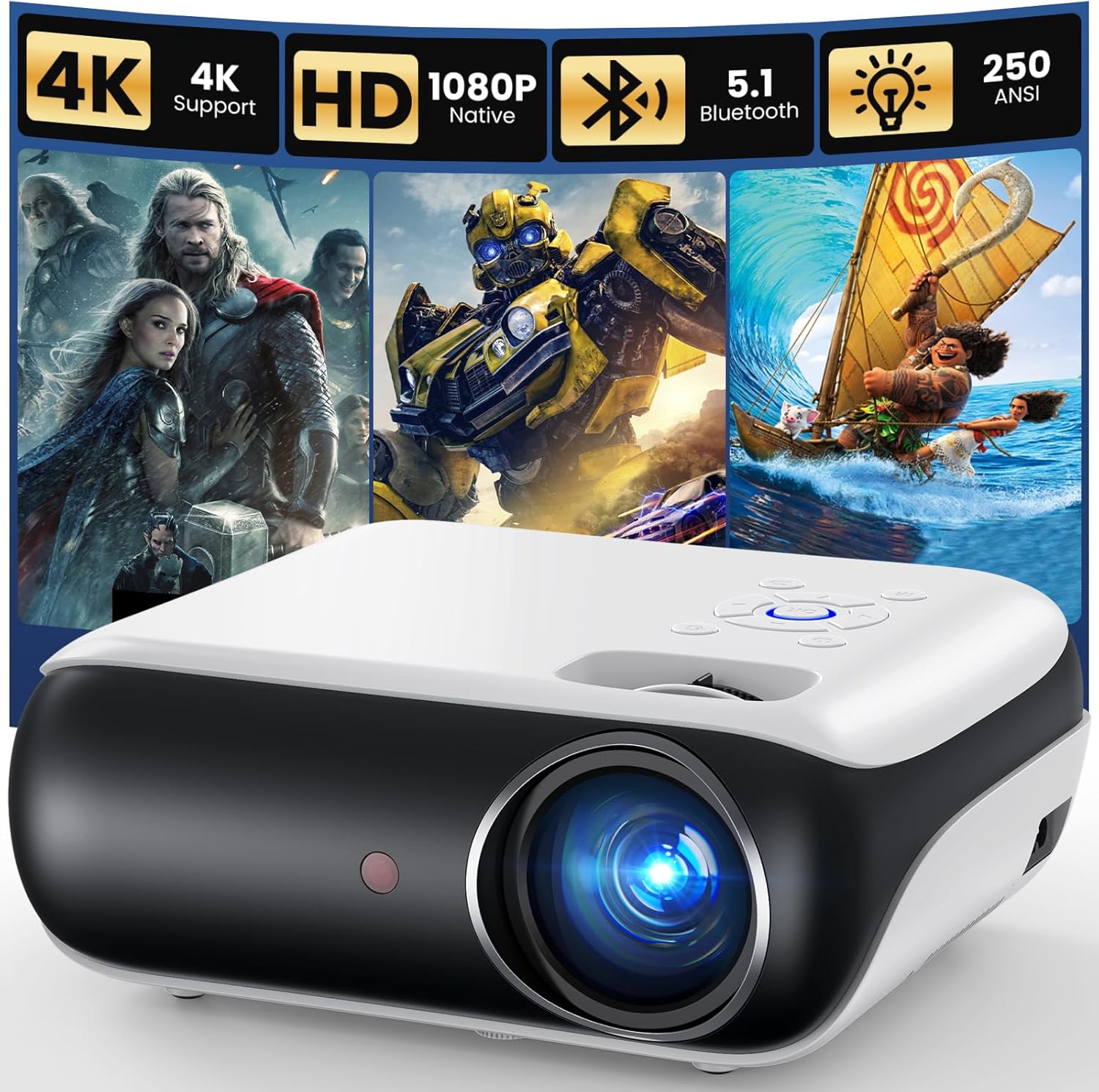
- Resolution: Native 1080p (Full HD) is the baseline for quality images. Some sub‑$500 models only offer 720p, which looks softer on larger screens.
- Contrast Ratio: A higher contrast ratio (e.g., 10,000:1) delivers deeper blacks and more punchy colors.
- Throw Distance & Throw Ratio: Determines how far the projector must be from the screen to achieve a certain image size. Short‑throw models are perfect for small rooms.
3. Build Quality & Durability
Projectors that stay cool run longer. Look for models with metal housings, efficient cooling fans, and a reputable lamp life (or laser light source) of at least 5,000 hours. A sturdy build also reduces wobble when you adjust the lens or mount the unit.
4. Features & Functionality
Modern projectors come packed with extras. Consider the following:
- Built‑in speakers: Useful for casual viewing, but most audiophiles will add external soundbars.
- Wireless connectivity: Wi‑Fi or Bluetooth for streaming directly from phones, tablets, or streaming sticks.
- HDMI & USB ports: At least two HDMI inputs are ideal for connecting a console and a streaming device simultaneously.
- Keystone correction & lens shift: Enables flexible placement without image distortion.
5. Brand Reputation
Companies like Epson, BenQ, ViewSonic, and Optoma have built strong followings for delivering reliable budget projectors. Research brand forums and after‑sales support history; a good warranty can save you money if a component fails early.
6. Warranty & Support
Most manufacturers offer a 1‑year limited warranty, but some retailers extend this to 2 or 3 years. Look for easy‑claim processes, local service centers, and responsive online chat support. A solid warranty often reflects confidence in product durability.
7. Size & Portability
If you plan to move the projector between rooms or take it to a friend’s house, weight and footprint matter. Portable pico‑projectors can fit in a backpack, but they usually lack the brightness of a larger unit. Balance portability with performance based on your primary use case.
8. User Reviews & Ratings
Real‑world feedback uncovers issues that spec sheets hide. Scan Amazon, Best Buy, and specialized AV forums for recurring themes—such as overheating, fan noise, or lamp degradation. A model with 4‑star average and detailed reviews is often a safe bet.
Different Types of Buying Guide

Common Buying Mistakes to Avoid
❌ Mistake: Ignoring Ambient Light
Why it’s bad: A projector rated at 2,800 lumens sounds bright, but if your room has large windows and no blackout curtains, the image will look dull.
What to do instead: Measure typical lighting conditions and aim for at least 3,000 lumens for rooms with moderate ambient light, or invest in simple light‑blocking solutions.
❌ Mistake: Over‑focusing on Resolution Alone
Why it’s bad: A 1080p projector with 1,500 lumens may look worse than a 720p model with 3,000 lumens in a bright room.
What to do instead: Balance resolution with brightness and contrast. For casual TV watching, a bright 720p can be more satisfying than a dim 1080p.
❌ Mistake: Forgetting Lamp Life Costs
Why it’s bad: Replacing a lamp can cost $100‑$150, which adds up over the projector’s lifespan.
What to do instead: Look for LED or laser light sources that promise 20,000+ hours of use, effectively eliminating recurring lamp expenses.
❌ Mistake: Skipping the Throw Ratio Check
Why it’s bad: Without calculating throw distance, you may end up with a tiny image or need to mount the projector on the ceiling.
What to do instead: Use the formula: Image Width ÷ Throw Ratio = Distance. Ensure your room can accommodate the required distance.
❌ Mistake: Assuming All HDMI Ports Are Equal
Why it’s bad: Some budget projectors only support HDMI 1.2, limiting 4K pass‑through or HDR.
What to do instead: Verify that at least one HDMI port is 2.0 or higher to handle modern streaming devices.
❌ Mistake: Overlooking Fan Noise
Why it’s bad: A projector that hums at 40 dB can be distracting during quiet dialogue scenes.
What to do instead: Check decibel ratings in reviews; aim for ≤30 dB for a cinema‑like experience.
Budget Guidelines: How Much Should You Spend?
- Entry‑Level ($250‑$300): Expect 720p resolution, 2,000–2,500 lumens, basic HDMI, and a plastic housing. Ideal for occasional movie nights in a dark room.
- Mid‑Range ($301‑$400): Full HD 1080p, 2,800–3,200 lumens, better contrast, and often include wireless screen mirroring. Good balance for most households.
- Premium ($401‑$500): Enhanced color accuracy (Rec. 709), laser or high‑end LED light source, short‑throw options, and robust connectivity (multiple HDMI, USB‑C). Suits enthusiasts who want a lasting setup.
- Luxury ($500+): While above the guide’s price ceiling, some models dip just over $500 with 4K‑upscaling and HDR. Consider if you can stretch the budget for future‑proofing.
Expert Tips for Getting the Best Deal
- Timing: Late summer is when manufacturers release next‑gen models, pushing older inventory into deep discount.
- Where to buy: Compare prices on Amazon, B&H Photo, and Manufacturer’s own site. Some retailers offer bundled screen kits that save you $50‑$100.
- Spotting deals: Look for “open‑box” or “refurbished” units with a full warranty—these can be 15% cheaper.
- Warranty considerations: Register the product within 30 days to unlock extended coverage offered by many brands.
- Return policies: Choose sellers with a 30‑day return window; you’ll want to test the projector in your own lighting.
- Testing before buying: If possible, view a demo in a store, checking brightness, color saturation, and fan noise at your typical viewing distance.
- Cable quality: Invest in high‑speed HDMI 2.0 cables to avoid signal loss, especially for 1080p content at 60 Hz.
Frequently Asked Questions
Q: Can I use a projector under $500 for gaming?
A: Yes, but prioritize low input lag (under 30 ms) and a refresh rate of 60 Hz or higher. Models like the BenQ TH585 offer a “Game Mode” that reduces lag, making them suitable for console gaming.
Q: Do I need a separate screen?
A: A white wall works, but a dedicated projector screen improves gain and contrast. For budget setups, a 120‑inch pull‑down screen costs around $80 and delivers noticeably sharper images.
Q: How far away should the projector be?
A: Use the throw ratio. For a 108‑inch image on a standard‑throw projector with a 1.5:1 ratio, you’ll need roughly 10‑12 feet of distance.
Q: Will a projector work with my existing sound system?
A: Absolutely. Most projectors have an audio out (3.5 mm or optical) that you can connect to a receiver or soundbar. Some even support ARC over HDMI.
Q: Is lamp replacement expensive?
A: Traditional lamps can cost $100‑$150, but many 2026 budget models now use LED or laser sources that last 20,000+ hours, effectively eliminating replacement costs.
Q: How loud are projectors?
A: Fan noise varies from 25 dB (very quiet) to 45 dB (noticeable). Check user reviews for decibel levels; quieter units are better for dialogue‑heavy movies.
Q: Can I mount the projector on the ceiling?
A: Yes, most units come with a ¼‑inch mounting hole. Ensure the throw distance and lens shift accommodate ceiling placement without excessive keystone correction.
Q: Do I need a special screen for 1080p?
A: No, any smooth, matte white surface will display 1080p fine. However, a screen with a gain of 1.1‑1.2 enhances brightness.
Our Final Recommendations
- Best for Budget‑Conscious Buyers: Epson Home Cinema 1060 – 3,200 lumens, 1080p, HDMI, and a solid 2‑year warranty for just $279.
- Best Overall Value: BenQ TH585 – 3,500 lumens, low input lag, game mode, and built‑in speaker, priced at $399.
- Best Premium Option: Optoma UHD38 (just under $500 during sales) – 4,000 lumens, HDR10, 240 Hz refresh, and laser light source.
- Best for Beginners: ViewSonic M2 – Portable, LED, 1080p, Wi‑Fi, and auto‑focus, perfect for first‑time users at $429.
- Best for Advanced Users: LG PF1000 – Short‑throw, 3,600 lumens, laser, and extensive lens shift for precise calibration, $499.
Conclusion: Making the Right Choice
Choosing the best home‑theatre projector under $500 boils down to matching your room’s lighting, your desired screen size, and the features that matter most to you. Remember to balance brightness with resolution, verify throw distance, and factor in long‑term costs like lamp life or potential accessories. By following the guidelines, avoiding common mistakes, and considering our curated recommendations, you’ll be well on your way to enjoying cinema‑quality entertainment without breaking the bank.
Ready to start your search? Grab a notebook, measure your wall, and explore the models listed above. Happy viewing!