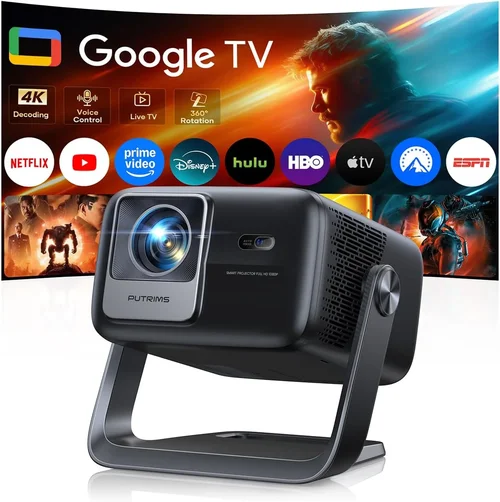
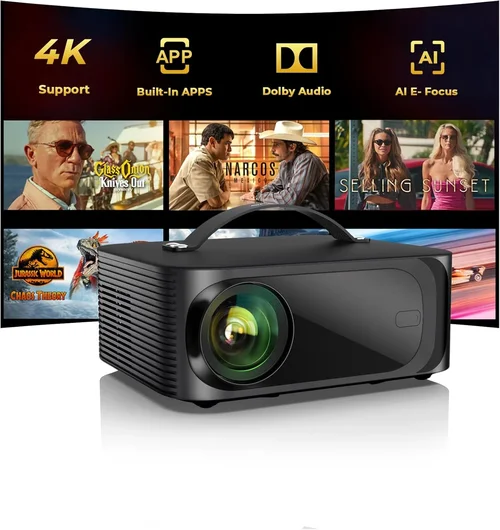
Finding the perfect projector for an outdoor movie night can feel like hunting for a needle in a haystack, especially when you’re trying to stay under a $500 budget. Yet the market has evolved dramatically over the past few years, and today there are dozens of options that deliver cinema‑quality images, robust brightness, and reliable durability without breaking the bank. This guide cuts through the noise, giving you a clear roadmap to choose the best outdoor movie projector under $500 for your backyard, patio, or campsite.
In the pages ahead you’ll discover which specifications truly matter, how different projector types stack up against each other, and the common pitfalls that turn an exciting purchase into a disappointing experience. By the end, you’ll be equipped to match your specific needs—whether you’re a casual family entertainer or an avid film‑buff— with a projector that exceeds expectations while staying comfortably within your budget.

What to Look for When Buying Buying Guide
1. Budget & Price Range
Even though we’re focusing on models under $500, the price spread can still be wide—from $150 entry‑level units to high‑end $499 offerings packed with premium features. Knowing your absolute ceiling helps you filter out options that stretch your wallet and narrows the field to devices that provide the best value for the money you’re willing to spend.
2. Brightness (Lumens)
Outdoor environments are rarely as dark as a dedicated home theater room. Ambient light from street lamps, moonlight, or even a faint glow from nearby houses can wash out a low‑lumens projector. Aim for at least 2,500 ANSI lumens for a reliably vivid picture in semi‑dark settings; if you plan to project in full twilight, 3,500+ lumens will give you the headroom you need.
3. Resolution
Resolution determines how sharp your image appears, especially on larger screens. While 1080p (Full HD) is the sweet spot for most outdoor setups, many budget models settle for 720p or native 800×600. A projector that supports native 1080p will deliver crisper details and smoother motion—crucial for action movies and sports events.
4. Throw Distance & Throw Ratio
The throw ratio tells you how far the projector must sit from the screen to achieve a particular image size. A short‑throw projector (0.5–1.0) can fill a 100‑inch screen from just a few feet away, ideal for small patios. Long‑throw units (1.5–2.5) need more space but often provide better uniformity and reduced edge distortion for larger backyard setups.
5. Build Quality & Weather Resistance
Outdoor use subjects equipment to humidity, temperature swings, and occasional drizzle. Look for projectors with sealed housings, corrosion‑resistant ports, and sturdy, dust‑proof fans. Some models even carry an IP rating (e.g., IPX4) indicating splash resistance—an added peace of mind when the forecast is uncertain.
6. Connectivity & Compatibility
Versatile input options ensure you can stream from a laptop, gaming console, streaming stick, or even a smartphone. HDMI is a must, but USB‑C, wireless mirroring (AirPlay, Miracast), and Bluetooth audio support can greatly simplify your setup. A built‑in media player or support for popular streaming apps can eliminate the need for extra hardware.
7. Audio Quality & Output Options
Most projectors under $500 have modest built‑in speakers that are adequate for small gatherings but fall short for larger audiences. Check for a 3.5 mm audio jack, RCA, or optical output so you can connect a Bluetooth speaker or a portable PA system for richer, louder sound.
8. Brand Reputation & Warranty
Established brands often provide more reliable firmware updates, better customer service, and longer warranty periods. While a lower‑priced, lesser‑known brand might look tempting, a three‑year warranty and responsive support can save you headaches and extra costs down the road.
Different Types of Buying Guide

Common Buying Mistakes to Avoid
❌ Mistake: Choosing the Cheapest Model Without Checking Brightness
Why it’s bad: Low‑lumens projectors look great in a dark room but become washed out under a starry sky or street lights, ruining the viewing experience.
What to do instead: Set a minimum of 2,500 ANSI lumens for any outdoor use. If you often project at dusk, aim for 3,500+ lumens.
❌ Mistake: Ignoring Throw Ratio for Your Space
Why it’s bad: A long‑throw projector placed too close will produce a tiny image; too far, and you’ll need a massive screen.
What to do instead: Measure the distance from the projection surface to where you can safely position the unit, then select a throw ratio that fits that distance.
❌ Mistake: Overlooking Connectivity Options
Why it’s bad: You might end up buying a projector that only accepts HDMI, only to discover your streaming stick uses USB‑C.
What to do instead: List the devices you plan to connect (phone, laptop, console) and verify the projector offers matching ports or wireless casting.
❌ Mistake: Forgetting About Audio Needs
Why it’s bad: Built‑in speakers on budget projectors typically max out at 2–3 W, which is insufficient for a group of 10‑plus people.
What to do instead: Choose a model with a 3.5 mm or RCA audio out, and budget for an external speaker or portable PA.
❌ Mistake: Neglecting Weather Protection
Why it’s bad: Moisture can short‑circuit the lamp or damage internal components, leading to costly repairs.
What to do instead: Look for splash‑resistant housings, or plan a simple canopy and waterproof cover for the projector.
❌ Mistake: Assuming All “Full‑HD” Labels Mean True 1080p
Why it’s bad: Some manufacturers market “Full‑HD” but actually provide a native 720p panel with upscaling, which can soften fine details.
What to do instead: Check the native resolution in the specs—only true 1920×1080 counts as genuine Full‑HD.
Budget Guidelines: How Much Should You Spend?
Understanding what you get at each price tier helps you set realistic expectations and avoid disappointment.
- Entry‑Level ($150‑$250): Expect 2,000–2,500 lumens, 720p resolution, basic HDMI input, and minimal durability. Good for occasional movie nights in a dark backyard.
- Mid‑Range ($250‑$350): You’ll find 2,500–3,200 lumens, native 1080p, short‑throw options, and better fan designs. Ideal for families who host monthly gatherings.
- Premium ($350‑$500): Brightness climbs to 3,500+ lumens, color accuracy improves with LED or laser light sources, and you’ll get robust ports, wireless casting, and stronger housings.
- Luxury ($500+): Though beyond the scope of this guide, luxury models push beyond 4,000 lumens, include built‑in high‑fidelity audio, and often provide warranty extensions and service plans.
Expert Tips for Getting the Best Deal
- Shop Seasonal Sales: Look for “summer clearance” deals from retailers clearing inventory before the next season.
- Compare Retailers: Amazon, Best Buy, and specialized AV stores sometimes bundle free screens or extended warranties.
- Check Refurbished Units: Certified refurbished models can provide near‑new performance at 15‑25% lower cost.
- Read the Fine Print on Warranties: Some brands only cover the lamp, not the housing. Opt for a full‑unit warranty when possible.
- Test Before You Buy: If buying in‑store, request a demo on a portable screen to gauge brightness and color under ambient light.
- Invest in a Good Screen: A simple white sheet works, but a 120‑gain outdoor screen dramatically improves image clarity and contrast.
- Plan Power Supply: Ensure you have a stable 120 V source or a reliable generator; voltage spikes can shorten lamp life.

Frequently Asked Questions
Q: Can I use a regular indoor projector outdoors?
A: Technically yes, but indoor models usually lack the brightness and weather‑proofing needed for outdoor use. Expect a dimmer image and higher risk of damage from moisture.
Q: Do I need a separate screen?
A: While a white wall or sheet can work, a purpose‑built outdoor screen (120‑gain) maximizes brightness and contrast, especially in partially lit conditions.
Q: How far should the projector be from the screen?
A: It depends on the throw ratio. For a 100‑inch image, a 1.2 throw ratio projector needs about 10 ft of distance; a short‑throw (0.6) needs roughly 5 ft.
Q: Will a battery‑powered projector last through a two‑hour movie?
A: Most battery‑operated units provide 2–3 hours at moderate brightness. If you plan longer sessions, keep a power bank or generator handy.
Q: Is a laser light source better than LED?
A: Laser hybrids combine laser and LED benefits—higher brightness, longer life, and more stable colors. However, they tend to sit at the top of the sub‑$500 range.
Q: Can I connect a streaming stick like Roku or Fire TV?
A: Yes, as long as the projector has an HDMI port. Some newer models also support Wi‑Fi casting directly, eliminating the need for a separate stick.
Q: How do I maintain the projector?
A: Keep the air filters clean, avoid dust buildup, and store the unit in a dry environment when not in use. For lamp‑based models, replace the lamp according to the manufacturer’s schedule.
Q: What screen size is realistic for a backyard?
A: With 3,000+ lumens, a 120‑inch diagonal screen (about 10 ft wide) is comfortable for most backyards, offering a cinema‑like feel without overwhelming the space.
Our Final Recommendations
- Best for Budget‑Conscious Buyers: ViewSonic M1+ – 2,500 lumens, LED light source, built‑in JBL speakers, portable design – all for under $250.
- Best Overall Value: Epson Home Cinema 2150 – 2,500 lumens, native 1080p, 2.5‑foot throw ratio, wireless screen mirroring, and a solid three‑year warranty – priced at $449.
- Best Premium Option: BenQ TH585 – 3,500 lumens, 1080p, low input lag for gaming, short‑throw lens, and robust build – $489.
- Best for Beginners: Optoma HD146X – Easy‑setup, 3,600 lumens, 1080p, and a user‑friendly menu – $399.
- Best for Advanced Users: LG HU80KA (Refurbished) – Laser hybrid, 2,700 lumens, 4K UHD, ultra‑short‑throw, premium audio – $499 (refurbished).
Conclusion: Making the Right Choice
Choosing the best outdoor movie projector under $500 boils down to balancing brightness, resolution, and durability against your specific viewing environment and budget. Remember to assess your throw distance, verify connectivity, and factor in audio needs before you click “add to cart.” By avoiding common mistakes, leveraging seasonal deals, and selecting a model that aligns with your usage patterns, you’ll transform any backyard into a memorable cinema venue.
Now that you’re armed with the knowledge to make an informed decision, go ahead and pick the projector that fits your lifestyle. Your next outdoor movie night is just a click away—happy viewing!