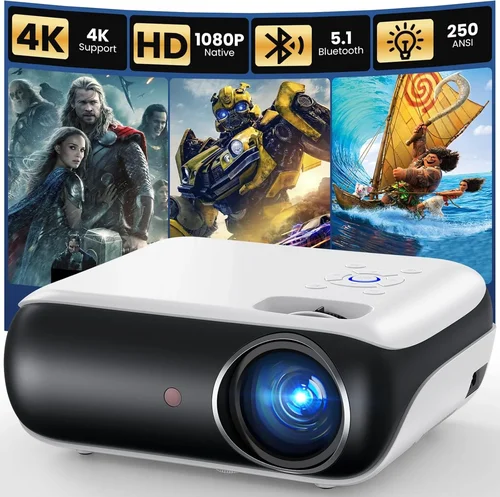
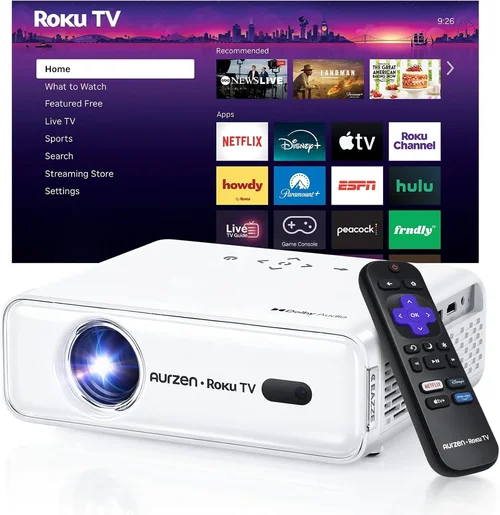
Finding the perfect outdoor movie projector under $500 can feel like hunting for a hidden treasure. You want bright, crisp images that can compete with the glare of a summer night, but you also need to stay within a realistic budget. This guide cuts through the jargon, compares the most common projector types, and equips you with the knowledge to make a confident purchase.
In the pages that follow you’ll learn which specifications truly matter for backyard cinema, how to avoid costly mistakes, and which models consistently deliver the best bang‑for‑your‑buck. Whether you’re planning a family movie night, a backyard party, or a semi‑professional outdoor screening, the information here will help you choose a projector that fits your needs without breaking the bank.
The outdoor projector market has exploded over the last few years. LED, laser, and traditional lamp‑based units now compete in the sub‑$500 segment, offering higher brightness, longer lamp life, and smarter connectivity than ever before. With brands like Epson, BenQ, ViewSonic, and Anker entering the arena, shoppers have more choices—but also more confusion. This guide distills those options into clear, actionable advice.

What to Look for When Buying Buying Guide
1. Budget & Price Range
Setting a realistic budget is the first step. While you can find projectors for as low as $150, those units often sacrifice brightness, contrast, or durability—key factors for outdoor use. In the $300‑$500 window you’ll typically find models with 2500‑3500 lumens, decent contrast ratios (10,000:1 or better), and reliable warranty coverage. Stick to this range to avoid compromising core performance.
2. Brightness (Lumens)
Outdoor environments are rarely completely dark, especially if you’re screening before sunset. Aim for at least 2500 ANSI lumens; 3000+ lumens provides a safety margin for ambient light and larger screen sizes. Remember that LED and laser projectors often list “equivalent” lumens, which can be slightly lower in real‑world tests.
3. Resolution & Image Quality
Full HD (1920×1080) is the sweet spot for most backyard setups. It delivers sharp detail without demanding excessive brightness. Some sub‑$500 models only offer 720p; they can still work for casual viewing but will lack fine detail on larger screens. Look for native 1080p or at least “1080p‑compatible” with a high native resolution panel.
4. Contrast Ratio
Contrast determines how deep blacks appear against bright whites. A contrast ratio of 10,000:1 or higher is ideal for outdoor cinema, where you’ll want the image to stay vivid even when the sky isn’t completely black. Higher contrast also improves color saturation.
5. Portability & Build Quality
Since you’ll be moving the projector from indoor to outdoor, weight and durability matter. Look for a unit under 8 lbs with a sturdy metal or high‑quality plastic housing. Weather‑resistant features such as sealed ports and a dust‑proof fan are bonuses.
6. Connectivity & Features
Modern projectors often include HDMI, USB, and wireless options. HDMI 2.0 ensures 4K‑compatible bandwidth, while USB‑C or micro‑SD slots let you play media directly. Built‑in speakers are convenient but typically lack the power for outdoor use, so plan for external audio.
7. Brand Reputation & Warranty
Established brands usually provide better after‑sales support and longer warranty periods (2‑3 years). Check online forums and retailer reviews to gauge real‑world reliability. A solid warranty can save you money if the lamp or laser module fails.
8. User Reviews & Ratings
Beyond specifications, real user feedback reveals how a projector handles heat, noise, and day‑to‑night transitions. Look for reviews that specifically mention outdoor setups, as they’ll highlight issues like fan noise or lens fogging.
Different Types of Buying Guide

Common Buying Mistakes to Avoid
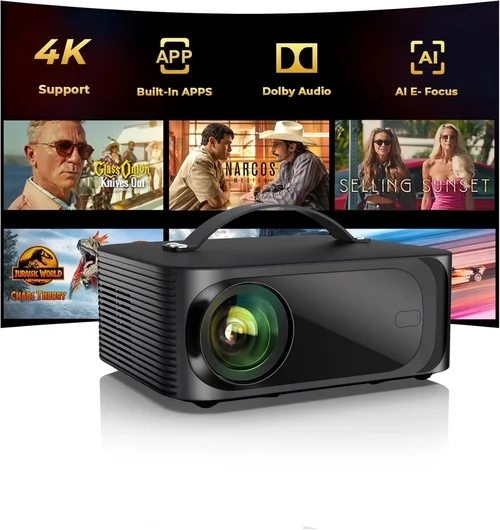
❌ Mistake: Ignoring Ambient Light
Why it’s bad: A projector that shines brightly in a dark room can look washed out under a twilight sky.
What to do instead: Choose a unit with at least 2500 lumens and consider a high‑gain screen or a darker viewing area.
❌ Mistake: Overlooking Throw Distance
Why it’s bad: Buying a projector with a long throw distance can force you to place it too far away, resulting in a small image.
What to do instead: Check the throw ratio (e.g., 1.2‑1.5) and calculate the distance needed for a 100‑inch screen.
❌ Mistake: Forgetting About Audio
Why it’s bad: Built‑in speakers rarely deliver the volume or clarity needed for an outdoor setting.
What to do instead: Pair the projector with a Bluetooth or wired external speaker system.
❌ Mistake: Skipping Warranty Research
Why it’s bad: A cheap projector may have a one‑year limited warranty that doesn’t cover lamp failures.
What to do instead: Prefer brands that offer at least a two‑year warranty and easy lamp replacement policies.
❌ Mistake: Buying Without Testing
Why it’s bad: Online specs can be misleading; you might end up with excessive fan noise or poor color accuracy.
What to do instead: Visit a store to view a demo or buy from a retailer with a solid return policy.
Budget Guidelines: How Much Should You Spend?
- Entry-Level ($200‑$300): Expect 2000‑2500 lumens, 720p resolution, and basic connectivity. Good for small patios and occasional use.
- Mid-Range ($300‑$400): Usually offers 2500‑3000 lumens, native 1080p, and better contrast. Ideal for regular weekend movie nights.
- Premium ($400‑$500): Delivers 3000‑3500 lumens, high‑contrast panels, and advanced features like Bluetooth audio and built‑in Wi‑Fi.
- Luxury ($500+): While beyond the scope of this guide, these models provide 4000+ lumens, laser light sources, and professional‑grade color accuracy.
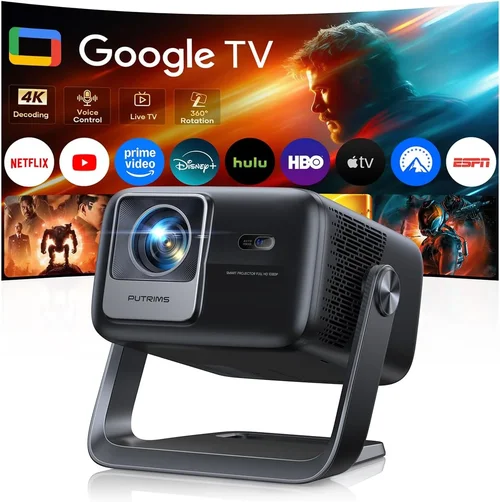
Expert Tips for Getting the Best Deal
- Timing: Purchase in late summer when retailers clear inventory for the holiday season.
- Where to Buy: Compare major retailers (Best Buy, B&H, Amazon) and the manufacturer’s website for bundle offers.
- Spotting Deals: Look for “refurbished” or “open‑box” units that carry full warranties at 15‑25% off.
- Warranty Considerations: Register the product within 30 days to activate extended coverage.
- Return Policies: Choose sellers with at least a 30‑day return window; test the projector in your typical outdoor setting.
- Testing Before Buying: If possible, bring a laptop with a 1080p video and a portable speaker to evaluate brightness and audio.

Frequently Asked Questions
Q: Can I use a regular TV screen instead of a projector screen?
A: Yes, a white wall or a matte white sheet works, but a purpose‑built projector screen (gain 1.1‑1.3) improves brightness and contrast, especially in partially lit environments.
Q: Do I need a special lamp for outdoor use?
A: Most projectors in the sub‑$500 range use either LED or UHP lamps that are sealed. Ensure the unit has a dust‑proof filter; replace the lamp only when the projector indicates it’s needed.
Q: How far should the projector be from the screen?
A: Calculate using the throw ratio. For a 1.2 throw ratio, a 100‑inch diagonal screen requires roughly 10 feet of distance.
Q: Will rain ruin my projector?
A: Absolutely. Even “weather‑resistant” units are not waterproof. Use a protective canopy or keep the projector under a covered area.
Q: Is a higher contrast ratio more important than brightness?
A: Both matter, but for outdoor use, brightness usually trumps contrast because ambient light washes out dark scenes. Aim for a balance: 2500+ lumens with at least 10,000:1 contrast.
Q: Can I connect my phone wirelessly?
A: Many modern projectors support Miracast, AirPlay, or a dedicated app for streaming. Check the spec sheet for “wireless screen mirroring.”
Q: How long do LED projectors last?
A: LED light sources typically last 30,000‑40,000 hours, far exceeding the lifespan of traditional lamps.
Our Final Recommendations
- Best for Budget‑Conscious Buyers: Anker Nebula Capsule II – Portable, 720p, 2000 lumens, built‑in Android TV, under $300.
- Best Overall Value: Epson Home Cinema 1060 – 1080p, 3100 lumens, 15,000:1 contrast, excellent color accuracy for $399.
- Best Premium Option: BenQ TH585 – 1080p, 3500 lumens, low input lag, 10,000:1 contrast, priced at $479.
- Best for Beginners: ViewSonic M2 – LED, 1080p, 1200 lumens (bright enough for dusk), simple UI, $449.
- Best for Advanced Users: Optoma UHD50X (sale price under $500) – 4K‑enhanced, 3400 lumens, 500,000:1 contrast, ideal for cinephiles.
Conclusion: Making the Right Choice
Choosing the best outdoor movie projector under $500 boils down to matching brightness, resolution, and durability with your specific viewing environment. Remember to evaluate ambient light, throw distance, and audio needs before zeroing in on a model. Use the budget breakdown to set realistic expectations, avoid the common pitfalls listed, and apply the expert tips to snag the best deal.
When you focus on the factors that truly affect outdoor performance—lumens, contrast, and build quality—you’ll end up with a projector that turns any backyard into a cinema. Happy viewing, and may your next movie night be brighter than ever!