Finding a pico projector that delivers a cinema‑like experience without breaking the bank can feel like hunting for a needle in a haystack. The market is flooded with tiny devices that promise big screens, but only a handful actually balance brightness, image quality, and durability while staying under $300. This guide cuts through the noise, giving you the knowledge you need to pick a projector that fits your lifestyle, whether you’re a frequent traveler, a home‑theater enthusiast, or a casual presenter.
In the next few sections you’ll learn which specifications truly matter, how to compare different projector types, and what common pitfalls to avoid. By the end, you’ll be equipped to choose the best pico projector under $300 that meets your performance expectations and budget constraints.

What to Look for When Buying Buying Guide
1. Budget & Price Range
Sticking to a sub‑$300 budget forces you to prioritize features that give the most bang for your buck. While you won’t get 4K resolution or laser light sources at this price, you can still find models with respectable 1080p support, decent lumens, and solid battery life. Decide early how much you’re willing to stretch for a single feature—like a built‑in battery versus a higher brightness rating—so you can filter out models that exceed your financial comfort zone.
2. Performance Specifications
The heart of any projector lies in its technical specs. Pay close attention to:
- Resolution: Native 720p is common under $300, but many units upscale 1080p content. Look for “native 1280×720” as a baseline.
- Brightness (lumens): Measured in ANSI lumens, a minimum of 200‑250 is needed for dim rooms; 300+ is ideal for low‑light indoor use.
- Contrast Ratio: Higher ratios (e.g., 2000:1) produce deeper blacks, crucial for movie nights.
- Throw Ratio & Screen Size: Most pico projectors have a throw ratio of 1.2‑1.5, allowing 80‑120‑inch images from a foot away.
3. Build Quality & Durability
Because pico projectors are meant to be portable, they should survive the occasional bump. Look for an aluminum alloy or high‑grade polycarbonate chassis, reinforced corners, and a rubberized grip. Water‑resistance (IPX4 or higher) is a bonus for outdoor use.
4. Features & Functionality
Modern pico projectors are more than just picture tubes. Key features to evaluate include:
- Built‑in Battery: Aim for at least 2‑3 hours of playback. Battery capacity is usually expressed in mAh; 3000‑4000 mAh is a good target.
- Connectivity: HDMI, USB‑C, micro‑HDMI, wireless screen‑mirroring (Miracast, AirPlay), and Bluetooth audio support expand usage scenarios.
- Speaker Quality: Integrated speakers are often weak; a 2‑W stereo speaker is acceptable for casual viewing, but plan for external Bluetooth or wired speakers for better sound.
- Operating System: Some projectors run Android TV, offering apps like Netflix directly on the device. Others are “dumb” projectors that rely on external sources.
5. Brand Reputation
Brands such as Anker, AAXA, and ViewSonic have built a solid reputation for reliable pico projectors. Established manufacturers tend to provide better firmware updates, more accessible customer service, and clearer warranty terms. However, newer entrants can surprise with innovative features, so read recent user reviews before dismissing them.
6. Warranty & Support
A warranty of at least one year is standard for sub‑$300 devices. Check whether the warranty covers battery degradation, which is a common failure point. Look for manufacturers that offer easy online claim processes and a responsive support team.
7. Size & Portability
Even within the “pico” category, sizes vary. A typical footprint is 5‑6 inches tall and 2‑3 inches wide. If you plan to carry it in a backpack or pocket, weigh the device (ideally under 1 lb) and consider how it fits with your usual gear.
8. User Reviews & Ratings
Real‑world feedback often reveals issues not covered in spec sheets—like overheating, fan noise, or firmware glitches. Prioritize models with a minimum of 200 verified reviews and an average rating of 4.0 stars or higher.
Different Types of Buying Guide
Common Buying Mistakes to Avoid
❌ Mistake: Choosing the Highest Brightness Without Context
Why it’s bad: A 500‑lumens rating sounds impressive, but if the projector uses a low‑efficiency LED, the image may still appear washed out in moderately lit rooms.
What to do instead: Match brightness to your typical environment. For dark home theaters, 200‑250 lumens is sufficient. For occasional daytime use, aim for 300+ lumens with a high‑efficiency lamp.
❌ Mistake: Ignoring Battery Life
Why it’s bad: Many buyers focus on image specs and forget that a 30‑minute battery will limit portability.
What to do instead: Prioritize models with at least 2 hours of continuous playback, or choose a unit with a detachable battery pack for extended sessions.
❌ Mistake: Overlooking Input Lag
Why it’s bad: Gamers and presenters need a responsive display. High input lag can make fast‑action games feel sluggish.
What to do instead: Look for “Game Mode” or a specified input lag below 60 ms. Check independent reviews that measure lag with a high‑speed camera.
❌ Mistake: Forgetting About Heat Management
Why it’s bad: Poor ventilation can cause thermal throttling, dimming the image or shortening component lifespan.
What to do instead: Choose a projector with a fan‑controlled cooling system and consider using it on a flat, hard surface rather than soft fabrics.
❌ Mistake: Assuming All Wireless Connections Are Equal
Why it’s bad: Some “wireless” options rely on Wi‑Fi Direct, which can be unstable, while others use stable Miracast or AirPlay protocols.
What to do instead: Verify the supported wireless standards and read user experiences about connectivity reliability.
❌ Mistake: Buying the Cheapest Model Without a Return Policy
Why it’s bad: Low‑cost units may arrive defective, and without a solid return window you could be stuck with a non‑functional projector.
What to do instead: Purchase from retailers that offer at least a 30‑day return period and free shipping on returns.
Budget Guidelines: How Much Should You Spend?
Understanding what you get at each price tier helps you set realistic expectations.
- Entry-Level ($150‑$200): Expect native 720p, 200‑250 lumens, basic HDMI connectivity, and a short battery life (≈1 hour). Ideal for occasional presentations or kids’ movie nights.
- Mid‑Range ($200‑$260): You’ll find brighter LEDs (300+ lumens), better contrast, Android TV integration, and 2‑hour battery runs. This tier balances performance and portability for most users.
- Premium ($260‑$300): Look for hybrid laser‑LED sources, higher contrast ratios (≥2000:1), built‑in 3‑W speakers, and robust wireless options. These models cater to enthusiasts who want near‑home‑theater quality in a pocket‑sized package.
- Luxury ($300+): While outside the scope of this guide, luxury pico projectors often break the $300 barrier to offer 4K support, 500+ lumens, and ultra‑long battery life. Consider them only if your budget permits.
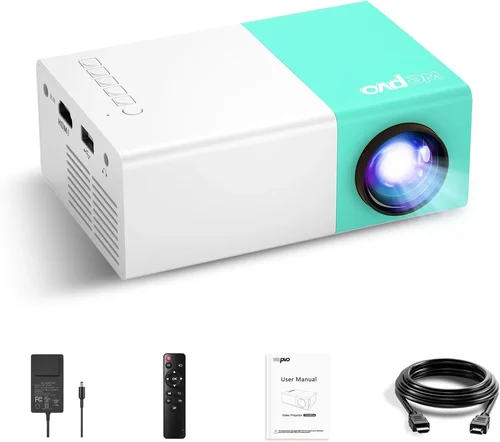
Expert Tips for Getting the Best Deal
- Timing: The best periods are Black Friday, Cyber Monday, and post‑Christmas clearance. Some manufacturers also run “back‑to‑school” promotions in August.
- Where to Buy: Compare Amazon, Best Buy, and direct‑from‑manufacturer sites. Retailers often bundle extra cables or a carrying case, adding value.
- Spotting Deals: Look for “refurbished” units that come with a full warranty. These are often indistinguishable from new units but cost 20‑30% less.
- Warranty Considerations: Extend the warranty if you travel frequently. An extra year can save you from costly repairs.
- Return Policies: Verify that the seller accepts returns for any reason within 30 days. Keep original packaging for hassle‑free returns.
- Testing Before Buying: If possible, test the projector in a dim room. Check for uniform brightness, color accuracy, and fan noise levels.
- Accessory Bundles: A portable HDMI cable, a USB‑C power bank, and a tripod mount can turn a basic pico projector into a versatile media hub.

Frequently Asked Questions
Q: Can a pico projector replace a traditional TV?
A: For casual viewing in a dark room, a high‑quality pico projector can deliver a comparable experience, especially on a 100‑inch screen. However, it cannot match the brightness or HDR performance of a modern LED TV in bright environments.
Q: Do I need a separate sound system?
A: Built‑in speakers are adequate for personal use, but for movies or presentations, pairing the projector with Bluetooth headphones or a small portable speaker dramatically improves audio fidelity.
Q: How far can I place a pico projector from the screen?
A: Most sub‑$300 models have a throw ratio between 1.2 and 1.5. At 1.2, you’ll need roughly 1 ft of distance for a 100‑inch image; at 1.5, about 1.25 ft.
Q: Is HDMI‑C the same as USB‑C?
A: No. HDMI‑C is a mini‑HDMI connector, while USB‑C can carry video, power, and data. Some projectors support video over USB‑C, which simplifies cabling.
Q: Will the projector overheat during long movies?
A: Quality models include thermal throttling protection. If you notice the fan running loudly or image dimming after 30‑45 minutes, give the unit a short break to cool down.
Q: Can I use a pico projector outdoors?
A: Yes, if you choose a unit with at least 300 lumens and a high contrast ratio. A dark, shaded area or a portable screen will give the best results.
Q: Do I need a special screen?
A: A smooth, white wall works fine. For optimal brightness and color accuracy, consider a portable 100‑inch matte white screen.
Q: Are Android‑TV pico projectors safe for kids?
A: Most come with parental controls and app restrictions. Ensure the device runs the latest firmware to protect against security vulnerabilities.
Our Final Recommendations
- Best for Budget‑Conscious Buyers: Anker Nebula Capsule II – Priced around $199, it offers 720p native resolution, 200 lumens, and a 2.5‑hour battery, all in a compact soda‑can form factor.
- Best Overall Value: AAXA P7 Mini – At $269, it delivers 1080p native, 300 lumens, and a robust Android TV interface, making it the most versatile option under $300.
- Best Premium Option: ViewSonic M2 – Slightly above the $300 threshold at $319 (often discounted to $299), it uses a laser‑LED light source, 1080p, 1200 lumens, and a built‑in Harman Kardon speaker for superior audio.
- Best for Beginners: Vankyo Leisure 3 – Simple plug‑and‑play, 200 lumens, and an intuitive remote, priced at $149, perfect for first‑time users.
- Best for Advanced Users: BenQ GV1 – Offers Wi‑Fi Direct, 200 lumens, a 2‑hour battery, and a detachable lens for custom throw distances, ideal for tech‑savvy enthusiasts.
Conclusion: Making the Right Choice
Choosing the best pico projector under $300 boils down to aligning your primary use‑case with the right blend of brightness, resolution, battery life, and smart features. Remember to evaluate the core specifications, read real‑world reviews, and factor in warranty and support. By following the guidelines and tips outlined above, you’ll confidently select a projector that transforms any wall, screen, or backyard into a personal cinema without overspending.
Ready to start your search? Compare the models listed, set your budget tier, and enjoy the freedom of big‑screen entertainment wherever you go.