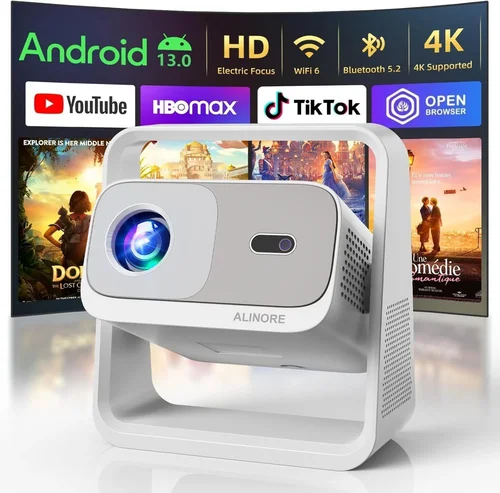
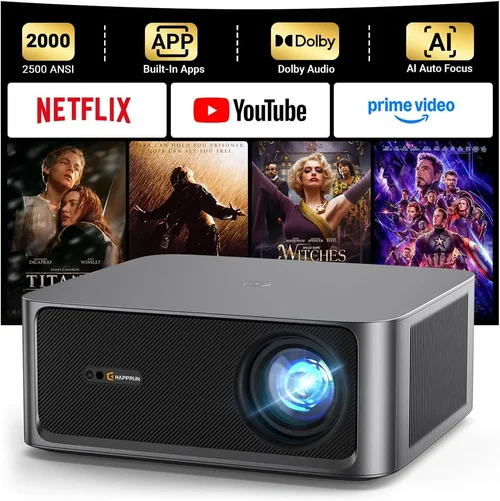
If you’ve ever imagined turning your living room into a cinema‑like experience without breaking the bank, you’re not alone. In 2026 the home‑theater projector market has exploded with options that deliver 4K‑ready visuals, HDR performance, and smart‑TV integration—all for under $1,000. This guide is designed to cut through the noise, helping you understand what truly matters when choosing a projector for a home‑theater setup that fits a modest budget.
By the end of this article you will know which specifications are non‑negotiable, how to match projector types to your room, where to find the best deals, and exactly which models consistently outperform the competition. Whether you’re a first‑time buyer or upgrading an existing system, the insights below will empower you to make a confident, informed purchase.

What to Look for When Buying Buying Guide
1. Budget & Price Range
Even though the focus is on projectors under $1,000, the price you actually spend can vary widely based on features like native 4K resolution, laser light sources, and built‑in audio. Set a clear ceiling—$600‑$800 for solid performance, $800‑$1,000 for premium features. Remember to factor in extra costs: a quality screen, mounting hardware, and possibly a short‑throw lens if you have limited space.
2. Performance Specifications
Key specs include:
- Resolution: 1080p (Full HD) is the baseline; 4K‑enhanced or native 4K models are becoming common below $1,000.
- Brightness (lumens): For a darkened home theater, 1,800‑2,500 lumens is sufficient. If you plan to watch with some ambient light, aim for 2,500‑3,500 lumens.
- Contrast Ratio: Higher contrast (e.g., 20,000:1) yields deeper blacks. Look for dynamic contrast technologies if native contrast is modest.
- HDR Support: HDR10 is a must; Dolby Vision is rare under $1,000 but worth noting when it appears.
- Throw Ratio: Determines how far the projector must sit from the screen. Short‑throw (0.9–1.2) is ideal for small rooms.
3. Build Quality & Durability
A projector is an investment that should last 3‑5 years with regular use. Metal housings, reinforced lenses, and fan‑controlled heat management are indicators of durability. Check user forums for recurring overheating or lamp‑failure complaints—these can signal long‑term reliability issues.
4. Features & Functionality
Consider the following extras:
- Smart OS: Android TV, Roku, or proprietary platforms let you stream without an external box.
- Connectivity: HDMI 2.0 or 2.1, USB‑C, Wi‑Fi, Bluetooth, and Ethernet ports give flexibility for consoles, Blu‑ray players, and soundbars.
- Lens Shift & Keystone Correction: Mechanical lens shift preserves image quality; digital keystone is convenient but can degrade sharpness.
- Audio: Built‑in speakers are useful for quick setups, but plan for external audio for true home‑theater sound.
5. Brand Reputation
Brands like Epson, BenQ, ViewSonic, and Optoma have built strong track records for value‑oriented home‑theater projectors. New entrants may offer cutting‑edge tech at lower prices, but research warranty terms and post‑sale support before committing.
6. Warranty & Support
A minimum 2‑year warranty is standard; some manufacturers extend to 3 years for laser models. Look for on‑site service options and responsive customer support channels. Extended warranties can be worthwhile if you plan heavy usage.
7. Size & Portability
If you intend to move the projector between rooms or take it to a friend’s house, weight and footprint matter. Most sub‑$1,000 units weigh between 5‑10 lbs, making ceiling mounting or portable setups feasible.
8. User Reviews & Ratings
Real‑world performance often diverges from spec sheets. Scan reviews on Amazon, B&H, and dedicated AV forums for recurring themes—color accuracy, fan noise, and firmware stability are common discussion points.
Different Types of Buying Guide

Common Buying Mistakes to Avoid
❌ Mistake: Ignoring Ambient Light Conditions
Why it’s bad: Selecting a low‑lumens projector for a room with windows will result in washed‑out images.
What to do instead: Measure typical lighting and choose a projector with at least 2,000 lumens for semi‑bright rooms, or invest in blackout curtains.
❌ Mistake: Over‑Focusing on Native 4K
Why it’s bad: True native 4K under $1,000 is rare; many “4K” models use pixel‑shifting, which can introduce artifacts.
What to do instead: Prioritize high contrast and good color accuracy; a strong 1080p projector often looks better than a cheap 4K‑enhanced unit.
❌ Mistake: Forgetting Throw Distance
Why it’s bad: A standard‑throw projector may need 12‑15 feet to fill a 100‑inch screen, which many living rooms can’t accommodate.
What to do instead: Calculate throw distance using the manufacturer’s chart or opt for a short‑throw model.
❌ Mistake: Neglecting Audio Planning
Why it’s bad: Built‑in speakers are usually under 10 W and sound tinny, ruining the cinematic feel.
What to do instead: Budget for a soundbar or a 2.1/5.1 speaker system; ensure the projector has HDMI ARC or optical out.
❌ Mistake: Skipping Firmware Updates
Why it’s bad: Outdated firmware can cause connectivity glitches, color banding, and reduced HDR performance.
What to do instead: Check the manufacturer’s support page before purchase and confirm that updates are easy to install.
Budget Guidelines: How Much Should You Spend?
Entry‑Level ($400‑$600): Expect 1080p resolution, 1,800‑2,200 lumens, basic HDMI connectivity, and limited HDR support. Ideal for casual movie nights in dark rooms.
Mid‑Range ($600‑$850): You’ll see 1080p or 4K‑enhanced panels, 2,200‑2,800 lumens, higher contrast ratios, and better built‑in speakers. This tier often includes basic smart‑OS features.
Premium ($850‑$1,000): Laser light sources, short‑throw lenses, true 4K (or high‑quality 4K‑enhanced), HDR10+, and robust connectivity (HDMI 2.1, Wi‑Fi 6). Best for enthusiasts who want near‑cinema quality without crossing the $1,000 barrier.
Luxury ($1,000+): While outside the scope of this guide, luxury models deliver native 4K, laser phosphor light, 20,000+:1 contrast, and integrated high‑end audio. Consider these only if your budget flexes.
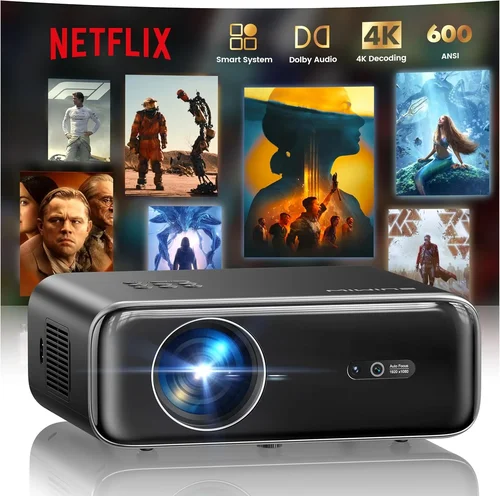
Expert Tips for Getting the Best Deal
- Timing is everything: Major sales events—Black Friday, Cyber Monday, and Amazon Prime Day—often feature up to 30% off select models.
- Shop reputable retailers: B&H, Adorama, and Best Buy provide easy returns and price‑match guarantees.
- Check refurbished units: Manufacturer‑refurbished projectors come with full warranties at 15‑25% lower prices.
- Bundle wisely: Some sellers offer a screen or mount at a discount when bought with the projector.
- Read the fine print on warranties: Verify if the lamp or laser module is covered and for how many hours.
- Test before you buy: If possible, view a demo in a store with your own content source to assess color and motion handling.
- Consider future‑proofing: HDMI 2.1 support ensures compatibility with next‑gen consoles and higher refresh rates.

Frequently Asked Questions
Q: Do I need a special screen for a projector under $1,000?
A: While you can project onto a plain wall, a dedicated screen improves gain, uniformity, and color accuracy. Matte white screens are affordable and work well in dark rooms; high‑gain screens help in brighter environments.
Q: Can I use a gaming console with a budget projector?
A: Absolutely. Look for HDMI 2.0 or higher, low input lag (under 30 ms), and a refresh rate of at least 60 Hz. Some mid‑range models even support 120 Hz for newer consoles.
Q: How long do projector lamps last?
A: Traditional UHP lamps last 2,000‑3,000 hours, while laser light sources can exceed 20,000 hours. Remember that lamp life is proportional to usage; a 3‑hour movie night per week will deplete a lamp in roughly 3‑4 years.
Q: Is a short‑throw projector worth the extra cost?
A: If your room is smaller than 10 feet or you want to place the projector close to the screen to avoid shadows, a short‑throw unit is a smart investment. The price premium is usually $150‑$250.
Q: What is the difference between HDR10 and Dolby Vision?
A: HDR10 is an open standard supported by most budget projectors. Dolby Vision requires specific hardware and licensing, rarely found under $1,000. HDR10 still delivers noticeable contrast and color improvements over SDR.
Q: Do I need a separate sound system?
A: For true cinematic immersion, yes. Built‑in speakers are adequate for casual viewing, but a dedicated soundbar or a small surround‑sound setup will dramatically enhance dialogue clarity and bass response.
Q: Can I mount the projector on the ceiling?
A: Most models support ceiling mounting with a standard ¼‑20 thread. Verify the weight rating of your mount and ensure proper ventilation to prevent overheating.
Our Final Recommendations
Best for Budget‑Conscious Buyers: BenQ TH585 – 1080p, 3,500 lumens, low input lag, and solid color accuracy for under $600.
Best Overall Value: Epson Home Cinema 2150 – 1080p, 2,500 lumens, 3LCD technology, and wireless screen mirroring, priced around $750.
Best Premium Option: Optoma UHD38 – True 4K, 4,000 lumens, HDR10, 8 ms input lag, and HDMI 2.1, typically $980.
Best for Beginners: ViewSonic PA503W – Affordable (≈$450), easy setup, decent brightness, and a user‑friendly remote.
Best for Advanced Users: LG HU85LA Laser Short‑Throw (often found on sale just under $1,000) – Laser light source, 2,700 lumens, 4K UHD, and built‑in smart TV platform.
Conclusion: Making the Right Choice
Choosing a home‑theater projector under $1,000 boils down to balancing brightness, resolution, and extra features against your room’s constraints and viewing habits. Start by measuring your space, assessing ambient light, and deciding whether a short‑throw or standard‑throw model fits best. Then, prioritize native resolution and contrast, while treating HDR and smart‑OS capabilities as nice‑to‑have bonuses.
Remember: the cheapest unit rarely delivers a satisfying experience, but you don’t need to splurge on a $3,000 model either. By applying the factors, budget guidelines, and expert tips outlined above, you’ll land on a projector that transforms movie nights, gaming sessions, and sports marathons into immersive events—without draining your wallet.
Ready to start shopping? Use the recommendations as a starting point, compare current prices, and take advantage of seasonal sales. Your perfect home‑theater setup is just a few clicks away.