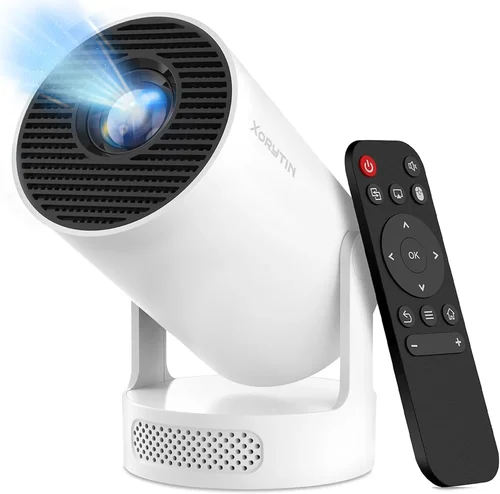
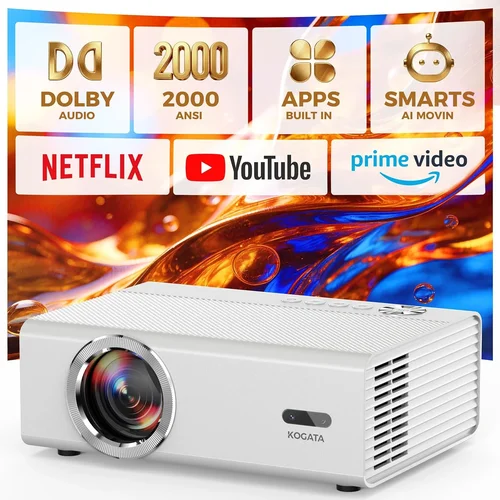
Choosing the right projector for a business environment can feel like navigating a maze of technical jargon, price points, and endless feature lists. Whether you’re setting up a conference room, a training space, or a small office huddle area, the projector you pick will directly impact how clearly your ideas are communicated and how efficiently meetings run. This guide cuts through the noise, giving you a step‑by‑step roadmap to select the best business projector under $200 without sacrificing performance.
In the pages that follow, you’ll learn which specifications truly matter for professional use, how different projector types stack up against each other, and where to find the most reliable models that fit a tight budget. By the end, you’ll be equipped to make a confident, data‑driven purchase that serves your team’s needs for years to come.

What to Look for When Buying Buying Guide
1. Budget & Price Range
When the ceiling is $200, every dollar counts. The first step is to define a realistic budget that includes not only the projector itself but also essential accessories—mounts, cables, and possibly a replacement lamp. While you can find sub‑$150 units, expect trade‑offs in brightness or connectivity. Aim for the sweet spot of $170‑$200 to secure a model that balances cost with core business features.
2. Performance Specifications
Three specs dominate projector performance: brightness (lumens), resolution, and contrast ratio. For boardrooms with ambient light, look for at least 2,500 ANSI lumens; in darker training rooms, 1,800 lumens may suffice. Resolution should be 1280×800 (WXGA) or higher; 1080p (1920×1080) is a bonus but rare under $200. A contrast ratio of 10,000:1 ensures readable text on dark backgrounds.
3. Build Quality & Durability
Business projectors endure frequent set‑ups, transport, and long‑hour usage. Choose a unit with a metal or high‑grade ABS chassis, reinforced lens caps, and a fan‑controlled cooling system. Look for models that advertise a lamp life of 6,000‑8,000 hours; this reduces long‑term maintenance costs.
4. Features & Functionality
Connectivity options are crucial. HDMI is a must, but VGA, USB‑C, and wireless Miracast or AirPlay add flexibility for laptops, tablets, and smartphones. Built‑in speakers are handy for quick huddles, though external audio is recommended for larger rooms. Keystone correction (±10°) and lens shift simplify installation without professional alignment.
5. Brand Reputation
Even in the sub‑$200 segment, certain brands consistently deliver reliability. Epson, BenQ, ViewSonic, and Optoma have established service networks and firmware support. Research each brand’s track record for firmware updates and how quickly they address known issues.
6. Warranty & Support
A solid warranty protects your investment. Look for at least a 1‑year limited warranty covering parts and labor, with an optional extended plan. Verify the availability of local service centers or authorized repair partners; this can dramatically reduce downtime.
7. Size & Portability
If your team moves presentations between rooms, weight and footprint matter. Projectors under 2 kg with a compact form factor (≈8 × 6 × 3 in) slot easily into a laptop bag. Some models include a quick‑release mount for ceiling installation, offering both portability and permanent setup options.
8. User Reviews & Ratings
Real‑world feedback highlights quirks that spec sheets hide. Scan Amazon, B&H, and professional forums for patterns—e.g., “overheats after 2 hours” or “remote response lag.” Prioritize models with an average rating of 4 stars or higher and at least 50 verified reviews.
Different Types of Buying Guide

Common Buying Mistakes to Avoid
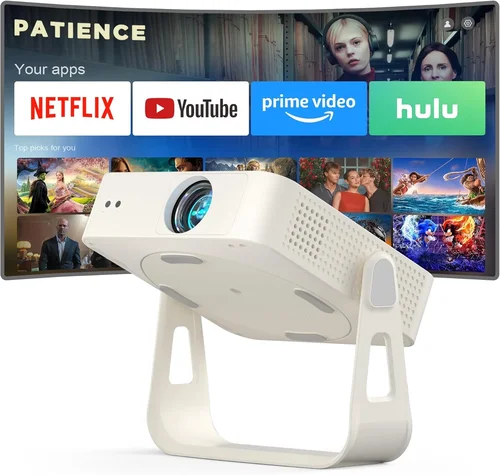
❌ Mistake: Ignoring Ambient Light Conditions
Why it’s bad: A projector rated for 1,800 lumens will look washed out in a well‑lit conference room, forcing you to crank up the volume or pause the meeting.
What to do instead: Measure the typical lighting level of your meeting space. If natural light is present, aim for 2,500‑3,000 lumens even if it pushes the budget slightly.
❌ Mistake: Over‑focusing on Resolution Alone
Why it’s bad: A 1080p projector with only 1,200 lumens will still produce a dim image, negating the benefit of higher resolution.
What to do instead: Balance resolution with brightness and contrast. For most business uses, WXGA (1280×800) with 2,500 lumens is a better overall value.
❌ Mistake: Skipping the Warranty Fine Print
Why it’s bad: Some manufacturers limit lamp replacement coverage, leaving you with unexpected out‑of‑pocket costs.
What to do instead: Read the warranty terms carefully. Prefer brands that include lamp replacement for at least the first year.
❌ Mistake: Forgetting About Connectivity Needs
Why it’s bad: A projector with only VGA forces you to use adapters, adding clutter and potential signal degradation.
What to do instead: List all devices you’ll connect (laptops, tablets, smartphones) and ensure the projector offers HDMI, USB‑C, and wireless options.
❌ Mistake: Buying the Lightest Model Without Testing Image Quality
Why it’s bad: Ultra‑light units often compromise optical engine quality, resulting in grainy images.
What to do instead: Prioritize image quality first; if weight is a concern, look for compact models that still meet the brightness and contrast thresholds.
Budget Guidelines: How Much Should You Spend?
- Entry‑Level ($150‑$170): Expect 1,800‑2,000 lumens, WXGA resolution, basic HDMI/VGA ports. Suitable for small, dim rooms.
- Mid‑Range ($170‑$190): 2,200‑2,600 lumens, improved contrast (10,000:1), optional USB‑C or wireless mirroring. Best value for most small‑to‑medium offices.
- Premium ($190‑$200): 2,500‑3,000 lumens, 1080p support, built‑in speakers, keystone correction, and longer lamp life (up to 8,000 hrs). Ideal for mixed‑light environments.
- Luxury (above $200): Not covered in this guide, but typically includes laser light sources, 4K UHD, and advanced networking features.
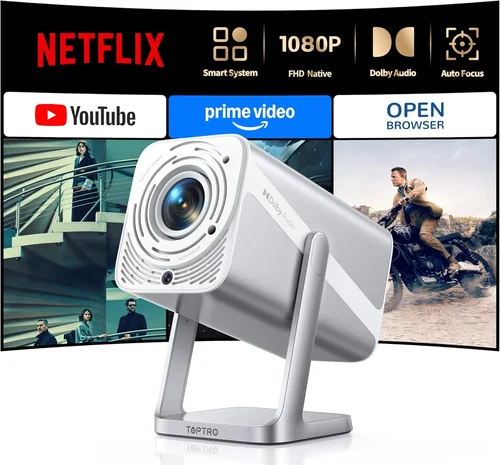
Expert Tips for Getting the Best Deal
- Shop during major sales events—Black Friday, Cyber Monday, and back‑to‑school periods often feature deep discounts on business electronics.
- Compare prices across Amazon, B&H, Newegg, and the brand’s official store. Use price‑tracking tools like CamelCamelCamel to see historical lows.
- Consider refurbished units from certified sellers. They often come with a limited warranty and can save 20‑30%.
- Check for bundle offers that include HDMI cables, ceiling mounts, or extended warranties at a reduced combined price.
- Read the return policy carefully. A 30‑day return window gives you time to test the projector in your actual meeting room.
- When possible, test the projector in‑store. Look for uniform brightness across the screen and verify that the remote response feels snappy.
- Keep an eye on lamp replacement costs. Some low‑priced models use proprietary lamps that are expensive to replace.

Frequently Asked Questions
Q: Can a sub‑$200 projector handle a 100‑inch screen?
A: Yes, provided the projector offers at least 2,500 lumens. At that brightness level, a 100‑inch diagonal image will appear vibrant even with moderate ambient light.
Q: Do I need a separate sound system?
A: Built‑in speakers are convenient for quick briefings, but for presentations with videos or conference calls, external speakers deliver clearer audio and higher volume.
Q: How long does the lamp typically last?
A: Most budget models list 6,000‑8,000 hours of lamp life. At an average use of 4 hours per day, that translates to 4‑5 years before a replacement is needed.
Q: Is wireless connectivity reliable for business use?
A: Modern Miracast or AirPlay implementations work well in small rooms with a stable Wi‑Fi network. For mission‑critical presentations, keep a wired HDMI backup.
Q: What’s the difference between DLP and LCD for office use?
A: DLP excels in contrast and motion handling, making it great for video demos. LCD provides brighter images and more accurate color reproduction, which is useful for data‑heavy slides.
Q: Can I mount the projector on the ceiling?
A: Most models in the under‑$200 range include a standard ¼‑inch mounting hole compatible with ceiling brackets. Verify the weight rating of the mount before installation.
Q: Are there any hidden fees?
A: Occasionally, manufacturers charge extra for extended lamp warranties or proprietary cables. Review the cart before checkout to ensure no surprise costs.
Our Final Recommendations
- Best for Budget‑Conscious Buyers: BenQ MS525 – 2,200 lumens, WXGA, HDMI/VGA, 6,000‑hour lamp, priced at $159.
- Best Overall Value: Epson VS260 – 3,200 lumens, WXGA, HDMI + USB‑C, keystone correction, 1‑year warranty, $189.
- Best Premium Option: ViewSonic PA503W – 3,600 lumens, 1080p support, built‑in speakers, wireless Miracast, $199.
- Best for Beginners: Optoma S334 – Simple plug‑and‑play, HDMI, auto‑focus, 2,500 lumens, $172.
- Best for Advanced Users: LG PF50KA – LED light source, 2,800 lumens, USB‑C, battery‑operated for up to 2.5 hours