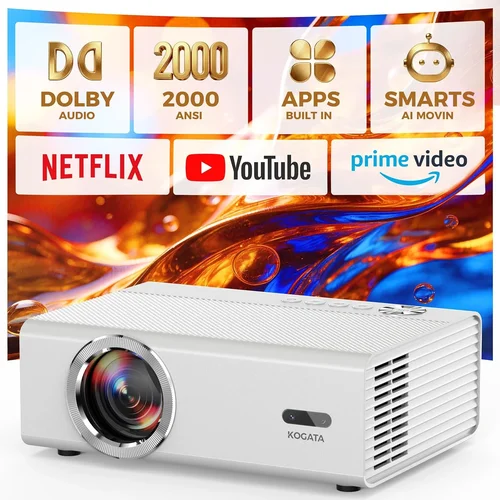
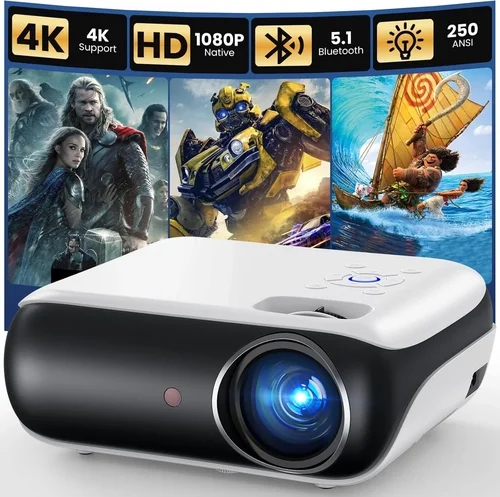
Welcome to the most thorough guide you’ll find on buying a high‑definition projector that delivers true 1080p performance without breaking the $1,000 barrier. Whether you are setting up a home cinema in a small apartment, planning a flexible office presentation solution, or simply want a bright, crisp picture for gaming nights, the right projector can transform everyday viewing into an immersive experience. The market in 2026 is crowded with options that promise “Full HD” but differ wildly in brightness, colour accuracy, and feature sets. This guide cuts through the noise, explains exactly what matters, and points you to the models that truly stand out.
By the end of this article you will understand the technical specs that affect picture quality, know which projector type matches your space, avoid common buying pitfalls, and have a clear shortlist of the best HD projectors under $1,000 for every use‑case. Let’s dive in and make sure your next purchase is a win, not a regret.
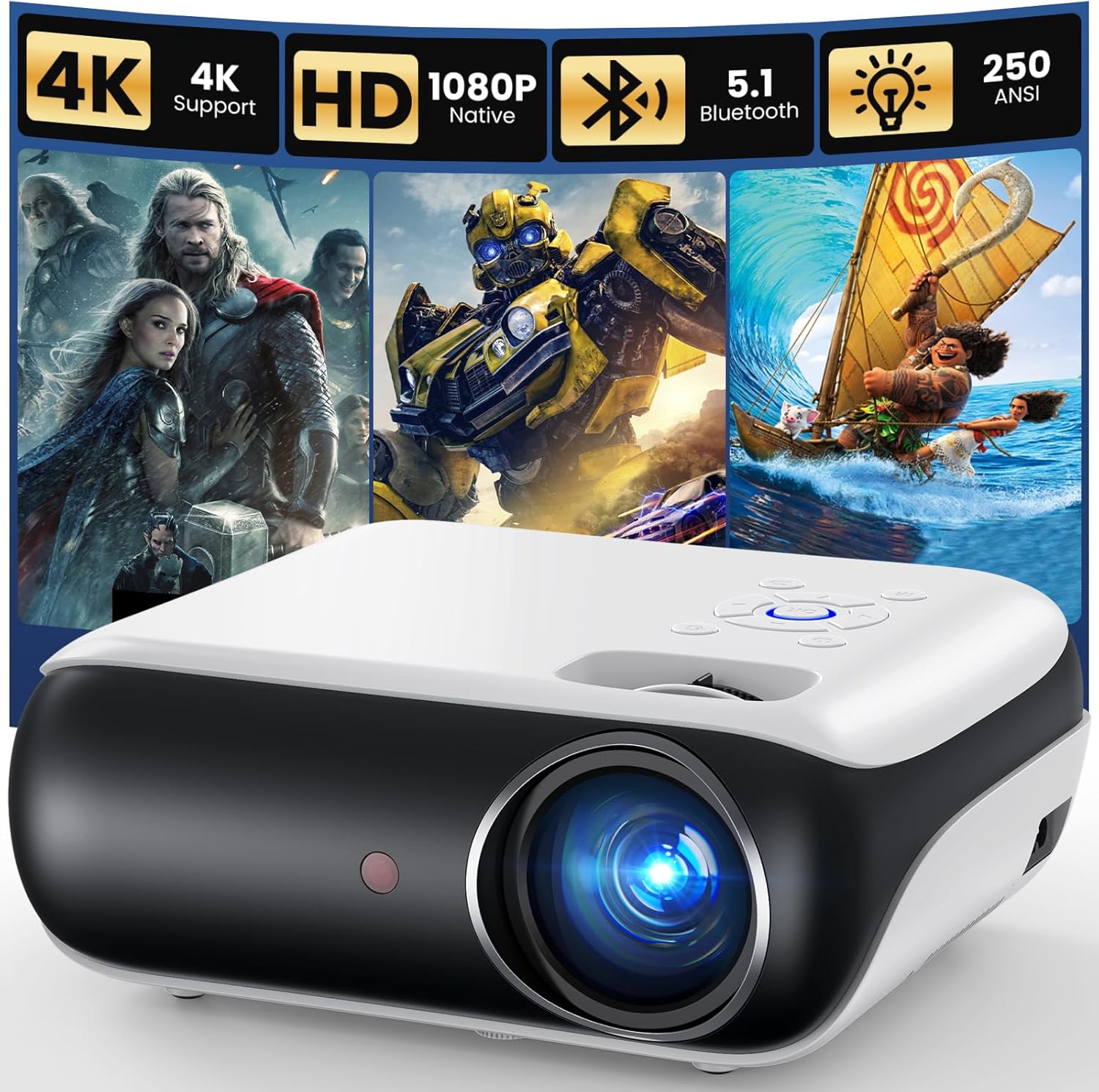
What to Look for When Buying Buying Guide
1. Budget & Price Range
Even though the headline says “under $1,000,” there is still a wide price spread from $400 to $999. The lower end often sacrifices brightness or colour gamut, while the high‑end of this bracket may include premium lenses, better throw ratios, and more robust build quality. Set a realistic ceiling based on the size of your room, ambient lighting, and how often you’ll use the projector. Remember that accessories—mounts, screens, cables—add to the total cost.
2. Performance Specifications
The three specs that dictate visual fidelity are:
- Resolution: True 1080p (1920×1080) ensures each pixel is distinct. Some “Full HD” labels hide native 720p panels that upscale, which can blur fine detail.
- Brightness (lumens): Measured in ANSI lumens. For dark rooms, 1,500–2,000 lumens is ample. Light‑controlled living rooms or office spaces typically need 2,500–3,500 lumens to stay vivid.
- Contrast Ratio: Higher contrast (e.g., 20,000:1) means deeper blacks and better colour separation. Look for dynamic contrast features if you plan to watch movies with dark scenes.
3. Build Quality & Durability
A projector that feels cheap will likely suffer from overheating, misaligned lenses, or a short lamp life. Metal housing, solid cooling fans, and sturdy lens caps are good signs. Check the manufacturer’s lamp or laser life rating – a 20,000‑hour laser unit can save you hundreds of dollars over a traditional lamp that needs replacement every 2,000–3,000 hours.
4. Features & Functionality
Modern projectors pack a surprising amount of tech. Prioritize features that align with your use‑case:
- Keystone correction: Automatic vertical/horizontal correction saves time when the projector can’t be placed perfectly centered.
- Lens shift: Allows you to move the image up, down, left, or right without moving the projector – essential for ceiling mounts.
- Built‑in speakers: Useful for casual movie nights, but generally underpowered for home‑theater setups.
- Wireless streaming: Wi‑Fi or Bluetooth connectivity for casting from phones, tablets, or laptops.
- Gaming mode: Low input lag (≤16 ms) and high refresh rates (up to 120 Hz) are critical for smooth gameplay.
5. Brand Reputation
Brands that have consistently delivered reliable projectors include Epson, BenQ, ViewSonic, and Optoma. These manufacturers offer solid warranty terms, accessible service centers, and firmware updates that keep devices secure and performant. Newer entrants may offer attractive specs at lower prices, but research their after‑sales support before committing.
6. Warranty & Support
A minimum 2‑year warranty is standard for this price range, but some brands extend to 3 or 4 years on laser models. Verify what the warranty covers – lamp replacement, parts, labor – and whether you need to register the product online to activate it. Good customer support can be the difference between a quick fix and a months‑long downtime.
7. Size & Portability
If you need to move the projector between rooms or take it to a friend’s house, weight and dimensions matter. Portable “pico” projectors often compromise on brightness, but a compact 2‑kg unit with a short‑throw lens can still deliver 1080p clarity while fitting in a backpack.
8. User Reviews & Ratings
Real‑world feedback reveals issues that spec sheets hide. Look for patterns in reviews – recurring colour shifting, fan noise, or connectivity glitches. Sites like Amazon, B&H Photo, and dedicated AV forums provide a wealth of user experiences. Aim for an average rating of 4 stars or higher, and read both positive and negative comments to gauge overall satisfaction.
Different Types of Buying Guide

Common Buying Mistakes to Avoid
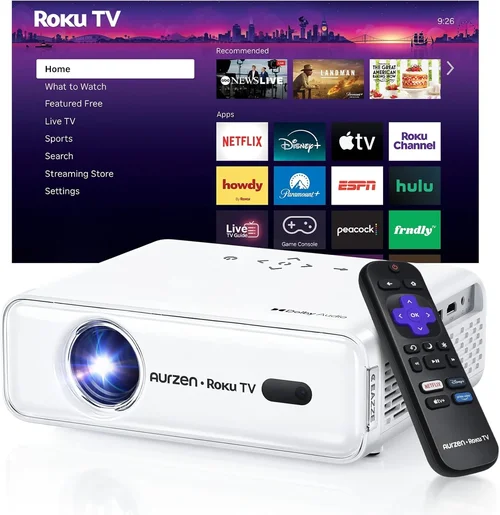
❌ Mistake: Ignoring Ambient Light Conditions
Why it’s bad: A projector rated at 1,500 lumens will look fantastic in a dark home theater but will appear washed out in a living room with sunlight streaming through windows.
What to do instead: Measure the typical lighting in your intended space. If you can’t control ambient light, aim for a minimum of 2,500 lumens and consider a model with high dynamic contrast.
❌ Mistake: Overlooking Throw Ratio
Why it’s bad: Buying a standard‑throw projector for a 6‑foot room may force you to place the unit too far back, resulting in a tiny image or the need for a massive screen.
What to do instead: Calculate the required throw distance (screen width × throw ratio). Short‑throw or ultra‑short‑throw models are ideal when space is limited.
❌ Mistake: Forgetting Lamp or Laser Life
Why it’s bad: Replacing a lamp can cost $150‑$250, and some cheap units have a lifespan of only 2,000 hours.
What to do instead: Prioritize laser‑light or high‑lumens LED options that promise 20,000+ hours of operation, especially if you plan to use the projector weekly.
❌ Mistake: Assuming All “Full HD” Is Equal
Why it’s bad: Some manufacturers label a 720p native panel as “Full HD” because it upscales content, leading to softer images.
What to do instead: Verify the native resolution in the spec sheet. True 1080p panels deliver sharper text and finer detail, especially for gaming and PC use.
❌ Mistake: Neglecting Input Lag for Gaming
Why it’s bad: A high‑quality image is meaningless if the picture lags behind controller inputs, ruining fast‑paced games.
What to do instead: Look for a projector with an explicit “Gaming Mode” or input lag ≤16 ms at 1080p/60 Hz. Test with a console if possible.
❌ Mistake: Skipping Connectivity Checks
Why it’s bad: You might end up with a projector that only has VGA and no HDMI, forcing you to buy adapters or missing out on 4K‑upscaled sources.
What to do instead: Ensure at least one HDMI 2.0 port, plus USB‑C or wireless casting if you plan to stream from mobile devices.
Budget Guidelines: How Much Should You Spend?
Understanding what you can realistically expect at each price tier helps you set expectations and avoid disappointment.
- Entry‑Level ($400‑$600): You’ll find genuine 1080p panels, but brightness will hover around 1,500 lumens. Colour accuracy is modest, and features like lens shift or advanced keystone are rare. Ideal for dark rooms or occasional movie nights.
- Mid‑Range ($601‑$850): This is the sweet spot for most buyers. Expect 2,200‑2,800 lumens, dynamic contrast >20,000:1, and added conveniences such as automatic keystone, built‑in speakers, and basic wireless casting. Many models also introduce low‑input‑lag gaming modes.
- Premium ($851‑$1,000): Here you get short‑throw optics, laser light sources, higher colour gamuts (up to 95% DCI‑P3), and robust connectivity (dual HDMI, Bluetooth, Wi‑Fi 6). These units are built for frequent use and mixed‑light environments.
- Luxury ($1,001+): While beyond the guide’s price ceiling, it’s worth noting that ultra‑short‑throw laser projectors with 4K‑enhanced upscaling exist. They offer cinema‑grade performance but often exceed $2,000.
Expert Tips for Getting the Best Deal
- Timing: New models launch in Q2 and Q4. Buying the previous generation in Q3 often yields 20‑30% savings while still offering excellent performance.
- Where to Buy: Major retailers like B&H, Best Buy, and Adorama provide price‑matching guarantees. Online marketplaces (Amazon, Newegg) often have user‑generated coupons.
- Spotting Deals: Look for bundle offers that include a screen, mounting kit, or extra lamp. The total value can be higher than buying each item separately.
- Warranty Extensions: Some brands sell extended warranties at a discount when purchased with the projector. Compare the cost versus an independent third‑party plan.
- Return Policies: Ensure a 30‑day return window with free shipping both ways. This allows you to test the projector in your actual environment.
- Testing Before Buying: If possible, visit a local AV store and view a demo unit on a 100‑inch screen. Pay attention to colour uniformity, fan noise, and keystone correction speed.
- Firmware Updates: Choose a model that receives regular firmware upgrades. These can improve lamp performance, add new streaming apps, and fix security vulnerabilities.
- Use a Proper Screen: A high‑gain 120‑inch screen can boost perceived brightness by up to 30% compared to a painted wall.

Frequently Asked Questions
Q: Do I need a projector screen, or can I use a blank wall?
A: While a white or light‑grey wall works for low‑lumens units in dark rooms, a dedicated screen improves colour accuracy, contrast, and brightness uniformity. For bright‑room use, a high‑gain screen is strongly recommended.
Q: How long does a typical projector lamp last?
A: Traditional UHP lamps average 2,000–3,000 hours. Laser and LED light sources extend life to 20,000–30,000 hours, reducing long‑term operating costs.
Q: Can I connect a gaming console directly via HDMI?
A: Yes. Look for HDMI 2.0 ports that support 1080p@60 Hz or higher. For the best experience, enable the projector’s “Game Mode” to minimise input lag.
Q: Is 1080p still relevant with 4K TVs everywhere?
A: Absolutely. 1080p projectors deliver a crisp image on screens up to 150 inches, and many models use pixel‑shifting technology to approximate 4K detail without the price premium.
Q: What’s the difference between “lumens” and “LED lumens”?
A: ANSI lumens measure the brightness of traditional lamp‑based projectors. LED‑lumens are a relative metric for LED or laser units and are not directly comparable. Always check the manufacturer’s conversion chart.
Q: Do I need a separate sound system?
A: Built‑in speakers are convenient but often lack the depth for cinematic audio. Pairing the projector with a soundbar or a 2.1 speaker system greatly enhances the viewing experience.
Q: How far should the projector be from the screen?
A: Use the throw ratio (screen width × throw ratio = distance). For a 100‑inch (16:9) screen and a 1.5 throw ratio, you’ll need about 6.5 feet of distance.
Q: Are there any health concerns with long‑term projector use?
A: Projectors emit low‑level blue light compared to LED TVs. Ensure the room is well‑ventilated, and take regular breaks to reduce eye strain, especially during marathon gaming sessions.
Our Final Recommendations
- Best for Budget‑Conscious Buyers: ViewSonic PA503W – 3,600 lumens, native 1080p, and a price around $450. Excellent brightness for bright rooms, though it lacks lens shift.
- Best Overall Value: BenQ TH671ST – Short‑throw, 3,000 lumens, 10,000:1 contrast, low input lag (≈16 ms), and priced at $699. Perfect for small living rooms and gamers.
- Best Premium Option: Epson Home Cinema 2150 – Laser‑light source, 2,500 lumens, 60,000:1 contrast, wireless mirroring, and a price just under $1,000. Ideal for mixed‑light home theaters.
- Best for Beginners: Optoma HD146X – Simple setup, 3,600 lumens, decent colour, and a friendly price of $529. No frills, reliable performance.
- Best for Advanced Users: LG HU80KA (when on sale) – Though typically $1,400, sales bring it under $1,000. Ultra‑short‑throw, 2,500 lumens, 4K‑upscaling, and excellent colour gamut for serious cinephiles.
Conclusion: Making the Right Choice
Choosing the best HD projector 1080p under $1,000 boils down to aligning three core elements: the lighting conditions of your space, the size of the image you desire, and the features that matter most to you. By evaluating brightness, contrast, throw ratio, and connectivity, you can avoid common pitfalls and invest in a unit that delivers cinema‑quality visuals without draining your wallet.
Remember, the cheapest model may cost you more in lamp replacements, while the most expensive one could waste money on features you’ll never use. Use the budget breakdown, the expert tips, and the model recommendations above as a roadmap. Test the projector in your own environment whenever possible, and don’t forget to pair it with a good screen and sound system for the full experience.
Ready to bring your movies, games, and presentations to life? Dive into the product pages, compare prices, and make a confident purchase today. Happy viewing!