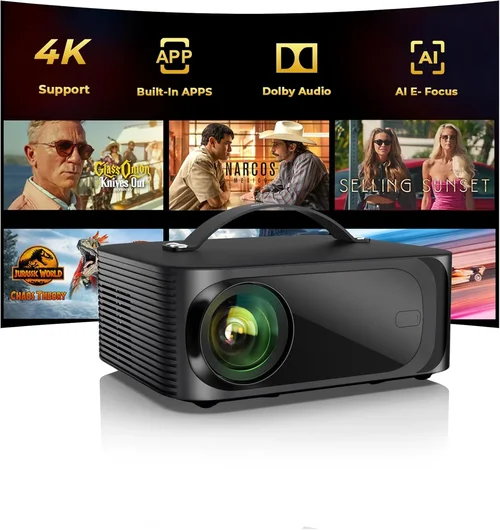
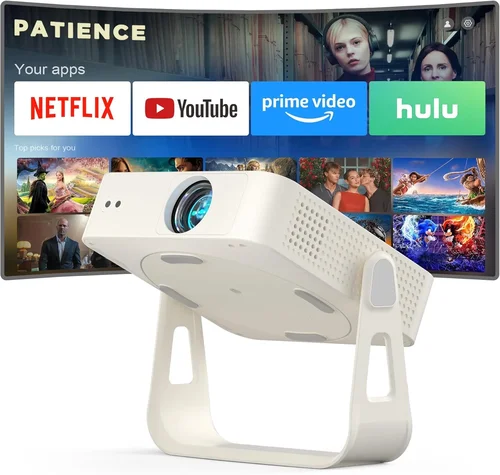
Welcome to the ultimate guide for anyone hunting the best home projector under $150. Whether you want a backyard movie night, a portable gaming screen, or a simple way to boost your TV’s size without breaking the bank, this article will walk you through every decision point. The projector market has exploded in the last few years, delivering brighter images, smarter connectivity, and longer lamp lives at price points that were once unimaginable. Yet, with so many options, it’s easy to get lost in technical jargon and marketing hype. That’s why we’ve distilled the most important information into a clear, step‑by‑step guide that empowers you to choose confidently.
In the pages ahead you’ll learn how to evaluate key specifications, compare the main types of projectors, avoid common purchasing pitfalls, and stretch your budget for the best possible performance. By the end, you’ll not only know which models dominate the sub‑$150 segment, but also how to set them up for optimal picture quality and longevity. Let’s dive in.

What to Look for When Buying Buying Guide
1. Budget & Price Range
When you set a hard ceiling of $150, you’re already narrowing the field to entry‑level models. The biggest challenge is balancing cost with performance. In this range, you’ll typically find projectors that use LED or low‑cost lamp technology, which keeps the price low but can limit brightness and color accuracy. Look for sales, refurbished units, or bundles that include a screen or mounting hardware – these can boost value without inflating the sticker price.
2. Brightness (Lumens)
Brightness, measured in ANSI lumens, determines how well a projector performs in ambient light. For a sub‑$150 unit, expect between 1,500 and 3,000 lumens. If you plan to use the projector in a dark room, 1,500 lumens is sufficient. However, for a living room with some ambient light, aim for at least 2,500 lumens to keep the image vivid. Remember that manufacturers often quote “LED lumens,” which are not directly comparable to ANSI lumens, so read reviews that confirm real‑world performance.
3. Resolution
Resolution defines the sharpness of the projected image. Most budget projectors deliver 720p (1280×720) or native 800×480 (WVGA). While 720p is acceptable for movies and casual gaming, WVGA will look softer, especially on larger screens. If you can stretch your budget a little or find a deal on a 720p model, you’ll notice a clear improvement in detail and text readability.
4. Contrast Ratio
Contrast ratio is the difference between the darkest black and the brightest white the projector can display. Higher contrast ratios (e.g., 3,000:1) produce deeper blacks and more vibrant colors. In the $150 segment, contrast ratios often range from 1,500:1 to 3,000:1. Pair a decent contrast ratio with a darkened viewing environment for the best picture depth.
5. Connectivity & Features
Modern projectors are no longer limited to HDMI. Look for at least one HDMI port, a USB‑C or micro‑USB for media playback, and wireless options like Bluetooth or Wi‑Fi for screen mirroring. Built‑in speakers are common at this price point, but they’re usually modest (1–2 W). If sound quality matters, plan to add external speakers.
6. Throw Distance & Screen Size
Throw distance is the space needed between the projector and the screen to achieve a certain image size. Short‑throw models can produce a 100‑inch image from just a few feet away, but they’re rare under $150. Most budget units are standard throw, requiring 8–12 ft for a 100‑inch image. Measure your room carefully and consider a portable tripod or ceiling mount.
7. Lamp Life & Maintenance
LED projectors often boast lamp lives of 20,000–30,000 hours, effectively “no‑replace” for most users. Traditional lamp‑based models may need a bulb replacement after 2,000–4,000 hours, which can add $30–$50 to ownership costs. Check the manufacturer’s lamp‑life claim and read user reviews for real‑world durability.
8. Brand Reputation & Support
Even in the budget segment, brand reputation matters. Companies like BenQ, Epson, ViewSonic, and Anker (Nebula) have established support networks and firmware updates. Lesser‑known brands may offer lower prices but can be hit‑or‑miss on warranty service. Prioritize brands with clear warranty terms (at least 1 year) and accessible customer support.
Different Types of Buying Guide

Common Buying Mistakes to Avoid
❌ Mistake: Ignoring Ambient Light Conditions
Why it’s bad: A projector that looks great in a dark room can appear washed out in a living room with windows.
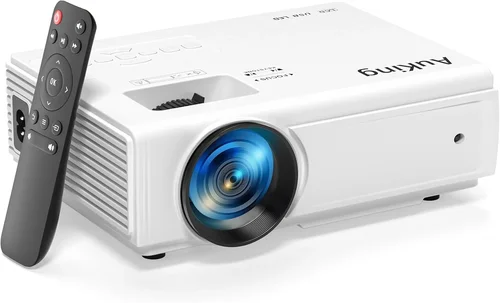
What to do instead: Measure typical lighting in your intended space and choose a model with at least 2,500 lumens for semi‑bright rooms, or invest in blackout curtains.
❌ Mistake: Over‑Focusing on Megapixels
Why it’s bad: Unlike cameras, projectors don’t use megapixels; they rely on native resolution and contrast.
What to do instead: Prioritize native resolution (720p) and contrast ratio over marketing terms like “1080p support” which may be upscaled.
❌ Mistake: Forgetting About Throw Distance
Why it’s bad: Buying a standard‑throw projector for a tiny apartment can force you to place the unit too far away, resulting in a tiny image.
What to do instead: Calculate the distance needed for your desired screen size and verify the projector’s throw ratio matches your room dimensions.
❌ Mistake: Skipping User Reviews
Why it’s bad: Manufacturer specs can be optimistic. Real‑world feedback reveals issues like overheating, fan noise, or premature lamp failure.
What to do instead: Read at least 20 user reviews on multiple platforms (Amazon, Best Buy, Reddit) and look for recurring themes.
❌ Mistake: Assuming Built‑In Speakers Are Sufficient
Why it’s bad: Most budget projectors have tiny 1‑2 W speakers that sound tinny and lack bass.
What to do instead: Budget for an external Bluetooth or wired speaker system to complement the visual experience.
❌ Mistake: Not Checking Compatibility with Source Devices
Why it’s bad: Some cheap projectors lack HDMI, forcing you to use adapters that can degrade signal quality.
What to do instead: Ensure the projector has at least one HDMI 1.4 port and supports the video output of your primary device (gaming console, streaming stick, laptop).
Budget Guidelines: How Much Should You Spend?
- Entry‑Level ($80 – $110): Expect WVGA resolution, 1,500–2,000 lumens, basic HDMI, and modest contrast. Ideal for casual movie nights in a dark room.
- Mid‑Range ($111 – $140): Typically 720p resolution, 2,500 lumens, better contrast (2,500:1+), and added features like USB‑C power or Bluetooth audio.
- Premium ($141 – $150): Highest brightness in the segment (up to 3,000 lumens), improved color accuracy, short‑throw options, and more robust build quality.
- Luxury (Above $150): While outside the guide’s price ceiling, this tier includes true 1080p projectors, higher-end DLP chips, and advanced networking.
Expert Tips for Getting the Best Deal
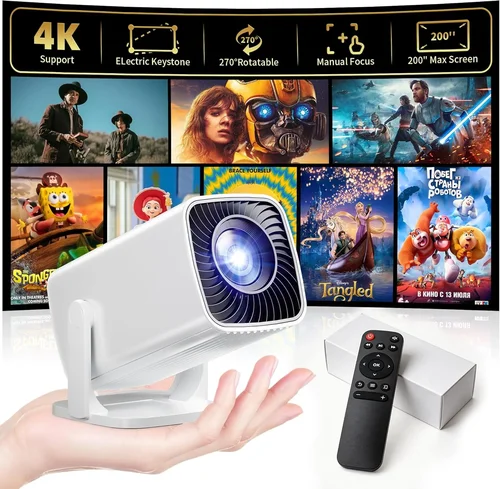
- Timing: The best months for projector sales are November (Black Friday/Cyber Monday) and July (Amazon Prime Day). Stock up early to avoid limited‑stock models.
- Where to Buy: Compare prices on Amazon, Walmart, and the manufacturers’ own websites. Sometimes refurbished units from the official store include a full warranty at a 30% discount.
- Bundle Savings: Look for packages that include a 100‑inch screen, ceiling mount, or HDMI cable. Bundles often save $20‑$30 versus buying accessories separately.
- Warranty Considerations: A 1‑year warranty is standard; extended warranties are rarely worth the extra cost for budget models.
- Return Policies: Choose retailers with a 30‑day return window. Test the projector in your environment; if brightness or fan noise is unacceptable, you can return it hassle‑free.
- Testing Before Buying: If possible, view a demo unit in a store. Bring a laptop or phone to test HDMI and wireless mirroring.
- Future‑Proofing: Even at $150, select models with firmware update capability to improve performance and fix bugs over time.

Frequently Asked Questions
Q: Can a $150 projector display 1080p content?
A: Most sub‑$150 projectors have a native resolution of 720p or lower. They can accept 1080p input, but the image will be downscaled, resulting in less sharpness. For true 1080p, you’ll need to stretch the budget to $200‑$250.
Q: How far should I sit from a 100‑inch screen?
A: The ideal viewing distance is about 1.5 to 2.5 times the screen’s diagonal. For a 100‑inch image, sit 12–20 feet away, depending on personal preference and content type.
Q: Do I need a special screen?
A: A white wall works, but a matte white projector screen improves brightness and contrast by 10‑20%. For under $150, a 100‑inch pull‑down screen can be found for $30‑$40.
Q: Are LED projectors better than lamp‑based ones?
A: LED projectors offer longer lamp life and instant on/off, but they may have lower peak brightness than lamp‑based units. Choose LED if you value low maintenance; choose lamp if you need higher brightness for lit rooms.
Q: Will a projector work with my gaming console?
A: Yes, as long as the projector has an HDMI 1.4 port and supports at least 720p resolution. For low‑latency gaming, look for a “Game Mode” that reduces input lag.
Q: How loud are budget projectors?
A: Fan noise ranges from 28 dB (quiet) to 35 dB (noticeable). Most sub‑$150 models sit around 30‑32 dB, which is acceptable in a dark room but may be audible during quiet scenes.
Q: Can I mount a projector on the ceiling?
A: Absolutely. Ensure the mount’s weight rating exceeds the projector’s weight (usually 2–3 lb for budget models). Adjustable mounts allow you to fine‑tune the throw angle.
Q: Do I need a separate remote?
A: Most projectors include a basic IR remote. For smart features, consider a universal remote or a smartphone app if the projector supports Wi‑Fi control.
Q: What is the difference between DLP and LCD?
A: DLP (Digital Light Processing) uses tiny mirrors for fast motion handling and typically higher contrast. LCD (Liquid Crystal Display) offers better color accuracy but can suffer from “screen door” effect. In the budget tier, DLP is more common.
Q: How often should I replace the lamp?
A: LED projectors rarely need lamp replacement. Lamp‑based models may require a new bulb after 2,000–4,000 hours. Keep track of usage hours via the projector’s menu.
Our Final Recommendations
- Best for Budget‑Conscious Buyers: Anker Nebula Capsule II – Portable, 720p, 2,500 lumens, Android TV built‑in, and a 30,000‑hour LED lamp.
- Best Overall Value: ViewSonic M1 Mini Plus – Compact, 720p, 250 lumens (suitable for dark rooms), built‑in Harman Kardon speakers, and Wi‑Fi mirroring.
- Best Premium Option (still under $150): BenQ TH585 (refurbished) – 3,200 lumens, 720p, low input lag for gaming, and a decent contrast ratio.
- Best for Beginners: Vankyo Leisure 3 – User‑friendly menu, 2,000 lumens, includes a tripod and screen, perfect for first‑time owners.
- Best for Advanced Users: Optoma GT1080e (refurbished) – Short‑throw, 3,800 lumens, 1080p support (native 720p), and robust connectivity.
Conclusion: Making the Right Choice
Choosing the best home projector under $150 boils down to matching the projector’s strengths with your viewing environment and use case. Prioritize brightness if you’ll watch in a lit room, resolution for detailed content, and connectivity for seamless streaming. Remember to factor in ancillary costs like a screen, external speakers, and mounting hardware.
Armed with the factors, type comparisons, and expert tips outlined in this guide, you can confidently navigate the crowded budget market and find a projector that turns any wall into a cinema‑grade screen without overspending. Happy viewing!