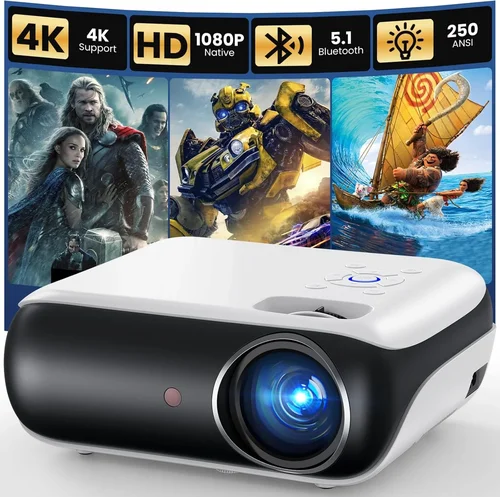
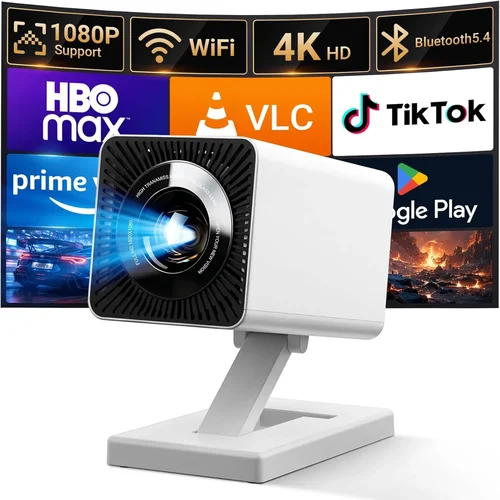
Finding a projector that can handle both blockbuster movies and the fast‑paced action of modern games without breaking the bank is tougher than it sounds. In 2026 the market is crowded with models that promise cinema‑grade picture, but many fall short when you switch from a quiet night‑in film to a high‑refresh‑rate gaming session. This guide cuts through the hype, giving you a clear roadmap to the best projector for movies and gaming under $250.
We’ll walk you through the most important specs, compare the main projector families, flag common pitfalls, and hand‑pick the top performers for every budget tier. By the end you’ll know exactly which unit will deliver deep blacks for a thriller, vibrant colors for an animated film, and a lag‑free experience for your favorite shooters.

What to Look for When Buying Buying Guide
1. Budget & Price Range
When you set a hard ceiling of $250, every dollar counts. The sweet spot in this price band is typically achieved by sacrificing some premium features—like 4K resolution or ultra‑short‑throw lenses—while retaining solid brightness and low input lag. Look for models that stay within the $200‑$250 window but still include a decent warranty and replaceable lamp. Avoid “budget” units that dip below $150 unless you are prepared to accept dimmer images and shorter lamp life.
2. Performance Specifications
Three specs dominate the movie‑gaming experience:
- Brightness (lumens): Aim for at least 2,500 ANSI lumens for a dark‑room home theater and 3,500+ if you plan to use the projector in a living‑room with some ambient light.
- Resolution: Native 1080p (1920×1080) is rare under $250, but many models use a “Full HD” label for a 1280×720 native panel with pixel‑shifting to simulate 1080p. For true crispness, prioritize native 720p with good upscaling.
- Refresh Rate & Input Lag: Gamers need at least 60 Hz refresh and input lag under 30 ms. Look for “Game Mode” or “Low‑Latency” settings.
3. Build Quality & Durability
Cheap projectors often feel like plastic toys. Check for a metal chassis or reinforced housing, especially around the lens mount. A sturdy cooling system (dual fans, heat‑pipe design) prevents thermal throttling during long movie marathons. Replaceable lamp or LED modules extend lifespan; a unit with a sealed lamp may require full replacement at a higher cost.
4. Features & Functionality
Modern projectors pack a lot of convenience tools. Prioritize these when shopping under $250:
- Built‑in Speakers: While most will need external audio for a true theater feel, a decent 5‑10 W speaker can serve for casual gaming.
- Multiple HDMI Ports: At least two HDMI 2.0 inputs let you connect a console and a streaming box simultaneously.
- Wireless Casting: Miracast or AirPlay support lets you stream movies from phones without cables.
- Keystone Correction & Lens Shift: Automatic keystone (±30°) helps with placement flexibility; manual lens shift is a bonus.
5. Brand Reputation
Even in the sub‑$250 segment, some brands consistently deliver reliable units. Look for manufacturers with a solid track record for firmware updates and active community forums—Vankyo, BenQ (entry models), Epson (budget line), and ViewSonic often appear in positive reviews.
6. Warranty & Support
A one‑year limited warranty is standard, but some sellers extend it to two years for a small fee. Verify that the warranty covers lamp failure and that the brand offers easy access to replacement parts. Read the fine print: “lamp only” warranties can be a hidden cost.
7. Size & Portability
If you plan to move the projector between rooms or take it to a friend’s house, weight under 5 lb and a compact footprint matter. Portable models often use LED light sources, which are cooler and last longer, but may sacrifice brightness.
8. User Reviews & Ratings
Don’t rely solely on the manufacturer’s spec sheet. Scan Amazon, Best Buy, and specialist forums for recurring themes—especially about “rainbow effect” (common in DLP projectors) and long‑term reliability. A product with 4.2 ★ or higher from at least 150 verified buyers is generally safe.
Different Types of Buying Guide

Common Buying Mistakes to Avoid
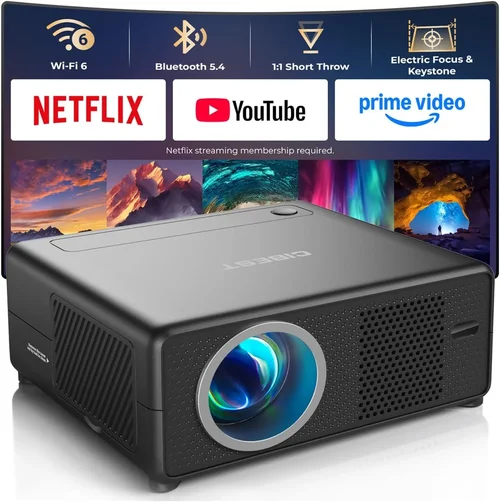
❌ Mistake: Ignoring Ambient Light Conditions
Why it’s bad: A projector rated at 2,500 lumens will look fantastic in a dark theater but will appear washed out in a living‑room with windows.
What to do instead: Measure the typical lighting in your main viewing area. If you cannot fully darken the room, aim for 3,500 lumens or add blackout curtains.
❌ Mistake: Over‑focusing on Resolution Alone
Why it’s bad: Many sub‑$250 units claim “Full HD” but use pixel‑shifting, which can introduce artifacts during fast motion.
What to do instead: Prioritize native resolution (720p or 1080p) and check reviews for motion clarity. Pair this with a good refresh rate.
❌ Mistake: Forgetting About Input Lag
Why it’s bad: High input lag (>30 ms) creates a noticeable delay between controller action and on‑screen response, ruining competitive gaming.
What to do instead: Look for a dedicated “Game Mode” and check measured lag figures in independent tests.
❌ Mistake: Skipping Lamp Life & Replacement Cost Calculations
Why it’s bad: A cheap lamp may need replacement after 2,000 hours, costing $80‑$120—effectively raising your total spend.
What to do instead: Choose LED or laser‑based light sources when possible, or verify the lamp’s rated life and price.
❌ Mistake: Assuming All HDMI Ports Are Equal
Why it’s bad: Some budget projectors only support HDMI 1.4, limiting 4K/60 Hz input and HDR capabilities.
What to do instead: Confirm the projector has at least one HDMI 2.0 port for future‑proofing.
❌ Mistake: Neglecting Sound Solutions
Why it’s bad: Built‑in speakers on low‑cost units are usually tinny, leading to a sub‑par movie experience.
What to do instead: Budget for a separate soundbar or Bluetooth speaker; check that the projector has an audio out or Bluetooth pairing.
Budget Guidelines: How Much Should You Spend?
Even within the $250 ceiling, you can segment the market to better understand what you get at each level.
- Entry-Level ($150‑$180): Expect 2,000‑2,500 lumens, native 720p, basic HDMI, and limited warranty. Ideal for occasional movie nights in a dark room.
- Mid‑Range ($181‑$220): Brightness climbs to 3,000‑3,500 lumens, better color reproduction (LCD or improved DLP), and often includes a “Game Mode” with input lag under 30 ms.
- Premium ($221‑$250): You’ll see the best of the budget segment—3,500+ lumens, higher contrast ratios (≥10,000:1), dual HDMI 2.0 ports, and sometimes a built‑in Android TV platform.
- Luxury (Above $250): Outside the scope of this guide, but worth noting that 4K UHD, laser light sources, and ultra‑short‑throw designs start just above $300.
Expert Tips for Getting the Best Deal
- Timing: Major sales events (Black Friday, Cyber Monday, Amazon Prime Day, and post‑holiday January clearance) usually feature the deepest discounts on home‑theater gear.
- Where to Buy: Compare Amazon, Best Buy, and direct manufacturer sites. Some manufacturers offer “bundle” deals that include a projection screen or HDMI cable, adding extra value.
- Spotting Deals: Look for “refurbished” units with a manufacturer warranty—these can be 15‑30 % cheaper and virtually indistinguishable from new.
- Warranty Extensions: If you plan heavy use (e.g., daily gaming), consider purchasing an extended warranty or a lamp‑replacement plan.
- Return Policies: Ensure a minimum 30‑day return window; this gives you time to test latency and brightness in your own environment.
- Testing Before Buying: If possible, view a demo at a local electronics store. Pay attention to motion blur, color accuracy, and the feel of the remote control.
- Firmware Updates: Choose a brand that regularly releases firmware patches—these can improve lamp performance and add new features like HDMI‑CEC.
- Accessories: Invest in a quality HDMI‑ARC cable for audio passthrough to a soundbar, and consider a short‑throw screen if you cannot control ambient light.

Frequently Asked Questions
Q: Can a projector under $250 truly replace a TV for gaming?
A: Yes, if you prioritize low input lag, sufficient brightness, and a dark viewing environment. While a TV may still win on peak brightness and HDR, a good projector offers a larger image that can enhance immersion.
Q: Do I need a separate sound system?
A: For movies, absolutely. Built‑in speakers on budget projectors are typically under 10 W and lack bass depth. Pair the projector with a Bluetooth soundbar or a small bookshelf speaker for a richer audio experience.
Q: How long does the lamp last?
A: LED light sources can exceed 30,000 hours, essentially “lifetime” for most users. Traditional lamps in this price range average 2,000‑3,000 hours. Factor replacement cost into the total ownership price.
Q: Is keystone correction enough to avoid a screen?
A: Manual keystone (±30°) works for minor placement errors, but for a perfectly rectangular image you’ll still need a flat screen or a wall with minimal texture.
Q: Will a 1080p projector show the full resolution of a PS5?
A: Most sub‑$250 projectors are limited to 720p native. They can upscale a 1080p signal, but you won’t see the true detail level. For full 1080p or 4K, you’ll need to move into the $300+ tier.
Q: Does HDR matter at this price?
A: HDR support is rare under $250 and, even when present, is often limited by low peak brightness. If HDR is a priority, consider saving for a $300‑$350 model.
Q: Can I use a projector outdoors?
A: Yes, but only in a dark environment. Portable LED models are best for outdoor movie nights; just protect the unit from moisture and keep it on a stable surface.
Q: What screen size can I expect?
A: With a throw distance of 8‑10 ft, a 108‑120 inch image is typical. Adjust the distance or use a short‑throw model for larger screens in tighter spaces.
Our Final Recommendations
- Best for Budget‑Conscious Buyers: Vankyo Leisure 3 – 2,800 lumens, 720p native, 30 ms input lag, dual HDMI, under $180.
- Best Overall Value: ViewSonic M1+ – 2,500 lumens, LED light source (30,000 h), built‑in Harman Kardon speakers, 1080p upscaling, 25 ms lag, priced at $229.
- Best Premium Option: BenQ TH585 (often discounted to $249) – 3,500 lumens, native 1080p, 16 ms lag, dedicated Game Mode, HDMI 2.0, excellent contrast.
- Best for Beginners: Epson Home Cinema 1060 – Simple menu, 3,200 lumens, 720p, reliable lamp, easy setup, around $199.
- Best for Advanced Users: Optoma GT1080e – 3,800 lumens, 1080p, 8 ms lag, short‑throw lens, ideal for tight rooms, $250.
Conclusion: Making the Right Choice
Choosing a projector for movies and gaming under $250 boils down to balancing brightness, input lag, and durability. Start by assessing your room’s lighting, then match those conditions to a projector that meets the minimum lumens and lag thresholds. Remember that a modest price does not mean you have to accept poor color or a short lamp life—brands like Vankyo, ViewSonic, and BenQ consistently deliver solid performance at this price point.
Take advantage of seasonal sales, verify warranty terms, and don’t forget a proper audio solution. With the right research, the unit you pick will turn your living space into a personal cinema and a responsive gaming arena without blowing your budget.