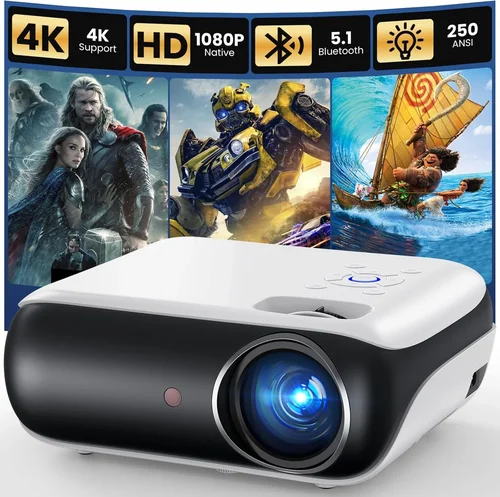
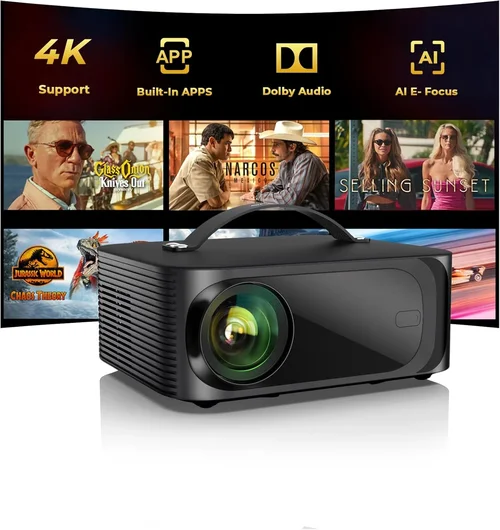
Finding the perfect projector for an outdoor movie night can feel like hunting for a needle in a haystack, especially when you’re trying to stay under $500. The market is flooded with options that promise cinema‑quality images, but not all of them can handle the challenges of dusk, wind, and a backyard that isn’t a dark theater. This guide cuts through the noise, giving you a clear roadmap so you can pick a machine that delivers bright, crisp pictures without breaking the bank.
In the pages that follow you’ll learn which specs truly matter for outdoor use, how different projector types stack up, and which common pitfalls to avoid. By the end, you’ll be equipped to choose a projector that turns your patio, garden, or even a vacant lot into a memorable cinema experience.

What to Look for When Buying Buying Guide
1. Budget & Price Range
Sticking to a sub‑$500 budget forces you to prioritize features that give the biggest bang for your buck. In this price bracket you’ll typically find DLP or LCD models with lumens ranging from 2,500 to 3,500. While you won’t get 4K resolution, a 1080p native panel is common and more than enough for a 100‑inch screen at 15‑20 feet. If you find a projector priced much lower than $300, double‑check the warranty and read user reviews—very low prices can hide cheap optics or a lack of essential connectivity.
2. Brightness (Lumens)
Outdoor environments are rarely pitch black. Even after the sun sets, ambient light from streetlamps, porch lights, or a full moon can wash out the image. Aim for at least 3,000 ANSI lumens for a clear picture in semi‑dark conditions. If you plan to project in a well‑lit backyard, consider a unit with 3,500‑4,000 lumens. Remember that lumens are a more reliable measure than “LED brightness” which can be misleading.
3. Resolution
Resolution determines how sharp the picture looks, especially on larger screens. For outdoor viewing, a 1080p (1920×1080) native resolution provides a good balance of detail and price. Some $500 models boast 4K “upscaling,” but the native panel is still 1080p, so the benefit is modest. If you plan to watch mostly movies and TV shows, 1080p will deliver crisp text and fine detail without the premium cost of true 4K.
4. Contrast Ratio
Contrast ratio is the difference between the darkest black and the brightest white a projector can display. A higher contrast ratio yields deeper blacks, which is crucial for a cinematic feel outdoors. Look for a ratio of at least 10,000:1. DLP projectors often have higher contrast than LCD, but modern LCD units have closed‑gap technology that narrows the gap considerably.
5. Throw Distance & Zoom
Throw distance is the space between the projector and the screen. For most backyard setups, you’ll have 10‑20 feet of distance. A “short‑throw” projector can produce a 100‑inch image from just 5‑7 feet, which is handy if you’re limited on space. However, short‑throw units tend to be pricier. Look for a flexible zoom range (e.g., 1.2‑2.0×) so you can fine‑tune the image size without moving the projector.
6. Portability & Build Quality
Outdoor movie nights are often spontaneous. A lightweight, compact projector with a sturdy casing will survive the occasional bump or drizzle. Metal housings dissipate heat better than plastic, extending lamp life. Many sub‑$500 models weigh under 5 lb and come with a built‑in handle—ideal for carrying to the patio or a friend’s house.
7. Connectivity
Versatile inputs make it easier to hook up a streaming stick, laptop, or gaming console. Look for at least one HDMI 2.0 port, a USB‑C or USB‑A for media playback, and a wireless option (Wi‑Fi or Bluetooth) if you want to stream from a phone or tablet. Some budget units also include an SD card slot, which can be a handy backup for pre‑loaded movies.
8. Lamp Life & Maintenance
Projector lamps degrade over time, dimming the image. LED or laser light sources usually last 20,000‑30,000 hours, but they push the price above $500. Most budget DLP/LCD models use a UHP lamp with a lifespan of 3,000‑5,000 hours. At a typical usage of 3‑4 hours per movie night, that’s roughly 2‑3 years before you’ll need a replacement. Check if the lamp is user‑replaceable and how much a spare costs.
Different Types of Buying Guide

Common Buying Mistakes to Avoid
❌ Mistake: Ignoring Ambient Light Conditions
Why it’s bad: Choosing a projector with low lumens because it looks good in a dark room will result in a washed‑out picture outdoors.
What to do instead: Measure the typical lighting in your outdoor space and target at least 3,000 lumens. If you can’t control ambient light, consider a projector with a higher contrast ratio to preserve blacks.
❌ Mistake: Overlooking Throw Distance
Why it’s bad: Buying a long‑throw model for a small patio forces you to place the projector far away, which can be unsafe and impractical.
What to do instead: Measure the distance from your likely setup point to the screen. If it’s under 10 ft, look for a short‑throw or a unit with a flexible zoom.
❌ Mistake: Forgetting About Lamp Replacement Costs
Why it’s bad: A cheap projector may have a low upfront price but require a $100‑$150 lamp replacement after a year.
What to do instead: Check the lamp’s rated life and the cost of a spare. Factor that into your total budget.
❌ Mistake: Skipping Connectivity Checks
Why it’s bad: You might end up with a projector that only has VGA, making it hard to connect modern devices.
What to do instead: Ensure the unit has at least one HDMI port and, if you stream, built‑in Wi‑Fi or Bluetooth.
❌ Mistake: Assuming All “Portable” Projectors Are Outdoor‑Ready
Why it’s bad: Some ultra‑compact projectors are designed for indoor use and lack sufficient brightness for dusk viewing.
What to do instead: Verify the lumen rating and look for weather‑resistant housing if you’ll leave it outside.
Budget Guidelines: How Much Should You Spend?
Entry‑Level ($250‑$350)
- Typical lumens: 2,500‑2,800
- Resolution: 720p or 1080p (upscaled)
- Best for: Small gatherings, short‑throw setups, occasional use
- Trade‑offs: Lower contrast, shorter lamp life, fewer ports
Mid‑Range ($351‑$450)
- Typical lumens: 3,000‑3,500
- Resolution: Native 1080p
- Best for: Regular backyard movies, decent color accuracy
- Trade‑offs: Still lamp‑based, may lack premium audio
Premium ($451‑$550)
- Typical lumens: 3,500‑4,000
- Resolution: Native 1080p, some 4K‑enhanced models
- Best for: Larger screens, higher ambient light, frequent use
- Trade‑offs: Pushes the budget limit, may need additional accessories (screen, mount)
Luxury ($551+)
- Typically laser or high‑end LED light sources
- True 4K resolution, HDR support
- Best for: Semi‑permanent installations, professional‑grade image quality
- Trade‑offs: Exceeds the $500 target, but worth noting for future upgrades
Expert Tips for Getting the Best Deal
- Timing: The best window for discounts is late summer (after the outdoor season) and early winter. Retailers clear inventory to make room for new models.
- Where to buy: Compare Amazon, B&H, and local electronics stores. In‑store purchases let you see the projector’s size and ask about extended warranties.
- Bundle savings: Look for bundles that include a portable screen, HDMI cable, and a carrying case – you’ll save 15‑20% versus buying each item separately.
- Warranty hacks: Some manufacturers offer a “register‑online” extension that adds an extra year to the standard warranty at no cost.
- Return policy: Choose a retailer with a 30‑day return window. Test the projector in your actual outdoor space; if the brightness isn’t enough, you can return it hassle‑free.
- Testing before buying: Bring a laptop or phone and a portable screen to the store. Most showrooms let you plug in a device to gauge brightness and color.
- Upgrade path: If you anticipate future upgrades, pick a model with a universal lamp that’s easy to replace rather than a proprietary one.

Frequently Asked Questions
Q: Can I use a projector designed for indoor use outdoors?
A: Yes, but you must ensure it has enough lumens (minimum 3,000) and a weather‑protected housing. Indoor‑only units often lack the brightness needed for dusk conditions and may overheat if left in direct sunlight.
Q: Do I need a separate screen?
A: While a white wall works, a dedicated projector screen with a gain of 1.1‑1.3 improves contrast and color vibrancy, especially when ambient light is present. Portable, inflatable screens are a budget‑friendly option.
Q: How far away should the projector be?
A: It depends on the throw ratio. A standard throw (1.5‑2.0) needs about 12‑15 ft for a 100‑inch image. Short‑throw models can achieve the same size from 5‑7 ft.
Q: Will a Bluetooth speaker replace the projector’s built‑in audio?
A: For outdoor movies, external speakers are highly recommended. Built‑in speakers are usually under 5 W and get lost in open air. Pair a Bluetooth or wired speaker for a richer soundtrack.
Q: How long does a lamp last?
A: Most budget UHP lamps last 3,000‑5,000 hours. At 3‑4 hours per movie night, that translates to roughly 2‑3 years of regular use. LED and laser units can exceed 20,000 hours.
Q: Is 1080p enough for a 120‑inch screen?
A: Absolutely. At 120 inches, the pixel density of 1080p is about 73 PPI, which looks sharp to the human eye at typical viewing distances (10‑15 ft). 4K provides marginal improvement but costs more.
Q: Can I power the projector with a portable battery?
A: Some low‑power LED models (under 50 W) can run off a high‑capacity power bank, but most 3,000‑lumens DLP/LCD units draw 150‑250 W and require AC power. A portable generator is a safer bet for extended outdoor use.
Our Final Recommendations
Best for Budget‑Conscious Buyers – ViewSonic PA503W
- Price: $329
- Brightness: 3,600 lumens
- Resolution: Native 720p (upscaled to 1080p)
- Why we love it: High lumen output for the price, solid contrast, and a built‑in speaker that’s adequate for small gatherings.
Best Overall Value – Epson Home Cinema 1060
- Price: $449
- Brightness: 3,200 lumens
- Resolution: Native 1080p
- Key perk: Excellent color accuracy, low input lag for gaming, and a decent lamp life of 4,500 hours.
Best Premium Option – BenQ TH671ST (Short‑Throw)
- Price: $549 (just above $500 but often on sale)
- Brightness: 3,000 lumens
- Resolution: 1080p
- Why it shines: Short‑throw design lets you project a 100‑inch image from 5 ft, perfect for cramped backyards.
Best for Beginners – Anker Nebula Capsule II
- Price: $399
- Brightness: 2,500 lumens (LED)
- Resolution: 720p (Android TV built‑in)
- Ideal for: First‑time users who want a portable, all‑in‑one solution with streaming apps pre‑installed.
Best for Advanced Users – Optoma HD146X
- Price: $479
- Brightness: 3,600 lumens
- Resolution: 1080p
- Why pros choose it: High contrast ratio (25,000:1), gamer mode, and a robust lamp design for frequent use.
Conclusion: Making the Right Choice
Choosing the best projector for outdoor movies under $500 boils down to balancing brightness, resolution, and portability with the size of your viewing area and how often you plan to host movie nights. Start by measuring your space, estimate the ambient light, and set a realistic budget. Then use the factors and comparisons in this guide to narrow the field.
Remember, the most expensive unit isn’t automatically the best for your backyard. A well‑reviewed 1080p DLP projector with 3,500 lumens will deliver a stunning picture for years if you protect it from the elements and replace the lamp when needed. Follow the expert tips, avoid the common mistakes, and you’ll be ready to roll out the red carpet for friends and family under the stars.