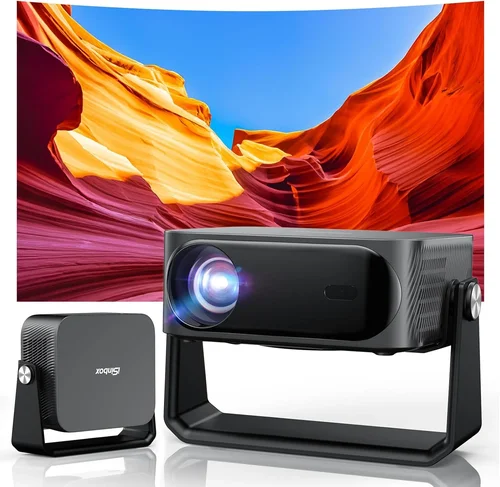
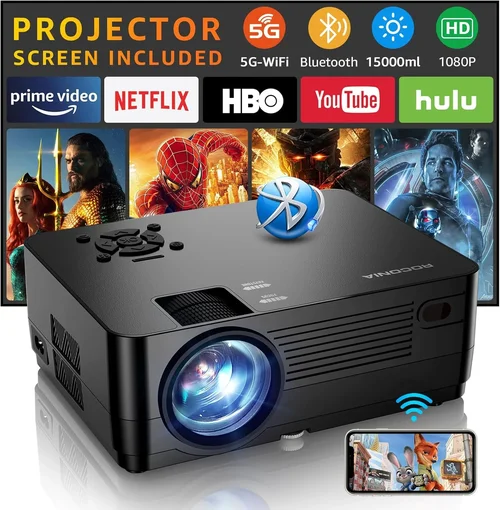
If you’ve ever dreamed of turning your living room into a home‑theater or creating a cinematic experience for gaming nights, a 4K projector is the ticket. Yet the market is flooded with options, and the $2,000 ceiling often feels like a glass wall that keeps the most dazzling models just out of reach. This guide breaks down exactly why that wall exists, what you can realistically expect under $2,000, and how to pick a projector that feels tailor‑made for your space and habits.
By the end of this article you’ll know the essential specs, the hidden features that separate a good purchase from a great one, and which models consistently outperform the competition. We’ll also walk you through the different projector categories, common pitfalls, budget planning, and expert tips that will save you both money and frustration. In short, this is the one‑stop resource for anyone hunting the best 4K projector under $2,000 in 2026.

What to Look for When Buying Buying Guide
1. Budget & Price Range
Even though the headline sets a $2,000 limit, not every dollar is created equal. Some manufacturers pack premium optics into a lower price tier, while others inflate cost with branding and accessories you may never use. Start by defining a realistic ceiling (for most, $1,500‑$1,950) and allocate portions of that budget to core performance (brightness, contrast) versus nice‑to‑have extras (lens shift, HDR support). Remember, a modestly priced projector that meets your primary needs will always beat a pricier model that excels in an area you never use.
2. Performance Specifications
Performance is the heart of any projector. Focus on three key numbers:
- Resolution: True 4K (3840×2160) is rare under $2,000; most “4K” units use pixel‑shifting technology to simulate the resolution. Look for “4K UHD” or “4K‑enhanced” and verify the native chip size (e.g., 1920×1080 DLP with 4× pixel shift).
- Brightness: Measured in lumens, a minimum of 2,500 ANSI lumens is advisable for rooms with ambient light. Dark home‑theaters can get away with 1,800‑2,200 lumens.
- Contrast Ratio: Higher contrast delivers deeper blacks. Aim for at least 20,000:1; many budget models claim higher numbers, but real‑world performance often falls short.
3. Build Quality & Durability
A projector is an investment that should last 5‑7 years with proper care. Metal housings, robust cooling fans, and sealed optical chambers protect against dust and heat. Check user forums for reports of overheating or premature lamp (or laser) degradation. Models with sealed laser light sources typically enjoy longer lifespans (20,000+ hours) compared to traditional lamps.
4. Features & Functionality
Feature sets can make daily use a joy or a chore. Prioritize the following:
- HDR Support: HDR10 is the baseline; Dolby Vision is still rare at this price.
- Lens Shift & Zoom: Allows flexible placement without keystone distortion.
- Keystone Correction: Digital correction is convenient but can degrade image quality; optical correction is preferable.
- Connectivity: HDMI 2.1 (for 4K @ 60 Hz), USB‑C, Wi‑Fi, Bluetooth, and Ethernet for streaming and gaming.
- Built‑in Speakers: Usually modest; consider external audio if you care about sound quality.
5. Brand Reputation
Established brands such as Epson, BenQ, Optoma, and ViewSonic have proven track records for firmware updates and parts availability. Newer entrants can surprise with innovation, but weigh the risk of limited service networks. Look for brands that provide clear warranty terms and have active online communities.
6. Warranty & Support
A solid warranty (minimum 2‑year parts & labor) shields you from early failures. Some manufacturers offer extended laser‑light warranties up to 5 years for an extra fee. Check whether on‑site service is available in your region, and read the fine print on what constitutes “accidental damage.”
7. Size & Portability (if applicable)
While most home‑theater projectors are semi‑permanent, portable “short‑throw” or “ultra‑short‑throw” (UST) models can sit just inches from the wall, saving space. If you plan to move the unit between rooms or use it for presentations, weigh weight, mounting options, and power consumption.
8. User Reviews & Ratings
Technical specs tell part of the story, but real‑world usage reveals reliability, firmware stability, and color accuracy. Scan Amazon, B&H, and dedicated AV forums for recurring themes. A product with a 4.2‑star average and consistent praise for color fidelity is usually a safe bet.
Different Types of Buying Guide
Common Buying Mistakes to Avoid
❌ Mistake: Ignoring Ambient Light Conditions
Why it’s bad: A projector rated at 2,500 lumens will look fantastic in a dark room but appear washed out in a bright living area.
What to do instead: Measure the typical lighting in your viewing space. If you can’t achieve near‑darkness, target 3,000+ lumens and consider a high‑gain screen.
❌ Mistake: Over‑focusing on “4K” Labels
Why it’s bad: Many sub‑$2,000 models use pixel‑shift technology, which can’t match true native 4K chips in fine detail.
What to do instead: Look for terms like “4K UHD” with a clear explanation of pixel‑shift, or consider a 1080p model with superior contrast if true 4K isn’t essential.
❌ Mistake: Skipping Lens Shift Evaluation
Why it’s bad: Without lens shift, you may need heavy keystone correction, degrading sharpness and uniformity.
What to do instead: Choose a projector offering at least ±10% vertical and ±5% horizontal lens shift for flexible placement.
❌ Mistake: Forgetting About Throw Ratio
Why it’s bad: Buying a standard‑throw unit for a small apartment can force you to place the projector too close, causing image distortion.
What to do instead: Calculate your room dimensions and pick a short‑throw or ultra‑short‑throw model that fits comfortably.
❌ Mistake: Assuming Built‑in Speakers Are Sufficient
Why it’s bad: Most budget projectors have 5‑10 W speakers that lack depth for movies or games.
What to do instead: Budget for an external sound system—soundbars or a modest AV receiver—and use the projector’s audio output.
❌ Mistake: Not Checking Firmware Update History
Why it’s bad: A projector with stale firmware may have unresolved bugs, color issues, or missing HDMI 2.1 support.
What to do instead: Visit the manufacturer’s support page; a recent update log shows ongoing commitment.
❌ Mistake: Ignoring Warranty Nuances
Why it’s bad: Some warranties exclude laser‑source degradation or require you to register within 30 days.
What to do instead: Read the warranty fine print, register promptly, and consider purchasing extended coverage if you plan heavy use.
Budget Guidelines: How Much Should You Spend?
Understanding how price correlates with performance helps you avoid over‑paying while still hitting your must‑have features.
- Entry‑Level ($1,200‑$1,400): Expect 1080p native resolution, 2,000‑2,500 lumens, basic HDR, and limited lens shift. Ideal for true dark rooms or occasional movie nights.
- Mid‑Range ($1,401‑$1,800): 4K‑enhanced (pixel‑shift) panels, 2,500‑3,000 lumens, improved contrast (20,000:1+), and more robust connectivity (HDMI 2.0/2.1). This tier hits the sweet spot for most households.
- Premium ($1,801‑$1,950): Laser‑phosphor light sources, true 4K or higher‑quality 4K‑enhanced chips, advanced HDR (HDR10+), extensive lens shift, and built‑in Android TV or Roku. Best for enthusiasts who want a TV‑replacement experience.
- Luxury ($2,000+): While outside the scope of this guide, luxury models push 4K native resolution, 4,000+ lumens, 1,000,000:1 contrast, and integrated AI upscaling. Consider only if budget permits.
Expert Tips for Getting the Best Deal
- Timing is everything: Major sales events—Black Friday, Cyber Monday, and Amazon Prime Day—often feature 15‑30% discounts on projector bundles.
- Shop the “refurbished” market: Certified refurbished units from the manufacturer come with full warranties and can shave $200‑$400 off MSRP.
- Bundle wisely: Purchasing a screen, mounting kit, and cables together can net additional savings compared to buying separately.
- Check firmware before buying: A unit with the latest firmware already installed reduces the risk of post‑purchase updates that could temporarily disrupt performance.
- Test in‑store if possible: Even a quick demo lets you gauge brightness, color saturation, and fan noise—critical for long gaming sessions.
- Read the return policy: A 30‑day return window with free shipping is ideal; it gives you time to set up and test in your actual environment.
- Consider future‑proofing: HDMI 2.1 support ensures compatibility with next‑gen consoles and 4K @ 120 Hz content.
- Negotiate extended warranty: Some retailers will add a year of coverage for a modest fee if you ask at checkout.

Frequently Asked Questions
Q: Do I need a “true” 4K projector, or is pixel‑shift good enough?
A: True 4K chips deliver the highest pixel density, but they are expensive. Pixel‑shift 4K‑enhanced projectors use a 1080p chip that rapidly shifts the image to simulate 4K. For most viewers—especially those sitting 8‑12 ft from the screen—the visual difference is minimal, making pixel‑shift a cost‑effective choice.
Q: How important is HDR for movies?
A: HDR expands contrast and color volume. If you watch HDR content frequently (Netflix, Disney+, Blu‑ray), prioritize a projector with HDR10 support and a wide color gamut (Rec. 2020). However, HDR performance also depends on brightness; a dim HDR projector will look flat.
Q: Can I use a 4K projector for gaming?
A: Absolutely, but ensure the projector supports HDMI 2.1, low input lag (<20 ms), and a refresh rate of at least 60 Hz. Some budget models have “Game Mode” which disables certain image processing to reduce lag.
Q: What screen should I pair with a projector under $2,000?
A: A white matte screen (gain 1.0) works well in dark rooms. For brighter spaces, a gray screen (gain 0.8‑0.9) improves perceived contrast. Screen size should match your throw distance; most home‑theater setups use 100‑120 inches.
Q: Is a laser light source worth the extra cost?
A: Laser‑phosphor units offer longer life (20,000+ hours) and more stable colors over time compared to lamp‑based models. If you plan to use the projector 4‑5 hours daily, the higher upfront cost pays off in reduced maintenance.
Q: How do I calculate throw distance?
A: Throw distance = Throw Ratio × Screen Width. For a 1.5:1 throw ratio and a 100‑inch (16:9) screen (≈87 in width), you’d need about 130 in (≈10.8 ft) of distance.
Q: Do I need a separate color calibration tool?
A: Most budget projectors are calibrated from the factory and look good out of the box. If you demand reference‑grade color accuracy (e.g., for home‑theater enthusiasts), a basic colorimeter (like X‑Rite i1Display) can fine‑tune gamma and color temperature.
Q: Will a projector replace my TV?
A: In a dark or controlled‑light room, a 4K projector can deliver a larger image and a more cinematic feel than most TVs. However, for bright rooms, a TV still offers higher peak brightness and better HDR performance.
Q: How loud are projectors under $2,000?
A: Fan noise typically ranges from 25‑35 dB(A). Look for models advertising “quiet mode” (≤30 dB) if you’re sensitive to background noise during movies or games.
Q: Is a ceiling mount necessary?
A: Not mandatory, but ceiling mounting provides a clean look and eliminates stray shadows from viewers. Ensure the projector’s weight and mounting pattern (M4 or M6) match your ceiling bracket.
Our Final Recommendations
Best for Budget‑Conscious Buyers
Model: BenQ TH685 (1080p, 3,500 lumens, 10,000:1 contrast, 4K‑enhanced via pixel shift)
Why: Priced at $1,199, it offers bright performance for ambient‑light rooms, low input lag (8 ms), and a generous lamp life of 15,000 hours. Ideal for gamers and casual movie watchers who don’t need true 4K.
Best Overall Value
Model: Epson Home Cinema 4010 (4K‑enhanced, 2,400 lumens, 200,000:1 contrast, lens shift)
Why: At $1,799, the 4010 balances color accuracy, excellent contrast, and flexible placement. Epson’s 3‑LCD technology avoids rainbow artifacts, making it a top pick for cinephiles.
Best Premium Option
Model: Optoma UHD38 (4K native, 4,000 lumens, 50,000:1 contrast, HDR10, HDMI 2.1)
Why: Slightly under $2,000, the UHD38 delivers true 4K with high brightness for lit rooms, low lag for gaming, and a robust laser‑phosphor light source for 20,000‑hour life.
Best for Beginners
Model: ViewSonic PX701HD (1080p, 3,200 lumens, 22,000:1 contrast, easy setup)
Why: Simple menu, automatic keystone, and a price point of $899 make it a low‑stress entry into home projection.
Best for Advanced Users
Model: LG HU85LA Ultra‑Short‑Throw (Laser, 4K, 2,700 lumens, 150,000:1 contrast, AI upscaling)
Why: Although priced at $1,999, its UST design eliminates shadow issues, and the built‑in AI enhances lower‑resolution sources. Perfect for living‑room TV replacement.
Conclusion: Making the Right Choice
Choosing the best 4K projector under $2,000 is less about chasing a marketing badge and more about aligning performance with your environment, usage habits, and budget. Start by measuring your room’s lighting, decide whether true 4K or a high‑quality 4K‑enhanced display meets your expectations, and then evaluate brightness, contrast, and lens flexibility.
Remember, the most expensive model isn’t automatically the best for you. A well‑matched mid‑range projector with the right throw ratio and a decent screen will outshine a premium unit placed in the wrong setting. Use the factors, category comparisons, and expert tips outlined above to narrow your list, test where possible, and secure a solid warranty.
Now that you’re armed with the knowledge, go ahead and explore the models highlighted in our recommendations. Happy hunting, and enjoy the cinematic world you’re about to bring into your home!