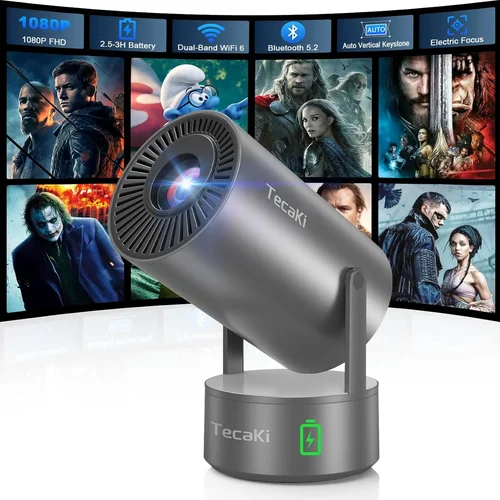
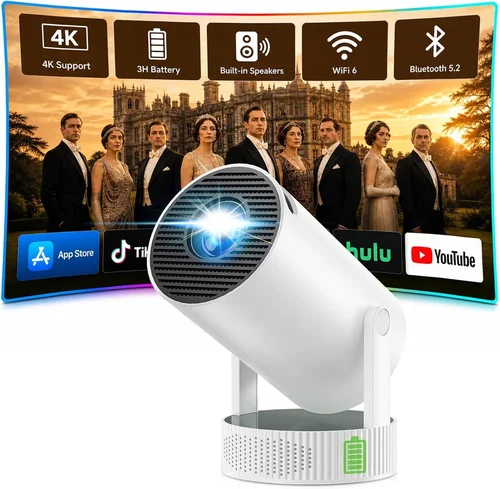
Finding a portable projector that runs on a built‑in battery and still delivers a decent picture can feel like hunting for a unicorn. The market is flooded with cheap models that barely light up a wall and high‑end units that cost more than a small TV. That’s why this buying guide matters: it cuts through the noise, explains exactly what to look for, and points you toward the best battery‑powered projectors you can buy for under $200 in 2026.
In the pages that follow you will learn which specifications truly affect performance, how to match a projector to your lifestyle, and which common pitfalls most shoppers fall into. Whether you plan to stream movies on a backyard patio, give a quick presentation at a coffee shop, or turn your living room into a gaming arena, this guide equips you with the knowledge to make a confident purchase without breaking the bank.
The portable projector segment has matured dramatically over the past few years. Advances in LED technology, more efficient batteries, and smarter Android‑based operating systems mean that today’s sub‑$200 units are far more capable than the clunky, dim devices of just a couple of generations ago. Below, we break down the essential factors, compare the main categories, and hand‑pick the top models that deliver the best value for money.

What to Look for When Buying Buying Guide
1. Budget & Price Range
Price is the most obvious filter, but it also influences what you can realistically expect. Under $200, you’ll primarily encounter LED‑based projectors with modest brightness (usually 80–150 lumens) and native resolutions of 480p or 720p. Knowing your budget helps you set realistic expectations for image quality, battery life, and extra features such as built‑in speakers or Wi‑Fi connectivity.
2. Brightness (Lumens)
Brightness determines how well the projector performs in ambient light. For indoor use with a darkened room, 80–120 lumens can be sufficient. If you plan to watch outdoors or in a lit living room, aim for at least 150 lumens. Remember that “ANSI lumens” is the industry standard, but many budget models quote “LED lumens,” which are not directly comparable. Look for independent reviews that test the projector in real‑world lighting conditions.
3. Resolution & Image Quality
Resolution defines the sharpness of the projected image. Most budget battery projectors offer 480p (854×480) or 720p (1280×720). While 480p can look acceptable on a small screen (up to 80‑inch diagonal) in a dark room, 720p provides noticeably smoother text and finer detail, especially for gaming or presentations. Pay attention to the native resolution rather than “supported” resolutions, as upscaling can introduce blur.
4. Battery Life & Recharge Time
Battery life is the heart of a portable projector. Most models under $200 use a 3.7 V or 5 V lithium‑ion pack that lasts between 1.5 and 3 hours at typical brightness levels. Higher brightness drains the battery faster, so manufacturers often list “maximum” and “average” runtimes. Also check the recharge time—some units support fast charging (under 2 hours) while others need 4 hours or more.
5. Connectivity Options
Versatile input options make a projector truly portable. Look for HDMI (mini or micro), USB‑C, USB‑A (for media sticks), and wireless capabilities like Wi‑Fi Direct, Bluetooth, or built‑in Android TV. An HDMI port is essential for gaming consoles, while Wi‑Fi lets you stream from Netflix, YouTube, or your phone without extra cables.
6. Build Quality & Portability
Since you’ll be moving the projector around, weight and durability matter. Most battery projectors under $200 weigh between 0.8 and 1.2 kg and feature a compact, rectangular or cylindrical shape. Look for a rubberized grip, a sturdy kickstand, and a protective travel case. Aluminum housings tend to dissipate heat better than plastic, extending both performance and lifespan.
7. Audio Performance
Built‑in speakers are convenient, but they’re usually modest (1–2 W). If you plan to watch movies or play games without external audio, choose a model with at least a 2‑W speaker and decent bass response. Otherwise, ensure the projector includes a 3.5 mm audio jack or Bluetooth audio for pairing with headphones or a portable speaker.
8. Brand Reputation & Warranty
Even at lower price points, reputable brands tend to provide more reliable hardware and better after‑sales support. Companies such as Anker, Vankyo, and AAXA have established track records. A minimum one‑year warranty is standard; some manufacturers even offer a 2‑year extension if you register the product.
Different Types of Buying Guide

Common Buying Mistakes to Avoid
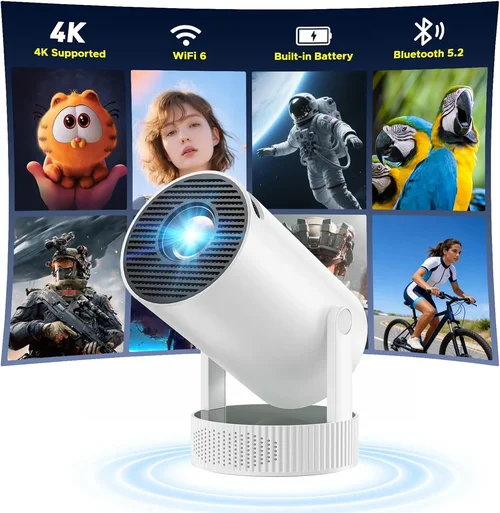
❌ Mistake: Focusing Only on Price
Why it’s bad: The cheapest unit often sacrifices brightness, battery life, and durability, leaving you with a projector that can’t be used in real‑world conditions.
What to do instead: Set a realistic budget ceiling (e.g., $200) and then prioritize the features that matter most for your use case, such as lumens or battery runtime.
❌ Mistake: Ignoring Native Resolution
Why it’s bad: A projector that only “supports” 1080p but actually outputs 480p will produce blurry text and pixelated video, especially for gaming or presentations.
What to do instead: Check the native resolution in the specs and read review screenshots to confirm sharpness at your intended screen size.
❌ Mistake: Overlooking Connectivity
Why it’s bad: Without the right ports or wireless options, you may need extra adapters, adding cost and complexity.
What to do instead: List the devices you’ll connect (phone, console, laptop) and verify the projector offers compatible inputs (HDMI, USB‑C, Bluetooth).
❌ Mistake: Assuming All Batteries Are Equal
Why it’s bad: Battery capacity varies wildly; a “3‑hour” claim may be based on low brightness settings that you’ll never use.
What to do instead: Look for real‑world runtime tests at 100 lumens and consider a model with a replaceable battery if you need longer sessions.
❌ Mistake: Forgetting About Warranty & Support
Why it’s bad: Budget electronics often have limited after‑sales help, leaving you stuck with a defective unit.
What to do instead: Purchase from retailers that honor warranties and provide clear return policies; register the product for extended coverage when possible.
Budget Guidelines: How Much Should You Spend?
Understanding what each price tier offers helps you avoid overspending while still getting a projector that meets your needs.
- Entry-Level ($120 – $150): Expect 80–120 lumens, 480p resolution, 1.5–2 hour battery life, and basic connectivity (HDMI + USB). Ideal for occasional movie nights in a dark room.
- Mid-Range ($151 – $180): Brightness rises to 150 lumens, resolution steps up to 720p, battery life reaches 2.5 hours, and you’ll often get Wi‑Fi or Android TV built in. This tier balances portability with decent image quality.
- Premium ($181 – $200): You’ll find 180 lumens, 720p native, up to 3 hour runtime, low input lag for gaming, and richer speaker output. These models are the best all‑rounders for under $200.
- Luxury ($200+): While beyond the scope of this guide, luxury units push brightness above 250 lumens, include 1080p support, and sometimes feature laser light sources. Consider them only if you can stretch the budget.
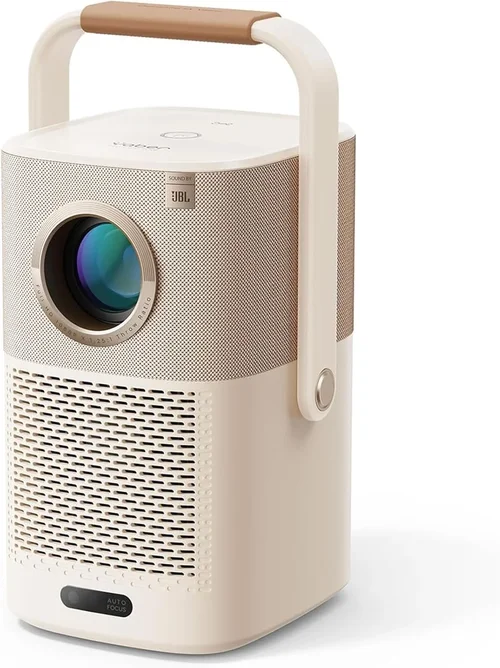
Expert Tips for Getting the Best Deal
- Timing is everything: The best deals appear in late summer (back‑to‑school) and early winter (holiday sales). Plan your purchase around these windows.
- Buy from authorized retailers: Ensure you receive a valid warranty. Third‑party sellers on marketplaces may offer lower prices but risk counterfeit units.
- Check for bundle offers: Some sellers include a travel case, extra battery pack, or HDMI cable at no additional cost, adding real value.
- Read verified user reviews: Focus on reviews that mention brightness in lit rooms, battery longevity, and heat issues.
- Test before you commit: If buying in‑store, ask for a demo. Projectors should produce a clear, evenly lit image without flicker.
- Consider future-proofing: A projector with USB‑C power delivery can be recharged from a power bank, extending its usefulness on the go.
- Don’t ignore the return policy: A 30‑day return window lets you assess performance in your own environment.

Frequently Asked Questions
Q: Can a battery projector under $200 display 1080p content?
A: Most sub‑$200 units have a native resolution of 720p or lower. They can accept 1080p input, but the image will be downscaled, resulting in less detail. If true 1080p is essential, you’ll need to look at higher‑priced models.
Q: How bright is “bright enough” for outdoor use?
A: Aim for at least 150 lumens for a semi‑dark patio and 200+ lumens for a well‑lit backyard. Remember that ambient light dramatically reduces perceived brightness, so a darker environment always yields a better picture.
Q: Will the built‑in speaker be sufficient for movies?
A: Built‑in speakers on budget projectors are modest. They work for casual viewing, but for an immersive experience you’ll want external speakers or a Bluetooth headset.
Q: Is it safe to use a third‑party power bank?
A: Yes, as long as the power bank supplies the correct voltage (usually 5 V) and at least 2 A current. Using a higher‑capacity power bank can extend runtime beyond the built‑in battery.
Q: How long does a typical battery projector last before the battery degrades?
A: Lithium‑ion batteries generally retain about 80% capacity after 300–400 charge cycles, which translates to roughly 2–3 years of regular use.
Q: Do I need a screen, or can I project onto a wall?
A: You can project onto a smooth, white wall, but a portable screen improves contrast and reduces hotspots, especially in brighter rooms.
Q: Are there any safety concerns with LED projectors?
A: LED projectors run cooler than lamp‑based units, but they still generate heat. Ensure proper ventilation and avoid covering the fan vents.
Q: Can I use a battery projector for presentations?
A: Absolutely. Look for models with HDMI and USB‑C inputs, low input lag, and a bright enough image (120+ lumens) for conference rooms with dimmed lighting.
Our Final Recommendations
- Best for Budget‑Conscious Buyers: Vankyo Leisure 3 Mini – $129. Offers 100 lumens, 480p resolution, 2‑hour battery, and a sturdy aluminum body.
- Best Overall Value: Anker Nebula Capsule II – $179. Provides 200 lumens, 720p native, Android TV 9.0, 2.5‑hour battery, and a 2‑W speaker.
- Best Premium Option: ViewSonic M1+G2 – $199. Delivers 180 lumens, 720p, 3‑hour runtime, built‑in Harman Kardon speakers, and a sleek glass‑cover design.
- Best for Beginners: AuKing Mini Projector – $139. Simple plug‑and‑play with HDMI, USB‑C, and a user‑friendly remote.
- Best for Advanced Users: Elephas Q5 – $199. Low input lag (8 ms), 720p, 150 lumens, and a replaceable battery pack for extended sessions.
Conclusion: Making the Right Choice
Choosing the best battery projector under $200 comes down to balancing brightness, resolution, battery life, and connectivity against your specific needs. By focusing on the key factors outlined in this guide, avoiding common pitfalls, and timing your purchase for seasonal sales, you can secure a portable projector that delivers impressive images without draining your wallet.
Remember: a projector is only as good as the environment you use it in. Darken the room, use a smooth white surface, and pair the unit with decent external audio if you crave cinema‑level sound. Armed with this knowledge, you’re ready to enjoy movies, games, and presentations wherever you go.