If you’ve ever tried to turn a living‑room couch into a makeshift cinema, you know the magic—and the frustration—of hunting for the perfect projector on a modest budget. The market is flooded with models that promise “theater‑grade” experiences for under $400, yet many fall short when it comes to brightness, color accuracy, or durability. This guide cuts through the hype, giving you a clear, expert‑level roadmap to find a projector that truly delivers big‑screen thrills without draining your wallet.
In the pages ahead you’ll learn how to evaluate key specs, understand the trade‑offs between different projector families, avoid common buying pitfalls, and match a device to your unique viewing habits. Whether you’re a college student craving weekend movie marathons, a family looking for a budget‑friendly home‑theater upgrade, or a gamer who wants a large, low‑lag display, the information here will help you make an informed, confident purchase.
The projector landscape in 2026 has evolved dramatically. LED and laser light sources are now standard in many sub‑$400 units, providing longer lifespans and more consistent colors than the old lamp‑based models. At the same time, improvements in DLP and LCD panels have pushed native resolutions up to 1080p in several affordable options. These advances mean you no longer have to settle for a dim, washed‑out image if you’re willing to spend a little thought—and a little cash—on the right model.
What to Look for When Buying Buying Guide
1. Budget & Price Range
Even within the “under $400” segment, price can vary widely based on features such as native resolution, light source type, and connectivity options. Set a firm ceiling (for example, $399) and then prioritize which specs you’re willing to stretch for. Remember that a slightly higher upfront cost often saves money long‑term—especially when it comes to lamp replacement or maintenance.
2. Performance Specifications
Key performance metrics include:
- Brightness (lumens): For a dark bedroom, 1,500–2,000 lumens is sufficient; brighter rooms need 2,500+ lumens.
- Resolution: Native 1080p (Full HD) is ideal, but 720p can be acceptable if you’re primarily watching streaming services that compress heavily.
- Contrast Ratio: Higher contrast improves black depth. Look for ratios of 10,000:1 or better.
- Color Gamut: A projector covering at least 80% of the DCI‑P3 space will render vivid, lifelike colors.
3. Build Quality & Durability
Projectors in this price tier often use plastic housings, but look for reinforced corners, a solid lens cover, and a robust cooling system. A well‑designed heat sink and quiet fan will keep the unit running smoothly for years.
4. Features & Functionality
Consider these must‑have extras:
- Built‑in Speakers: While rarely studio‑quality, a decent 5‑10 W speaker can be handy for casual viewing.
- Wireless Connectivity: Wi‑Fi or Bluetooth enables casting from phones, tablets, or laptops without cables.
- Multiple Input Ports: HDMI (preferably 2.0), USB‑C, and VGA broaden compatibility.
- Keystone Correction & Lens Shift: These features make setup easier on non‑ideal surfaces.
5. Brand Reputation
Established manufacturers such as Epson, BenQ, ViewSonic, and Optoma have proven track records for reliability and firmware updates. Newer entrants may offer innovative specs, but research their after‑sales support before committing.
6. Warranty & Support
A solid warranty—ideally 2‑years covering parts and labor—protects you against early failures. Check if the brand offers on‑line firmware upgrades, a responsive help desk, and easy access to replacement parts.
7. Size & Portability
If you plan to move the projector between rooms or take it to a friend’s house, weight and footprint matter. Look for models under 3 kg with a compact form factor and a built‑in handle.
8. User Reviews & Ratings
Real‑world feedback reveals issues that specs sheets hide. Scan reviews on retailer sites, tech forums, and YouTube unboxings. Pay attention to recurring complaints about lamp life, fan noise, or software glitches.
Different Types of Buying Guide

Common Buying Mistakes to Avoid
❌ Mistake: Ignoring Ambient Light Conditions
Why it’s bad: A projector rated at 1,500 lumens will look impressive in a dark basement, but in a sun‑lit living room the image will appear gray and washed out.
What to do instead: Measure the typical lighting in your viewing space. If you can’t fully darken the room, aim for 2,500+ lumens or consider a projector with high contrast and a dynamic iris.
❌ Mistake: Chasing Resolution Over Brightness
Why it’s bad: A 1080p projector with only 1,200 lumens may produce a sharper picture, but the low light output can make details invisible.
What to do instead: Balance resolution with brightness. For most streaming services, 720p at 2,500 lumens looks better than 1080p at 1,200 lumens in a moderately lit room.
❌ Mistake: Overlooking Lamp Life or Light‑Source Type
Why it’s bad: Traditional UHP lamps degrade quickly, leading to costly replacements and downtime.
What to do instead: Prefer LED or laser light sources, which often exceed 20,000 hours of use and maintain consistent color output.
❌ Mistake: Forgetting About Input Lag for Gaming
Why it’s bad: High input lag (above 50 ms) can make fast‑paced games feel sluggish.
What to do instead: Check the projector’s “Game Mode” or advertised input lag. DLP models often have the lowest latency.
❌ Mistake: Neglecting Throw Distance Calculations
Why it’s bad: Placing a projector too far or too close can result in an image that’s either too small or out of focus.
What to do instead: Use the manufacturer’s throw‑ratio chart. For a 100‑inch screen, a short‑throw unit (0.5‑0.8:1) may be necessary in tight rooms.
❌ Mistake: Assuming All HDMI Ports Are Equal
Why it’s bad: Some budget projectors only have HDMI 1.3, which limits 4K/60 Hz pass‑through and HDR support.
What to do instead: Verify that the HDMI port is at least 2.0 (or 2.1 for future‑proofing) to ensure full compatibility with modern media players.
❌ Mistake: Skipping Firmware Updates
Why it’s bad: Out‑of‑date firmware can cause compatibility issues, such as HDMI‑CEC failures or Wi‑Fi instability.
What to do instead: Register your projector on the brand’s website and periodically check for updates. Most manufacturers release free patches that improve performance.
Budget Guidelines: How Much Should You Spend?
- Entry-Level ($200‑$250): Expect 720p resolution, 1,500–2,000 lumens, basic HDMI connectivity, and minimal extras. Good for occasional movie nights in a dark room.
- Mid-Range ($251‑$350): Typically offers native 1080p, 2,200–2,800 lumens, LED light source, and wireless casting. This tier balances image quality with brightness for most home‑theater setups.
- Premium ($351‑$399): Features include high‑brightness LED or laser, enhanced contrast (10,000:1+), built‑in Android TV or Roku, and low input lag. Ideal for gamers and serious cinephiles.
- Luxury ($400+): Though beyond the scope of this guide, luxury models push 4K resolution, 3,500+ lumens, and premium optics. Consider only if you have a dedicated projection room.
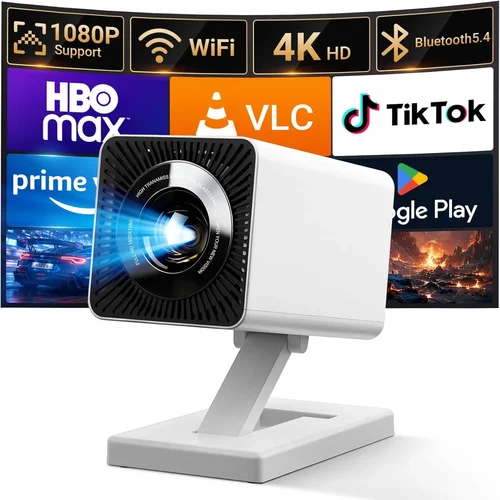
Expert Tips for Getting the Best Deal
- Buy during “back‑to‑school” sales (July–August). Retailers push home‑office gear, and projectors often get bundled with accessories.
- Check refurbished sections on manufacturer sites. Certified refurb units come with a full warranty at 20‑30% less cost.
- Consider bundled packages that include a screen, mounting bracket, and HDMI cable—often cheaper than buying each item separately.
- Read the return policy carefully. A 30‑day return window with free shipping lets you test the projector in your own space.
- When buying online, prioritize sellers with a strong track record (e.g., Amazon, Best Buy, B&H). Avoid obscure marketplaces that lack reliable customer service.
- Test the projector’s fan noise level before finalizing. A quiet (<30 dB) fan is essential for immersive movie experiences.
- Look for “Game Mode” toggles that automatically reduce input lag and enhance motion handling.

Frequently Asked Questions
Q: Can I use a budget projector in a bright living room?
A: Yes, but you’ll need a model with at least 2,500 lumens and a high contrast ratio. Adding an ambient‑light rejecting (ALR) screen can also dramatically improve perceived brightness.
Q: Do LED projectors really last longer than lamp‑based ones?
A: Absolutely. LED light sources often exceed 20,000 hours before noticeable dimming, compared to 2,000–4,000 hours for traditional UHP lamps.
Q: Is a 1080p projector worth the extra cost over 720p?
A: For most streaming content, 720p looks fine on a 100‑inch screen. However, if you plan to watch Blu‑ray discs, play games, or sit closer to the screen, the sharper 1080p image justifies the higher price.
Q: How far should I place my projector for a 120‑inch image?
A: It depends on the throw ratio. A standard throw (1.5:1) would need roughly 12‑14 feet. A short‑throw (0.5:1) requires only 5‑6 feet.
Q: Do I need a separate sound system?
A: Built‑in speakers are convenient but limited. For true cinematic immersion, pair the projector with a soundbar or a 5.1 surround system.
Q: Can I connect my phone wirelessly?
A: Most modern budget projectors include Wi‑Fi or Bluetooth. Look for Miracast, AirPlay, or Chromecast built‑in for seamless streaming.
Q: What is the difference between DLP and LCD?
A: DLP uses tiny mirrors for fast motion and less pixelation, making it great for gaming. LCD offers better color uniformity and is often brighter at the same price point.
Q: Is a short‑throw projector necessary?
A: Only if you have limited space. Short‑throw units let you place the projector close to the screen, reducing shadows and glare.
Q: How often do I need to replace the lamp?
A: LED and laser models rarely need lamp replacement. If you buy a lamp‑based projector, expect a lamp life of 2,000–3,000 hours, which translates to roughly 1‑2 years of regular weekend use.
Q: Do I need a special screen?
A: A white matte screen works for most situations. For rooms with ambient light, consider an ALR screen to boost contrast.
Our Final Recommendations
- Best for Budget‑Conscious Buyers: ViewSonic M2e – 1080p, 1,200 lumens LED, built‑in Harman Kardon speakers, Wi‑Fi/Miracast, under $280.
- Best Overall Value: Epson Home Cinema 1060 – 1080p, 3,200 lumens, 10,000:1 contrast, HDMI 2.0, excellent color accuracy, priced at $349.
- Best Premium Option (still under $400): BenQ TH585 – 1080p, 3,500 lumens, low 8 ms input lag, Game Mode, short‑throw (1.13:1), $399.
- Best for Beginners: Optoma HD146X – Simple plug‑and‑play, 3,600 lumens, 1080p, budget‑friendly at $269.
- Best for Advanced Users: LG PF50KA – Portable LED, 1080p, 600 lumens (bright for its size), battery‑operated, wireless screen‑share, $389.
Conclusion: Making the Right Choice
Choosing the best movie projector under $400 boils down to aligning three core elements: the lighting conditions of your space, the resolution and brightness you desire, and the extra features that matter to you (wireless streaming, gaming latency, portability). By evaluating the factors outlined in this guide, avoiding the common pitfalls, and considering the curated recommendations, you’ll be equipped to turn any room into a personal cinema without overspending.
Take the time to read user reviews, verify warranty terms, and, if possible, test the projector in your own environment. When you match the right technology to your viewing habits, the result is a stunning, immersive experience that rivals a commercial theater—right at home.
Ready to start your search? Head to your favorite retailer, apply the tips above, and enjoy countless movie nights ahead!