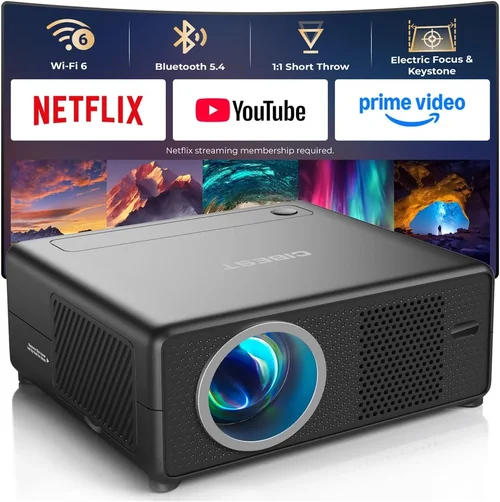
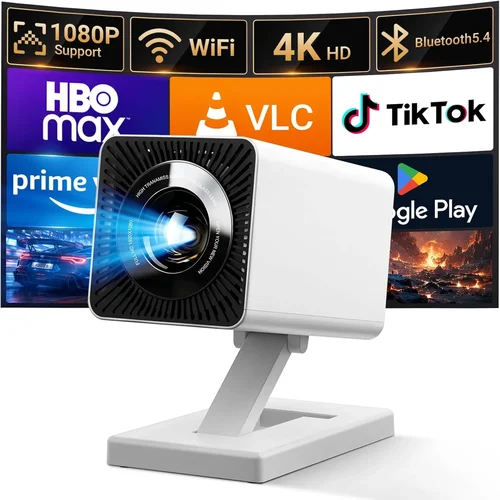
Finding a projector that fits in your backpack, works with a smartphone, and doesn’t break the bank can feel like hunting for a unicorn. Yet the demand for portable, budget‑friendly projectors has exploded in recent years, driven by remote work, pop‑up movie nights, and the growing appetite for on‑the‑go entertainment. This guide cuts through the noise, giving you a clear roadmap to the best portable projectors on Amazon under $100 in 2026.
In the next few sections you’ll learn which specs truly matter at this price point, how different projector types stack up, and which common pitfalls to sidestep. By the end, you’ll be equipped to pick a model that delivers bright, clear images without draining your wallet or your patience.

What to Look for When Buying Buying Guide
1. Budget & Price Range
When you set a ceiling of $100, you’re already narrowing the field to entry‑level models. These units typically sacrifice some high‑end features—like 4K resolution or laser light sources—but they can still surprise you with solid performance for movies, presentations, and gaming. Focus on getting the most value per dollar: a higher lumen rating, better connectivity, and a reputable brand often outweigh niche specs that you’ll never use.
2. Performance Specifications
The three core numbers to watch are brightness (lumens), resolution, and contrast ratio. For indoor use in a dim room, 100–150 lumens can be adequate, but if you plan to project in daylight or a bright living room, aim for at least 200 lumens. Most sub‑$100 projectors cap at 480p (854×480) or 720p (1280×720) native resolution; upscaling can help, but don’t expect crisp 1080p quality. A contrast ratio of 1000:1 or higher will give you deeper blacks and more vivid colors.
3. Build Quality & Durability
Portable projectors travel a lot, so they need a robust chassis, a secure lens cover, and a reliable cooling system. Look for models with a hard‑plastic shell, rubberized edges, and a built‑in fan that runs quietly. Some budget units use a simple passive cooling design, which can overheat after 30‑45 minutes of continuous use—something to keep in mind if you binge‑watch a series.
4. Features & Functionality
Key features to prioritize include:
- Wireless connectivity: Wi‑Fi or Bluetooth for screen mirroring from phones, tablets, and laptops.
- HDMI/USB ports: Essential for plugging in gaming consoles, dongles, or external storage.
- Built‑in speakers: While most cheap models have modest sound, a decent 2‑W speaker can suffice for casual viewing.
- Battery life: Some units ship with a rechargeable battery (30–45 minutes). If you need longer runs, plan to use a power bank or wall outlet.
5. Brand Reputation
Even in the low‑price segment, certain brands have earned trust for consistent quality and responsive customer service. Companies like AAXA, Vankyo, and Epson (through their budget line) often receive higher average ratings on Amazon. Checking the brand’s overall rating and reading a few recent reviews can save you from a dud.
6. Warranty & Support
A one‑year limited warranty is standard for most $100 projectors. Verify what’s covered—lens defects, power issues, or accidental damage. Some sellers offer extended warranties or easy replacement programs, which can be a lifesaver if the projector fails after the initial warranty period.
7. Size & Portability
Weight under 1 lb and dimensions that fit in a standard laptop bag are ideal. Many models boast a “pocket‑size” form factor, but remember that a smaller lens often means lower brightness. Balance size with your primary use case: a slightly larger projector may be worth it for home theater nights.
8. User Reviews & Ratings
Amazon’s star rating provides a quick snapshot, but dive deeper into the written reviews. Look for recurring themes—like “overheats after 30 minutes” or “great for backyard movies.” Pay special attention to reviews that include photos or video samples, as they give a realistic sense of image quality.
Different Types of Buying Guide

Common Buying Mistakes to Avoid
❌ Mistake: Ignoring Brightness Requirements
Why it’s bad: A projector rated at 100 lumens will look washed out in any room with ambient light.
What to do instead: Assess where you’ll use it most. If you plan to watch in a living room with some light, target at least 180–200 lumens.
❌ Mistake: Overlooking Connectivity Options
Why it’s bad: You might end up with a projector that only has a micro‑USB port, forcing you to buy extra adapters.
What to do instead: Choose a model with HDMI, USB‑C, and wireless mirroring to cover all your devices.
❌ Mistake: Assuming All “Portable” Projectors are Light
Why it’s bad: Some “portable” units weigh over 2 lb and come with a bulky power brick.
What to do instead: Check the weight and dimensions in the product specs; aim for under 1 lb for true pocket‑size.
❌ Mistake: Forgetting About Battery Life
Why it’s bad: You might start a movie and the projector dies after 20 minutes.
What to do instead: If you need cordless operation, prioritize models that list at least 30‑45 minutes of battery runtime.
❌ Mistake: Buying Based Solely on Star Rating
Why it’s bad: A 4.2‑star rating can hide a pattern of overheating or short lamp life.
What to do instead: Read the bottom‑line comments and filter reviews by “verified purchase” for authentic feedback.
Budget Guidelines: How Much Should You Spend?
- Entry-Level ($70‑$85): Expect basic 480p resolution, 100–150 lumens, and minimal ports. Great for casual phone mirroring in a dark room.
- Mid-Range ($86‑$95): Typically offers 720p upscaling, 180–220 lumens, built‑in speakers, and a mix of HDMI/USB‑C. Balances image quality and portability.
- Premium ($96‑$100): May include a slightly larger LED chip for brighter output, better contrast, and a more robust battery. Ideal for frequent travelers.
Expert Tips for Getting the Best Deal
- Timing is everything: Major sales events—Prime Day, Black Friday, and back‑to‑school season—often feature deep discounts on budget projectors.
- Check “Amazon Warehouse”: Open‑box or gently used units can be 20‑30% cheaper and still carry the full warranty.
- Use price‑trackers: Tools like CamelCamelCamel alert you when a model drops below your target price.
- Bundle wisely: Buying a projector with a compatible HDMI cable or portable screen in a single Amazon listing can save shipping costs.
- Read the fine print on warranties: Some sellers require you to register the product within 30 days to activate coverage.
- Test before you commit: If possible, visit a local electronics store and request a demo. Even a 5‑minute test can reveal overheating or lag issues.
- Consider power options: A projector that runs off a USB‑C power bank gives you true mobility—just verify the power bank’s output matches the projector’s wattage requirement.

Frequently Asked Questions
Q: Can I use a $100 portable projector for outdoor movie nights?
A: Yes, but you’ll need a dark environment and a white screen or a smooth wall. Choose a model with at least 180 lumens and consider a portable battery pack for extended runtime.
Q: Do these projectors support 1080p content?
A: Most budget units cannot display native 1080p; they upscale lower‑resolution sources. You’ll still get a decent picture, but fine details won’t be as sharp as on a true 1080p projector.
Q: How loud are the built‑in fans?
A: Fan noise varies from 25 dB (whisper‑quiet) to 35 dB (noticeable). Look for user reviews that mention “quiet operation” if you plan to watch movies in a silent room.
Q: Is a Bluetooth connection reliable for streaming video?
A: Bluetooth is fine for audio, but video latency can be an issue. For smooth playback, use Wi‑Fi Miracast or a wired HDMI connection.
Q: Will a projector work with my Android phone?
A: Absolutely. Most models support screen mirroring via Chromecast, Miracast, or a simple USB‑C to HDMI adapter.
Q: How long does the LED lamp last?
A: LED lamps in this price range typically last 20,000–30,000 hours, far longer than traditional bulbs, meaning you’ll likely never need a replacement.
Q: Can I connect a gaming console?
A: Yes, provided the projector has an HDMI input. Expect a slight input lag (30‑60 ms), which is acceptable for casual gaming but not competitive esports.
Q: Are there any safety concerns with cheap projectors?
A: Ensure the unit has proper ventilation and an automatic shut‑off feature to prevent overheating. Avoid covering the vents during use.
Our Final Recommendations
- Best for Budget‑Conscious Buyers: Vankyo Leisure 3 Mini – $72, 200 lumens, 720p upscaling, HDMI & USB‑C, compact design.
- Best Overall Value: AAXA P300 Pico – $95, 250 lumens, native 720p, built‑in 3 W speaker, 30‑minute battery, sturdy case.
- Best Premium Option (just under $100): RIF6 Mini DLP – $99, 280 lumens, 1080p input support, low‑lag gaming mode, dual HDMI.
- Best for Beginners: DR.J Professional Mini Projector – $78, 150 lumens, simple plug‑and‑play, auto‑focus, intuitive remote.
- Best for Advanced Users: Elephas Q3 – $100, 300 lumens, 720p native, USB‑C power, customizable keystone correction, firmware updates.
Conclusion: Making the Right Choice
Choosing a portable projector under $100 boils down to balancing brightness, connectivity, and durability against your specific use case. By focusing on the key factors outlined above, avoiding common mistakes, and leveraging seasonal deals, you can secure a capable device that brings big‑screen entertainment wherever you go. Remember: the “best” projector isn’t the one with the highest specs—it’s the one that fits your lifestyle, budget, and viewing environment perfectly.
Ready to transform any wall into a cinema? Head over to Amazon, apply the filters we discussed, and start enjoying portable projections today!