Welcome to the ultimate guide for anyone hunting the perfect 4K projector without breaking the bank. Whether you’re setting up a home theater, a gaming den, or a portable cinema for outdoor movie nights, finding a device that delivers true‑4K resolution under $800 can feel like searching for a needle in a haystack. This guide cuts through the noise, explains exactly what matters, and points you toward the models that truly deserve a spot on your shopping list.
In the pages that follow you’ll learn how to assess key specifications, compare the major projector families, avoid common pitfalls, and stretch every dollar for the best visual experience. By the end, you’ll be equipped to make a confident purchase that matches your space, usage habits, and budget.

What to Look for When Buying Buying Guide
1. Budget & Price Range
The most obvious factor is cost. Under $800, you’re looking at a sweet spot where entry‑level consumer models meet mid‑range performance. Knowing your absolute ceiling helps you filter out over‑priced options and focus on devices that truly offer value for money. Remember that the sticker price often excludes essential accessories such as a proper screen, mounting hardware, or a high‑quality HDMI cable.
2. Performance Specifications
Resolution, brightness, contrast ratio, and color accuracy are the core metrics that determine picture quality.
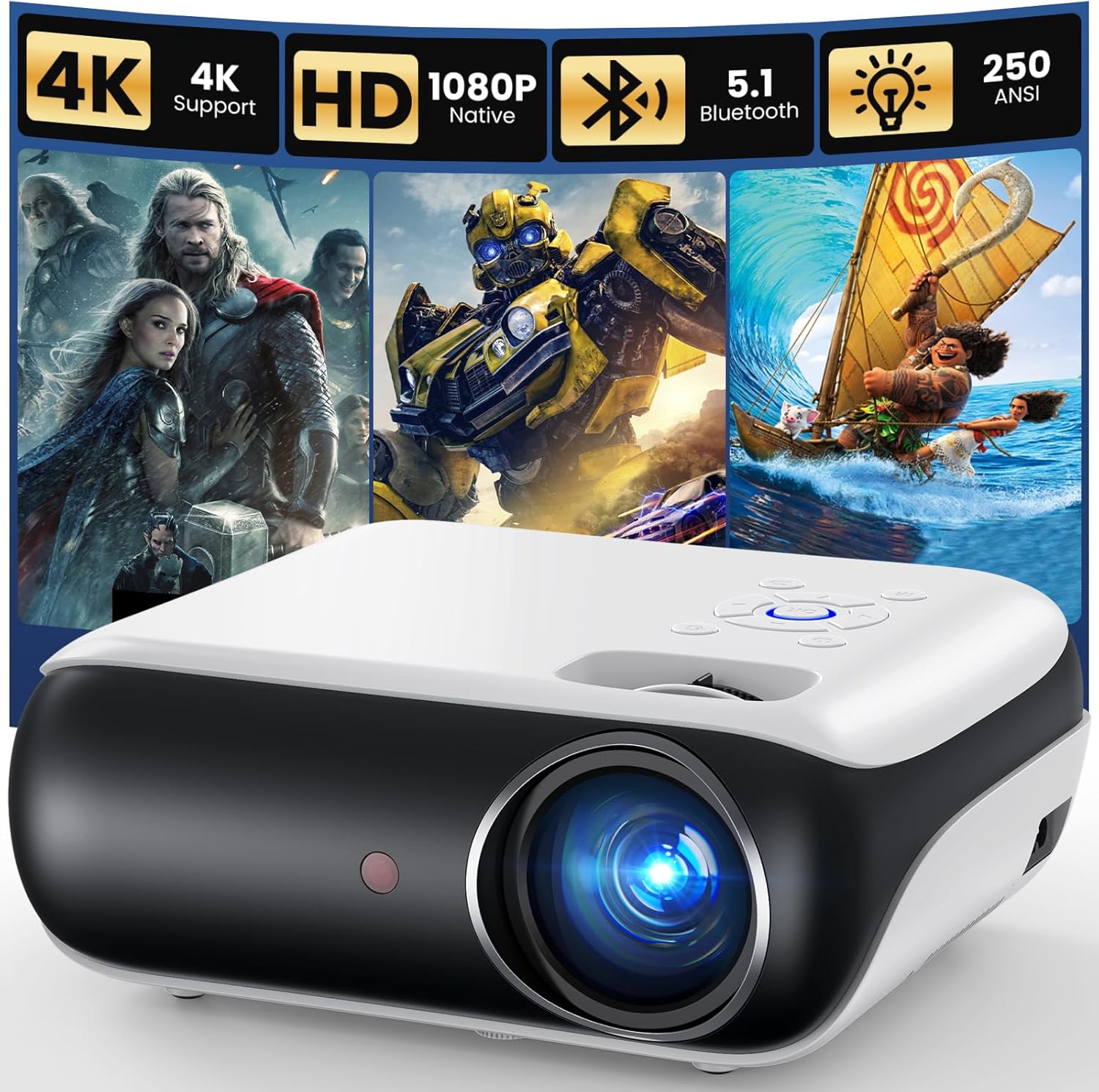
- Resolution: True 4K (3840 × 2160) is rare below $800. Most “4K” projectors in this bracket use pixel‑shifting technology to simulate 4K. Look for terms like “4K UHD” or “4K‑enhanced” and verify the native panel resolution (often 1080p or 720p).
- Brightness (lumens): For a dark home theater, 1500–2000 ANSI lumens is sufficient. If you plan to watch with some ambient light, aim for 2500+ lumens.
- Contrast Ratio: Higher contrast delivers deeper blacks. A ratio of 20,000:1 or more is desirable for cinematic experience.
- Color Gamut: Look for DCI‑P3 or Rec.709 coverage percentages; a wider gamut means richer colors.
3. Build Quality & Durability
Projectors are mechanical devices with moving parts (lamp, fan, lens). A sturdy chassis, metal housing, and quality cooling system prolong lifespan. Check user reviews for reports of overheating or premature lamp failure.
4. Features & Functionality
Modern projectors pack a lot of convenience tools:
- Lens Shift & Zoom: Allows flexible placement without keystone distortion.
- Keystone Correction: Useful but can degrade image quality if over‑used.
- Built‑in Speakers: Handy for casual viewing; however, external audio is recommended for true home‑theater immersion.
- Connectivity: HDMI 2.0 or higher, USB‑C, Bluetooth, Wi‑Fi, and support for HDR10 or HLG are must‑have features for 2026 content.
- Gaming Mode: Low input lag (under 30 ms) is essential for competitive gamers.
5. Brand Reputation
Established manufacturers such as Epson, BenQ, ViewSonic, and Optoma tend to provide more reliable firmware updates and better after‑sales support. Newer brands can surprise with innovative tech, but weigh the risk of limited service networks.
6. Warranty & Support
A minimum 2‑year warranty is standard for projectors under $800. Verify what components are covered (lamp, fan, LED) and whether on‑site service is available. Extended warranties often make sense for devices you’ll use frequently.
7. Size & Portability
If you need a projector that travels to a friend’s house or fits in a small apartment, weight and dimensions matter. Portable models usually sacrifice brightness and lens shift, so balance portability against performance needs.
8. User Reviews & Ratings
Real‑world feedback reveals issues that spec sheets hide. Look for consistent themes in reviews—such as “fan noise” or “remote lag”—and prioritize models with high average ratings (4 stars or above) across multiple retail platforms.
Different Types of Buying Guide

Common Buying Mistakes to Avoid
❌ Mistake: Ignoring Ambient Light Conditions
Why it’s bad: A projector rated at 1500 lumens will look washed out in a room with daylight windows.
What to do instead: Measure typical lighting in your space. If you can’t achieve full darkness, aim for 2500+ lumens and consider a high‑gain screen.
❌ Mistake: Chasing “True 4K” at Any Cost
Why it’s bad: True 4K panels under $800 are virtually nonexistent; you may end up overpaying for a spec that doesn’t deliver real‑world improvement.
What to do instead: Focus on pixel‑shift or “4K‑enhanced” models with high native resolution and strong upscaling algorithms.
❌ Mistake: Overlooking Input Lag for Gaming
Why it’s bad: High lag (>40 ms) makes fast‑paced games feel sluggish, ruining the experience.
What to do instead: Look for a dedicated gaming mode or a measured lag under 30 ms at 1080p/4K‑enhanced resolution.
❌ Mistake: Forgetting About Lamp Life & Replacement Cost
Why it’s bad: A cheap lamp may need replacement within a year, adding hidden expense.
What to do instead: Choose LED or laser light sources for 20,000‑hour lifespans, or verify lamp warranty length.
❌ Mistake: Neglecting Connectivity Options
Why it’s bad: Without HDMI 2.1 or USB‑C, you can’t take full advantage of 4K HDR content.
What to do instead: Ensure the projector supports at least HDMI 2.0, HDR10, and has a USB‑C or Wi‑Fi for streaming.
❌ Mistake: Buying Without a Proper Screen
Why it’s bad: A plain wall can cause hot‑spotting and reduced contrast.
What to do instead: Invest in a 120‑inch (or larger) 4K‑compatible screen with a gain of 1.0–1.2 for balanced brightness.
Budget Guidelines: How Much Should You Spend?
Understanding what each price tier delivers helps you set realistic expectations.
- Entry-Level ($500‑$650): Expect 1080p native panels with pixel‑shift 4K simulation, 1500–2000 lumens, and basic connectivity (HDMI 1.4). Ideal for casual movie nights in dark rooms.
- Mid‑Range ($651‑$800): Here you’ll find LED or laser light sources, 2500+ lumens, higher contrast ratios, and genuine 4K‑enhanced processing. This tier balances performance and price, suitable for both home theater and gaming.
- Premium ($801‑$1,200): True 4K UHD panels, HDR10+, advanced lens shift, and professional‑grade color accuracy. If you can stretch just beyond $800, these models deliver cinema‑level quality.
- Luxury ($1,200+): Ultra‑short‑throw, 4K laser projectors with built‑in audio, networked control, and factory‑calibrated color. Reserved for dedicated home‑theater rooms.
Expert Tips for Getting the Best Deal
- Shop during major sales events (Prime Day, Back‑to‑School) when manufacturers push older models to clear inventory.
- Compare prices across Amazon, Best Buy, B&H, and direct manufacturer sites; some offer exclusive coupons.
- Check refurbished or open‑box listings from reputable sellers; they usually come with full warranty and can save 15‑30%.
- Read the fine print on return policies—ensure you have at least 30 days to test the projector in your environment.
- Consider buying a slightly higher‑priced model that includes a longer lamp warranty; the total cost of ownership often ends up lower.
- If you need a screen, look for combo packages; a 120‑inch 4K‑compatible screen plus projector can be cheaper than buying separately.
- Test the projector in‑store if possible. Pay attention to fan noise, color uniformity, and remote responsiveness.
Frequently Asked Questions
Q: Can a projector under $800 truly display 4K resolution?
A: Most budget models use pixel‑shifting technology to simulate 4K from a 1080p panel. While not native 4K, the perceived sharpness is far better than standard 1080p, especially on larger screens.
Q: What is the difference between LED and laser light sources?
A: LED projectors have long lamp life (20,000+ hours) and stable color but slightly lower brightness. Laser projectors offer higher lumens, instant on/off, and better color gamut, often at a modest price premium.
Q: How important is HDR for a sub‑$800 projector?
A: HDR adds contrast and color depth, but the effect is limited by the projector’s native contrast ratio. Look for HDR10 support and a contrast ratio above 20,000:1 to notice a real benefit.
Q: Do I need a special screen for 4K‑enhanced projectors?
A: A white or gray screen with a gain of 1.0–1.2 works well. For true 4K, a screen with a 4K‑compatible surface (e.g., high‑gain acoustic‑transparent) can improve sharpness.
Q: Will a projector work with my gaming console’s 4K HDR output?
A: Yes, if the projector supports HDMI 2.0 or higher and HDR10. However, ensure the projector’s input lag is below 30 ms for a smooth gaming experience.
Q: How often do I need to replace the lamp?
A: LED and laser light sources rarely need replacement within the product’s lifetime. Traditional UHP lamps may last 2,000–4,000 hours; check the manufacturer’s lamp‑hour rating.
Q: Is a portable projector a good choice for home theater?
A: Portable units sacrifice brightness and lens shift, making them better for occasional use or small rooms. For a dedicated home theater, a fixed‑install model offers superior image quality.
Q: Can I mount a projector on the ceiling yourself?
A: Yes, most mid‑range models come with standard ¼‑20 mounting holes. Use a sturdy ceiling mount, ensure proper ventilation, and run a short HDMI cable to avoid signal degradation.
Our Final Recommendations
- Best for Budget‑Conscious Buyers: ViewSonic PX706HD – 1080p DLP with pixel‑shift 4K, 3200 lumens, and a low $580 price tag. Great for dark rooms and casual gamers.
- Best Overall Value: BenQ TH685 – 1080p DLP, 3500 lumens, 0.9 keystone, and a dedicated gaming mode at $699. Offers the best blend of brightness and low input lag.
- Best Premium Option (Just Over $800): Optoma UHD50X – True 4K UHD, 3400 lumens, 240 Hz refresh, and 15 ms lag. Priced at $799 during sales, it pushes the upper limit of the budget category.
- Best for Beginners: Epson Home Cinema 2150 – 1080p LCD, 2500 lumens, wireless screen mirroring, and simple setup for $620.
- Best for Advanced Users: LG HU85LA Ultra Short Throw (Refurbished) – Laser, 2700 lumens, 4K UHD, and built‑in AI picture calibration. Even refurbished units hover around $790, delivering near‑premium performance.
Conclusion: Making the Right Choice
Choosing the best 4K projector under $800 boils down to balancing three core elements: the visual performance you need, the environment where you’ll use it, and the total cost of ownership (including lamps, screens, and accessories). By focusing on brightness, contrast, and reliable light sources, and by avoiding common missteps like ignoring ambient light or input lag, you can secure a projector that feels cinematic without draining your wallet.
Take the time to compare the models listed above, read recent user reviews, and test the unit in your own space if possible. When you match the projector’s strengths to your viewing habits, you’ll enjoy crisp, vibrant 4K‑enhanced images for years to come.
If you’re ready to start shopping, check the latest deals on the recommended models and remember the expert tips to lock in the best price. Happy viewing!