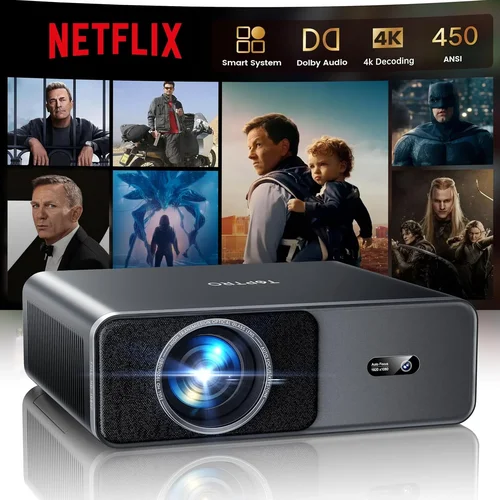
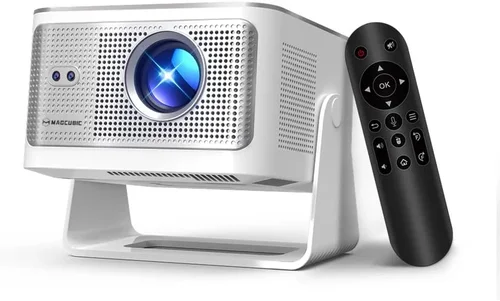
Choosing a projector for a 4K home cinema can feel like stepping into a tech labyrinth. The market is flooded with specifications, brand promises, and price tags that range from a few hundred dollars to several thousand. For most households, the sweet spot lies somewhere under $10,000—a price that promises true 4K resolution without the premium price of high‑end cinema‑grade units. This guide cuts through the noise, giving you a clear roadmap to find the best 4K home projector that fits your budget, space, and viewing habits.
In the pages that follow, you’ll learn exactly what specifications truly matter, how different projector types stack up against each other, and which common pitfalls to avoid. By the end, you’ll be equipped to make a confident purchase, whether you’re setting up a dedicated home theater room or a versatile living‑room media hub.
The 4K projector market in 2026 is more mature than ever. LED, laser, and DLP technologies have converged, offering brighter images, longer lamp life, and more accurate colors. Meanwhile, smart‑connectivity options such as HDMI 2.1, Wi‑Fi casting, and voice control have become standard. Understanding how these advances translate into real‑world performance is the key to getting the most bang for your buck.

What to Look for When Buying Buying Guide
1. Budget & Price Range
Even though you’ve set a ceiling of $10,000, the price you actually spend will dictate the trade‑offs you’ll face. Entry‑level 4K projectors (around $2,000‑$3,500) often rely on pixel‑shifting technology, which can produce a convincing 4K image but may fall short in motion clarity. Mid‑range models ($3,500‑$6,500) typically use true native 4K chips, delivering sharper detail and smoother motion. Premium units ($6,500‑$10,000) add laser light sources, higher brightness, and advanced color processing. Decide early how much you’re willing to invest in each feature, then narrow your list accordingly.
2. Performance Specifications
Three specs dominate the viewing experience:
- Resolution: True 4K (3840×2160) vs. pixel‑shifted 4K. True 4K offers the best detail, especially on large screens.
- Brightness (lumens): For a dark home theater, 1,500‑2,500 ANSI lumens is ample. If you’ll watch in a lit living room, aim for 2,500‑4,000 lumens.
- Contrast Ratio: Higher contrast means deeper blacks. Look for a dynamic contrast of at least 30,000:1; laser models often exceed 100,000:1.
Don’t forget color accuracy—look for a projector that covers at least 90% of the DCI‑P3 color gamut, the standard for cinema content.
3. Build Quality & Durability
Projectors are long‑term investments. A robust chassis, sealed optics, and reliable cooling systems keep performance consistent over years. Laser light sources, now common under $10,000, can last 20,000‑30,000 hours—far longer than traditional lamps, which need replacement every 2,000‑4,000 hours.
4. Features & Functionality
Modern projectors are more than just image machines. Key features to prioritize include:
- HDR Support: HDR10 and Dolby Vision enhance dynamic range.
- Lens Shift & Zoom: Allows flexible placement without keystone correction.
- Built‑in Speakers: Useful for casual viewing, though a dedicated sound system is recommended.
- Smart Connectivity: Wi‑Fi, Bluetooth, and HDMI 2.1 for 4K @ 120 Hz gaming.
- Screen Size Flexibility: Some units can project up to 150‑200 inches, while others cap at 120 inches.
5. Brand Reputation
Brands with a history of projector innovation—such as Sony, Epson, BenQ, and Optoma—often provide better firmware updates and customer support. Newer entrants like Hisense and Xiaomi are making strides, but research their post‑sale service track record before committing.
6. Warranty & Support
A solid warranty can save you thousands. Look for at least a 2‑year comprehensive warranty covering the light source, optics, and electronics. Some manufacturers offer extended laser‑light warranties up to 5 years, which is a strong indicator of confidence in product durability.
7. Size & Portability (if applicable)
If you plan to move the projector between rooms or use it for outdoor movie nights, consider weight, size, and mounting options. Short‑throw models are bulkier but eliminate shadows from viewers, while ultra‑short‑throw units sit just inches from the screen and are perfect for tight spaces.
8. User Reviews & Ratings
Real‑world feedback uncovers issues that spec sheets hide. Pay attention to recurring themes—like fan noise, firmware bugs, or excessive heat—across multiple reviews on sites like Amazon, B&H, and dedicated AV forums.
Different Types of Buying Guide
Common Buying Mistakes to Avoid
❌ Mistake: Ignoring Ambient Light Conditions
Why it’s bad: A projector rated at 2,000 lumens will look dim in a bright living room, leading to a disappointing viewing experience.
What to do instead: Measure typical room lighting and choose a brightness level 30‑50% higher than the ambient light level. Consider a projector with HDR support to boost perceived brightness.
❌ Mistake: Overlooking Throw Distance
Why it’s bad: Buying a long‑throw projector for a small apartment forces you to place it far away, resulting in a tiny image or the need for a massive screen.
What to do instead: Calculate the required throw distance using the projector’s throw ratio and your desired screen size. If space is limited, look at short‑throw or ultra‑short‑throw models.
❌ Mistake: Assuming All 4K Projectors Are Equal
Why it’s bad: Pixel‑shifting “4K” projectors can’t match the detail of a native 4K chip, especially noticeable on screens larger than 100 inches.
What to do instead: Verify whether the projector uses true native 4K or pixel‑shift technology. For large screens, prioritize native 4K.
❌ Mistake: Forgetting About Lens Shift
Why it’s bad: Relying on digital keystone correction degrades image quality and reduces brightness.
What to do instead: Choose a projector with at least 0.5‑inch vertical lens shift. This gives flexibility in placement while preserving image fidelity.
❌ Mistake: Neglecting Audio Needs
Why it’s bad: Built‑in speakers are often underpowered, leading to a weak soundtrack that forces you to buy a separate sound system.
What to do instead: Plan for an external audio solution—soundbar or home‑theater receiver—from the start and ensure the projector has appropriate audio outputs (optical, HDMI‑ARC).
❌ Mistake: Skipping Firmware Updates
Why it’s bad: Missing updates can leave you with unresolved bugs, limited HDR support, or compatibility issues with new streaming devices.
What to do instead: Check the manufacturer’s update policy. Choose a brand that offers regular OTA (over‑the‑air) updates and easy firmware installation.
Budget Guidelines: How Much Should You Spend?
- Entry‑Level ($2,000‑$3,500): Expect pixel‑shifted 4K, LED or laser light source, 1,500‑2,000 lumens, and basic HDR. Ideal for small rooms or occasional movie nights.
- Mid‑Range ($3,500‑$6,500): True native 4K, laser‑phosphor or high‑power LED, 2,500‑3,500 lumens, and broader color gamut. Great for dedicated home theatres with some ambient light.
- Premium ($6,500‑$10,000): High‑end laser light source, 3,500‑4,500 lumens, dynamic contrast >100,000:1, advanced motion processing, and robust connectivity (HDMI 2.1, Wi‑Fi 6). Perfect for large screens, gaming at 120 Hz, and HDR‑intensive content.
- Luxury ($10,000+): Ultra‑short‑throw, cinema‑grade optics, dual‑laser engines, and integrated calibration tools. Reserved for professional‑grade home theatres.
Expert Tips for Getting the Best Deal
- Timing: New models typically launch in Q2. Buying a previous‑generation model in Q3 can net you a steep discount while still offering excellent performance.
- Retailers: Compare prices on B&H, Adorama, and Amazon. Use price‑tracking tools like CamelCamelCamel to see historical lows.
- Bundle Smartly: Look for “home‑theater kits” that pair the projector with a screen and mounting hardware.
- Warranty Extensions: If you’re buying a laser projector, a 3‑year light‑source warranty is often worth the extra $150‑$250.
- Return Policies: Ensure the seller offers at least a 30‑day return window with free shipping. This gives you time to test in your actual environment.
- Testing Before Buying: If possible, visit a specialty AV store and view the projector on a calibrated screen. Bring a 4K Blu‑ray or streaming device to assess HDR performance.
- Calibration: Even the best projector benefits from basic calibration—adjust brightness, contrast, and color temperature using a free tool like CalMAN Home.
- Future‑Proofing: Choose a unit with HDMI 2.1 and HDCP 2.3 to ensure compatibility with upcoming consoles and streaming services.

Frequently Asked Questions
Q: Do I need a 4K projector if I’m only watching streaming services?
A: Most major streaming platforms (Netflix, Amazon Prime, Disney+) now stream 4K HDR content. A true 4K projector will let you enjoy that content at its intended resolution, delivering sharper detail and richer colors compared to 1080p units.
Q: Can I use a 4K projector with a regular 1080p TV?
A: Yes, a 4K projector will downscale 1080p content without issue. You’ll still benefit from higher contrast and larger screen sizes, though you won’t see the full 4K detail.
Q: How far should the projector be from the screen?
A: It depends on the throw ratio. For a 120‑inch screen, a typical 1.5‑throw projector needs about 9‑10 feet of distance. Short‑throw models can achieve the same size from 4‑5 feet.
Q: Is a laser light source worth the extra cost?
A: Laser sources offer higher brightness, better color accuracy, and dramatically longer lifespan (20,000+ hours). If you plan to use the projector frequently or in a bright room, the investment pays off.
Q: Do I need a special screen for 4K?
A: While a white wall works, a dedicated 4K screen with a high gain (1.2‑1.5) and smooth surface preserves detail and improves perceived contrast. For ultra‑short‑throw units, a flat, low‑gain screen is ideal.
Q: Will a projector work with my gaming console?
A: Absolutely, provided the projector supports HDMI 2.1 and HDCP 2.3. Look for models that can handle 4K at 120 Hz to fully exploit next‑gen consoles like PS5 and Xbox Series X.
Q: How loud are projectors?
A: Fan noise varies. Laser models often run quieter (20‑25 dB) due to efficient cooling. DLP units may be slightly louder (30‑35 dB). Check spec sheets for “fan noise level” and read user reviews for real‑world impressions.
Q: What maintenance does a projector need?
A: Laser and LED units require minimal upkeep—just keep the vents clean. Lamp‑based projectors need periodic lamp replacement and filter cleaning. Always follow the manufacturer’s cleaning schedule.
Q: Can I mount the projector on the ceiling?
A: Yes, most home‑theater projectors come with ceiling‑mount brackets. Ensure you have adequate clearance for the projector’s throw distance and ventilation.
Our Final Recommendations
- Best for Budget‑Conscious Buyers: BenQ TK800M – $2,799. Pixel‑shifted 4K, 3,000 lumens, HDR‑10, and a decent built‑in speaker. Ideal for bright rooms and casual gamers.
- Best Overall Value: Epson Home Cinema 5050UB – $5,499. True 4K (via pixel‑shift), 2,600 lumens, 100,000:1 contrast, and excellent lens shift. A solid all‑rounder for home theatres.
- Best Premium Option: Sony VPL‑VW715ES – $9,799. Native 4K SXRD, 2,800 lumens, 1,000,000:1 contrast, and laser light source. Perfect for dedicated cinema rooms and high‑end gaming.
- Best for Beginners: Optoma UHD50X – $1,999. True 4K, 3,400 lumens, 240 Hz gaming mode, and low input lag. Easy setup and great performance for the price.
- Best for Advanced Users: LG CineBeam HU85LA – $8,999. Ultra‑short‑throw, laser, 2,700 lumens, 95% DCI‑P3, and built‑in smart platform. Ideal for living‑room walls without sacrificing image quality.
Conclusion: Making the Right Choice
Investing in a 4K home projector under $10,000 is no longer a gamble. By focusing on the key factors—budget, brightness, contrast, true 4K capability, and smart features—you can select a unit that transforms any room into a cinematic oasis. Remember to assess your ambient lighting, calculate throw distance, and prioritize a reliable warranty.
Take the time to compare the models highlighted in our recommendations, read user reviews, and, if possible, see the projector in action. With the right research and a clear set of priorities, you’ll enjoy stunning 4K visuals for years to come.
Ready to upgrade your home entertainment? Start by narrowing down your top three models, check current pricing, and place your order before the next seasonal sale—your future self will thank you.